15 Basement Bedroom Ideas with Exposed Wood Beam Ceilings
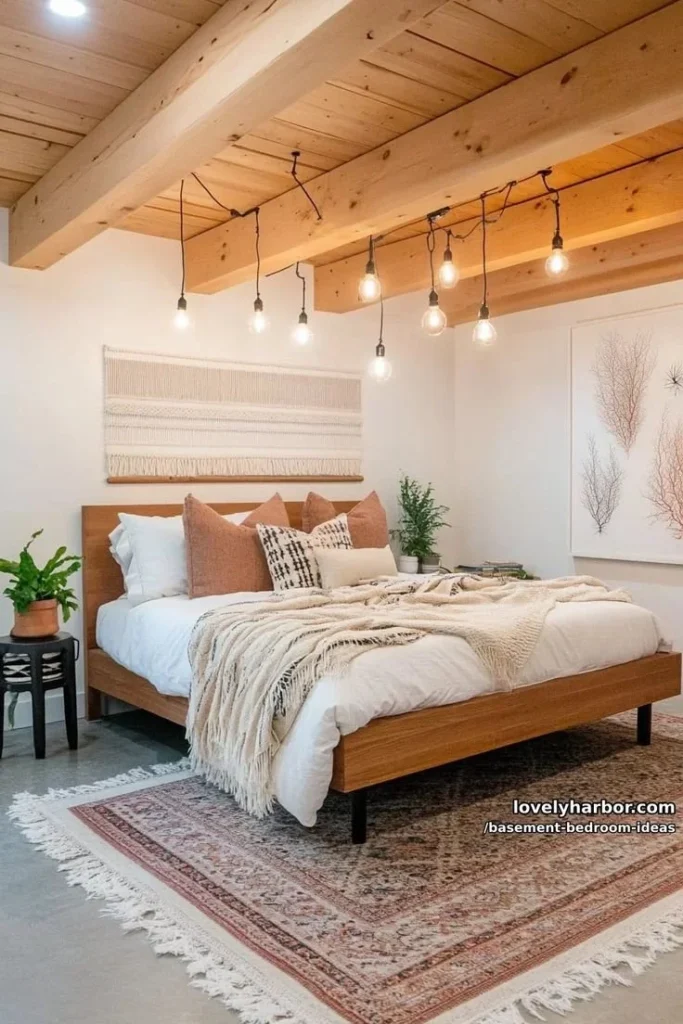
Imagine lowering the light and hearing the quiet hush that only a finished basement can hold — the kind of hush that invites blankets, books, and slow conversations. Exposed wood beam ceilings in a basement bedroom create that hush and make it tactile: the warm grain of aged timber overhead, the soft glow of layered lighting bouncing off matte paint, and the grounded feel of rugs and natural textiles underfoot. These rooms feel intimate without being cramped; their textures — rough-hewn beams, velvet throws, woven baskets, and raw brick or painted cinderblock — read as intentional and cozy rather than unfinished.
A bedroom with exposed beams is more than style: it’s atmosphere. It’s the sense of being in a treehouse for adults, sheltered and private, where every detail whispers comfort. Color palettes swing from the quiet sophistication of charcoal and cream to sunlit plaster and mossy greens; accent lighting pools on knots in the wood, while soft linens and layered rugs invite you to stay. Whether you prefer a modern minimalist silhouette that lets the beams do the talking or a layered rustic look where every surface tells a story, the beams anchor the design and add a soulful, architectural heartbeat.
This approach matters in real homes because basements often need a personality boost — they’re where guests stay, where teenagers claim independence, or where homeowners carve out a rental suite. Exposed beams give a character that makes these spaces feel lived-in and loved. If you’re prepping for holiday visitors, updating a rental, doing a seasonal refresh, or simply dreaming up a cozy corner for winter nights, this strategy is versatile and impactful. For renter-friendly touches and small-space solutions, there are plenty of low-commitment options to try — from temporary accent walls to freestanding headboards — that let you enjoy the beam look without permanent changes. For more inspiration on compact sleeping spaces and clever layouts, see this collection of small bedroom ideas that translate well to basements.
Whether you’re renovating or styling on a budget, the exposed-beam aesthetic makes a basement bedroom feel intentional and welcoming, and it works beautifully across seasons: cool and airy in summer, snug and lantern-lit in winter.
Decor Details
Exposed wood beam ceilings as a decor element are both architectural and decorative — they’re the backbone of a room’s personality and a major styling cue. In basement bedrooms, beams can be original structural members left visible, reclaimed wood added to create drama, or faux beams installed for visual effect.
- Item type: Architectural feature / styling focal point (ceiling treatment), complemented by textiles, lighting, and furniture.
- Main styles: Rustic, modern farmhouse, Scandinavian-warm, industrial-chic, and moody contemporary.
- Typical colors, materials & textures: Natural wood tones (walnut, oak, reclaimed gray), painted beams (black, white, deep charcoal), matte paints, plaster walls, warm metals (brass, blackened steel), linen and wool textiles, jute rugs, and soft upholstery.
- Best rooms/zones: Basement bedrooms, guest suites, media bedrooms, home offices-with-sleeping space, and studio apartments.
- DIY vs. store-bought: Mix — beams themselves can be a contractor project or faux-beam kits for DIY; decor around them is mostly store-bought with many easy DIY accents (headboard, shelves, wall art).
Design Impact
Visually, exposed beams introduce horizontal lines that draw the eye along the ceiling, making low basements feel intentional rather than claustrophobic. Dark-painted beams recede against a light ceiling, adding depth; light-stained or natural wood beams bring warmth and a vertical lift. They act as a natural focal point, helping anchor layered lighting — pendant lights, strung bulbs, and wall sconces look purposeful when tied to beam positions.
Emotionally, the impact is immediate: beams evoke a sense of shelter and history. A guest sleeping under visible timber often reports the feeling of being cocooned but not boxed in. For everyday life, this translates to calmer evenings, better sleep routines, and rooms that feel curated. Practical benefits include natural places to run accent lighting and hooks for hanging plants or bedside pendants, plus an aesthetic that tolerates wear — scuffs and lived-in patina look intentional rather than accidental. Picture a late autumn evening: a rug underfoot, a bedside lamp casting an amber pool of light, and the grain of a beam catching the glow — that’s mood lighting that’s built into the room.
Why Choose It
Exposed wood beam ceilings are perfect for homeowners who want character without sacrificing comfort. Renters can mimic the look with faux beams or removable mounting systems; families will appreciate a durable, forgiving aesthetic that hides imperfections; design beginners get a clear “jumping-off” point to build a room around. If you love seasonal updates, the beam is an ideal anchor for swaps — garlands in winter, macramé in summer, string lights for parties.
Key strengths include affordability when you use reclaimed wood or faux beams, timelessness because wood reads classic in every design era, and flexibility: paint the beams black for drama, whitewash them for coastal calm, or leave them raw for rustic warmth. One real-life problem they solve: a low, boxy basement ceiling. Instead of trying to hide it, exposing beams and painting the soffits a contrasting color creates a layered, intentional look that distracts from height constraints and adds personality. Another example: a bland guest room becomes memorable overnight with a statement beam and a pendant light layered with textiles.
How to Style 15 Basement Bedroom Ideas with Exposed Wood Beam Ceilings
{ingredients}
- Main items
- Beams (existing exposed beams, reclaimed timber, or faux beam kits)
- Mattress and low-profile bed frame/headboard (to keep sightlines open)
- Area rugs (layered jute, wool, or low-pile rugs)
- Bedside lighting: wall sconces, pendant lights, or table lamps
- Soft textiles: linen duvet, wool blanket, velvet cushions
- Optional extras for upgrades
- Hanging planters, string lights, exposed-bulb pendants
- Accent wall paint or wood slat headboard
- Floating shelves, woven baskets, vintage trunk
- Black or brass hardware, mirror to reflect light
- Budget-friendly substitutions
- Thrifted quilts, IKEA headboard hacks, reclaimed pallets for a platform base
- Faux beams made from pine or foam wrapped in wood veneer
- Secondhand light fixtures rewired to code
{directions}
- Evaluate ceiling height and beam placement. Tip: Keep furniture low — a platform bed reduces perceived ceiling pressure. If your beams are very low, paint the ceiling a soft white and the beams a medium tone to visually lift space.
- Choose a primary color palette anchored to the beams. For natural wood, pick neutrals and a single accent color (sage, terracotta, or navy). For painted beams, use high-contrast accents like cream walls with black metal fixtures. Avoid too many competing colors to keep a cozy feel.
- Plan layered lighting tied to beams. Mount pendant lights or hung sconces from beams where possible to create pockets of light. Use dimmers to shift mood from task to relaxation. Position bedside lights at eye level when seated in bed (about 50–60 inches from the floor).
- Anchor the bed under or between beams. If a beam runs along the center of the ceiling, align the headboard perpendicular to it to create a rhythm. For beams that run lengthwise, place the bed so the headboard sits roughly beneath a crossbeam or between two for symmetry.
- Add texture on the floor and walls. Place a plush rug that extends at least 18 inches on either side of the bed. Consider a textured wall treatment behind the bed (grasscloth, beadboard, or plaster) that contrasts with the raw wood overhead.
- Introduce metal and glass sparingly. A small brass reading lamp, a black metal bedside table, or a glass vase reflects light without competing with the wood grain. Keep metallics to two finishes max.
- Use hanging elements from beams for vertical interest. Hang a trailing plant or woven swing chair if structural load allows. Tip: consult a pro for load-bearing attachments.
- Calibrate scale — avoid oversized furniture that crowds the room. Slim bedside tables, narrow dressers, and wall-mounted shelves keep floor space open.
- Finish with soft layers and scent. Add a throw, two patterned cushions, and a linen curtain across a small window. A reed diffuser or soy candle with cedar or vanilla notes enhances the woodsy vibe.
- Avoid the “too busy” trap. If beams are ornate or dark, simplify the rest of the room: neutral bedding, one focal art piece, and minimal clutter.
For cozy farmhouse textures and layout ideas that pair beautifully with exposed-beam ceilings, try integrating techniques from this cozy farmhouse inspiration.
Showcasing Ideas
Exposed beams play different roles depending on the room. In a bedroom, make them the star by keeping walls neutral and using pendant lights that hang from beam junctions. For a living-sleep studio in the basement, use beams to define zones — hang a curtain on a beam-mounted track to create privacy or use a bookshelf parallel to a beam to mark a sleeping area.
Pair beams with:
- Plants: trailing pothos or a fiddle-leaf fig near a light source soften the wood.
- Candles & lanterns: amber glass and matte black candleholders add warmth.
- Mirrors: a mid-size round mirror reflects light and expands a small basement bedroom.
- Throws & rugs: mix textures (wool, velvet, jute) to enrich the tactile palette.
- Baskets & trunks: practical storage that reads as decor.
Small space idea: In a narrow basement bedroom, go monochrome with pale walls, whitewashed beams, and a single statement rug to visually widen the room. Large open-plan option: Use multiple rugs to create “rooms” under the same ceiling rhythm; align rug edges with beam lines to create cohesion.
How to Maintain
Keep wood beams and surrounding materials clean and healthy. Dust beams monthly with a microfiber duster or vacuum attachment to remove cobwebs and dust. For finished wood, use a slightly damp cloth with a mild wood cleaner once or twice a year; for raw or reclaimed timber, consult a specialist before using liquids—dry cleaning or gentle brushing is safer.
Fabrics: wash duvet covers and pillow shams every 2–4 weeks depending on use; vacuum rugs monthly and deep-clean them yearly. For seasonal decor like garlands or string lights, store in breathable fabric bags to avoid moisture and insect damage. Protect beams from moisture by ensuring basement humidity stays between 30–50% with a dehumidifier—this prevents wood warping and mold.
Refresh the look annually by rotating pillows, swapping throws, and changing candle scents. Small updates maintain novelty without a full redesign.
Designer’s Advice
- Keep the bed lower than you think — taller furniture fights low ceilings.
- Use warm bulbs (2700–3000K) to enhance wood grain and create inviting light.
- Hang at least one piece of art at eye level (about 57–60 inches from the floor) to balance vertical sightlines.
- Mix textures (soft, rough, sleek) in odd numbers for visual interest: three cushions, two throws, one rug.
- If painting beams, test a 1-foot square to see how light affects color across the day.
- Use mirrors to reflect light toward darker corners but avoid placing them where they reflect clutter.
- Keep pathways clear — maintain at least 30 inches of circulation space around the bed for comfort.
Creative Variations
- Minimalist Twist: Pale beams with whitewashed walls, a platform bed, minimal furnishings, and a single large-scale print. Budget: mid-range; focus on quality linens.
- Rustic Cozy: Heavy reclaimed beams, layered wool rugs, leather bench, and warm copper lighting. Best for weekend homes or winter-ready bedrooms. Budget: flexible — reclaimed pieces can be affordable or premium depending on source.
- Modern Color Pop: Stain beams dark and pair with jewel-toned bedding (teal, mustard). Add black metal fixtures and a geometric rug for an energetic, contemporary feel. Occasions: perfect for hosting movie night guests or creating an Instagram-ready suite.
Frequently Asked Questions
Q: How do I match exposed beams with existing furniture and colors?
A: Pull a color from the wood (a warm brown or gray) and use it as an accent hue in cushions or art. For painted beams, let the beam color inform your metal finishes—black beams pair well with matte black fixtures, while warm wood favors brass.
Q: Can I use this idea in a small apartment or rental?
A: Yes. Renters can use faux beams that attach without structural changes or add beam-like visual cues (painted trim, crown-molding hacks, or suspended lightweight boards). Always check landlord policies before drilling.
Q: Are exposed beams suitable for low ceilings?
A: Absolutely — when styled correctly. Use low-profile furniture, light paint on ceilings, and position lighting to avoid a heavy feel. The key is intentionality: let the beams feel designed rather than accidental.
Q: Where can I find affordable items to complete the look?
A: Mix thrift finds (vintage trunks, secondhand rugs) with a few higher-quality textiles. Local salvage yards and online secondhand marketplaces often have reclaimed wood, while budget stores carry good basics like curtains and simple lighting.
Q: What’s the best way to clean beams and textiles?
A: Dust beams monthly; use mild wood cleaner sparingly on finished surfaces. Wash bedding regularly and vacuum rugs monthly. Keep a dehumidifier running in humid seasons to protect wood and fabrics.
Conclusion
Exposed wood beam ceilings can transform a basement bedroom from an afterthought into a soulful retreat — warm, textured, and endlessly adaptable. Try these ideas in your home, start small with lighting and textiles, and let the beams guide your choices. Share your photos, questions, or styling tips in the comments — the community loves seeing real rooms and real solutions. For a useful discussion on the practical trade-offs of exposed and low basement ceilings, read this helpful roundtable on Pros & cons of keeping a low basement ceiling exposed/unfinished, and for more photo-forward inspiration, explore these 15 sensational basement bedroom ideas to restyle your home. Visit Moderndecorum.com for more guides and join our newsletter to get fresh decorating ideas delivered to your inbox.