15 Cozy Winter Cabin Interior Ideas for an Aesthetic Retreat
Introduction
Imagine stepping into a retreat where the air smells faintly of pine and hot cocoa, low amber light pools on a wool throw, and the crackle of a fire plays the soundtrack to an evening of quiet. Designing a winter cabin interior is about more than rustic props; it’s a sensory composition: rough-hewn wood under your palms, layered textiles that beg to be touched, muted jewel tones warmed by brass and leather, and corners arranged to invite lingering conversations or solitary reading. These 15 cozy winter cabin interior ideas blend texture, light, and function so your home feels like a curated shelter from the cold.
This decor approach matters because it answers a human need: comfort with personality. Whether you host holiday gatherings, want a calm work nook during short winter days, or simply crave an aesthetic that soothes, a cabin-inspired makeover can transform mood and routine. You’ll learn how to craft cozy corners, use color to make small spaces feel snug but not cramped, and toggle elements seasonally for renter-friendly updates. For practical inspiration and seasonal styling, check out this collection on modern cottage palettes for ideas that translate across spaces.
These ideas work for a seasonal refresh, a full-room update, or subtle swaps that tilt a modern living room toward cabin warmth. They’re perfect for renters seeking non-permanent changes (swappable textiles, peel-and-stick wallpaper), families needing durable surfaces, and anyone decorating on a budget with thrifted finds and DIY finishes. Below you’ll find a snapshot of the style, a deep dive into how it impacts daily life, and step-by-step directions to style the look in your own home.
Style Snapshot
What these 15 cozy winter cabin interior ideas are: a mix of decor pieces, furniture choices, wall art, lighting schemes, and curated textiles designed to create a warm, inviting cabin atmosphere with an aesthetic edge.
Main style: Rustic-Scandi hybrid — think Scandinavian simplicity softened by rustic textures, with nods to modern farmhouse and boho layers.
Typical colors, materials, textures:
- Colors: warm neutrals, charcoal, forest green, oxblood, soft navy, metallic accents.
- Materials: reclaimed or natural wood, stone, wool, bouclé, leather, brass, matte black metal.
- Textures: chunky knit throws, handwoven rugs, fluted ceramics, hammered metal, felted wool.
Best rooms or zones: living room, fireplace alcove, bedroom, entryway, dining area, and small home office corners.
Level of DIY vs. buying ready-made: mix — many elements are store-bought (lighting, rugs), while accent pieces like wooden trays, woven wall hangings, or thrifted frame makeovers are easy DIYs.
Design Impact
Visually, the cabin aesthetic reshapes a room by creating intimate focal points and rhythm through layered textures. A large leather sofa anchored by a sheepskin, a gallery wall with black-and-white landscape photography, and pendant lighting over a reclaimed wood table create zones that feel purposeful rather than cluttered. Using warm light bulbs and multiple light sources — table lamps, sconces, candles — softens shadows and expands perceived space despite darker winter palettes.
Emotionally, the look fosters calm and togetherness. Imagine evenings where the living room invites board games under amber light, while a reading nook near the window cushions you with a wool pillow and a thermos. These interiors can make working from home feel less clinical; swap in a leather desk chair and a woven lamp shade to soften the office. Practically, the style supports multi-use living: storage ottomans conceal blankets, floating shelves free up floorspace, and durable fabrics stand up to pets and guests. Hosting becomes effortless when layers and simple staging (placemats, candle clusters, warm textiles) create immediate atmosphere.
Why Choose It
This aesthetic is perfect for renters who want a seasonal refresh without major renovations, young families that need cozy durability, small-apartment dwellers craving warmth, and design lovers who appreciate tactile details. Beginners will find the approach forgiving — start with textiles and lighting, then add statement wood or metal pieces as budget allows.
Key strengths include flexibility (swap textiles seasonally), timelessness (natural materials age gracefully), and budget friendliness (thrifted wood, DIY art). It’s especially smart for solving common home problems: a blank entryway becomes welcoming with a bench, hooks, and a layered rug; a boring sofa gains life with mismatched cushions and a textured throw; an awkward corner transforms into a mini reading station with a lamp, stool, and wall shelf.
How to Style 15 Cozy Winter Cabin Interior Ideas for an Aesthetic Retreat
{ingredients}
- Main items:
- Reclaimed wood coffee table or side table
- Leather or fabric sofa in warm neutral
- Chunky knit throw, sheepskin, and layered cushions
- Warm-toned area rug (wool or handwoven)
- Table and floor lamps with fabric shades
- Wall art: landscapes, vintage maps, framed botanicals
- Basket storage for blankets and kindling
- Optional extras:
- Brass candleholders, fluted ceramic vases, pampas grass
- String of warm fairy lights or LED candles
- Small electric fireplace or fireplace accessories
- Greenery (potted fir, eucalyptus) and terracotta planters
- Budget-friendly substitutions:
- IKEA-style wood tables or secondhand coffee tables refinished with stain
- Faux sheepskin and acrylic rugs for high-traffic zones
- Thrifted frames and thrift-store brass candlesticks
{directions}
- Start with a neutral base: choose wall and large furniture colors in warm neutrals (cream, taupe, graphite). This lets texture and accents read as the focal points. Tip: If you love color, select one accent hue (forest green or oxblood) and repeat it in 2–3 places.
- Choose an anchor rug: place a large, warm-toned rug under the main seating to ground the space. Allow 18 inches of rug past furniture front legs for balanced scale. Mistake to avoid: rug too small — it fragments the room.
- Layer textiles strategically: add a chunky throw over an armrest, a small sheepskin on a side chair, and 3–4 cushions of varying textures. Balance pattern by keeping at least half the cushions in solid or subtle weave.
- Arrange lighting in layers: overhead ambient, task lighting by seating and work areas, and accent candles for atmosphere. Use bulbs at 2700K–3000K for warm glow. Tip: dimmers transform mood with one switch.
- Create a focal wall: use a grouping of framed landscapes or a large mirror above the mantel. Keep frames consistent in tone for cohesion. Common fix: uneven spacing — use 2–3″ gaps and hang at eye level (center at ~57–60″ from floor).
- Add natural elements: a wooden tray with pinecones, a stack of books, a ceramic mug, and a small plant create vignettes that feel lived-in. Rotate items seasonally to keep interest.
- Introduce mix-and-match metals sparingly: a brass lamp and black hardware play well together. Limit to 2–3 metal finishes to maintain harmony.
- Tackle storage with style: use woven baskets or vintage trunks for blankets and toys. Position under console tables or beside seating for easy access.
- Define small spaces: in a studio, use an open shelf or a rug to separate sleeping and living zones. A tall plant or low bookcase can create visual privacy without blocking light.
- Final check: walk the room and sit in key spots — ensure traffic flows, sightlines to the fireplace or TV aren’t blocked, and cushions feel inviting. Adjust lighting and add one statement object to avoid a “catalog” look.
Best Pairings
In the entryway: a reclaimed wood bench, a cluster of hooks, a woven runner, and a brass mirror set the tone for guests. Add a basket for mittens and a shallow tray for keys.
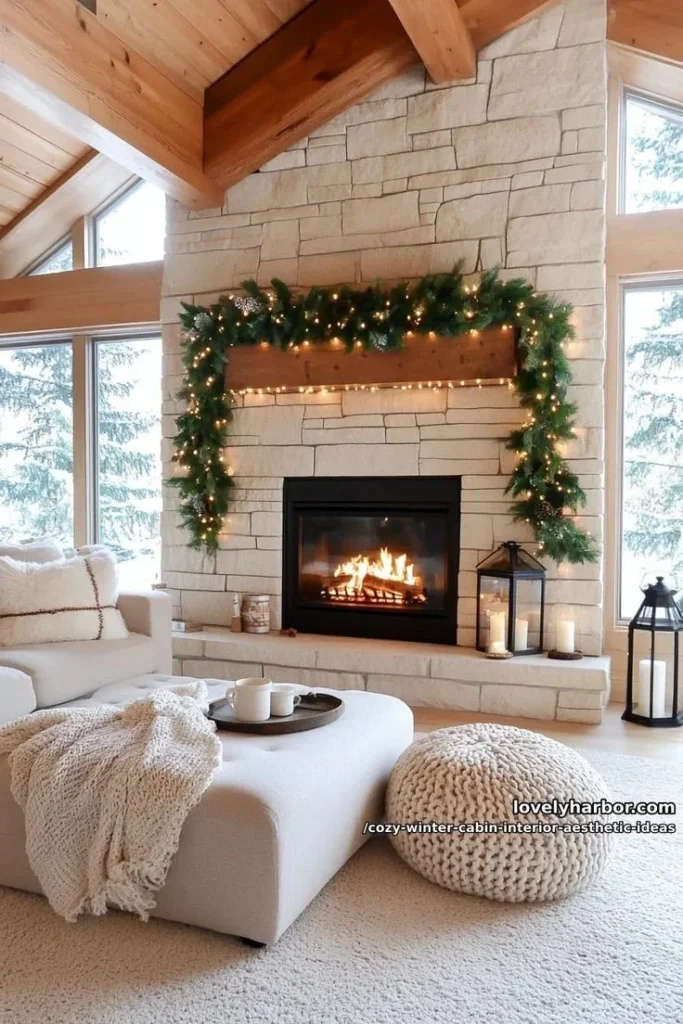
Living room: pair a leather sofa with a chunky knit throw, a low wood coffee table, and ceramic side lamps. Group candles of different heights on a tray and place a tall potted spruce beside the fireplace.
Bedroom: use layered plaids, a wool throw at the foot of the bed, bedside sconces, and a natural-fiber rug for warmth underfoot. Add a small reading nook with a slipper chair and a floor lamp.
Dining room: a long farmhouse table, mix-and-match wood chairs, and pendant lighting create a communal feel. Finish with linen napkins and a simple evergreen centerpiece.
Office: bench seating with a fur cushion, an industrial desk lamp, and wall-mounted shelves keep the space functional yet cozy.
Pairings with other decor:
- Plants: potted evergreens or eucalyptus for fragrance and color.
- Candles: clusters on trays to add glow and texture.
- Mirrors: reflect light and make compact cabins feel larger.
- Throws & cushions: mix sizes and textures for depth.
- Trays & baskets: corral clutter while adding natural texture.
Small space idea: use floating shelves and a faux fur stool as a compact reading corner. Large open-plan idea: define zones with rugs and low shelving so the cabin vibe reads consistent without overstuffing.
For ideas that remix these pairings into a youthful, aesthetic palette, consider how cottage neutrals meet youthful accents in modern décor guides like this dorm-room inspiration.
Care Instructions
Wood: Dust wooden surfaces weekly with a microfiber cloth. For sealed finishes, use a mild wood cleaner or diluted vinegar solution; avoid soaking. For raw or reclaimed wood, a light coat of beeswax or oil once a season preserves finish.
Textiles: Wash cushion covers and throws per label — wool and specialty fibers usually require gentle wash or professional cleaning. For frequent-use throws, machine-washable acrylics are a practical substitute. Shake out sheepskins outdoors to remove dust and brush gently.
Metals & ceramics: Wipe brass or matte black metal with a soft cloth; avoid abrasive cleaners that strip patina. Glazed ceramics can be cleaned with warm soapy water.
Refresh rhythm: Dust weekly, deep-clean upholstery every 6–12 months, and launder cushions seasonally. Store seasonal decor in breathable bins; avoid attics with extreme temperatures. Rotate textiles and art yearly to prevent fading and keep the space feeling new.
Designer’s Advice
- Stick to a 70/30 rule: 70% neutrals for base pieces, 30% textured accents or colors.
- Layer light sources at three heights: floor, table, and ambient overhead.
- Scale matters: large furniture anchors the room; smaller pieces should complement, not compete.
- Use odd-number groupings (3 or 5) for decorative objects — it feels more natural.
- Test textiles before committing: place swatches against existing furniture at different times of day.
- Warm bulbs are non-negotiable for winter cabin mood — invest in dimmable LED bulbs.
- When mixing patterns, vary scale: one large-scale pattern, one medium, one small.
Style Twists
Minimalist Cabin: Keep lines clean with neutral upholstery, a single statement wood table, and one textured throw. Use fewer decorative objects and emphasize negative space.
Cozy Maximalist: Embrace layered rugs, patterned cushions, vintage textiles, and a gallery wall full of framed landscapes and family photos. This is perfect for collectors and families.
Budget vs. Luxury:
- Budget: refinished thrifted furniture, faux fur throws, IKEA baskets, and secondhand lamps.
- Luxury: bespoke reclaimed wood table, high-quality wool rugs, leather seating, and curated art.
Occasion variations:
- Everyday: neutral base with one color accent and durable fabrics.
- Holiday-ready: swap cushions for plaid, add evergreen wreaths, and cluster candles for instant festivity.
- Party setup: clear surfaces for serving, add extra seating with floor cushions, and string warm fairy lights.
Decor Q&A
Q: How do I match this decor with existing furniture and colors?
A: Anchor with neutrals; add one accent hue and repeat it. If your sofa is cool-toned, use warm throws to balance. Match wood tones by choosing at least two woods that read well together — one light, one dark.
Q: Is this style renter-friendly?
A: Yes. Focus on swap-friendly elements: textiles, lighting (plug-in), removable wall art, and peel-and-stick wallpaper for accent walls. Use lightweight rugs and freestanding shelves.
Q: How to adapt the look for a studio apartment?
A: Define zones with rugs and low shelving, keep visual clutter low, and use multipurpose furniture like an ottoman with storage.
Q: Where can I source quality items affordably?
A: Look to local thrift stores, flea markets, craft fairs, and local artisans. Online marketplaces for handcrafted items can offer unique finds — prioritize quality of materials.
Q: Best way to store seasonal decor so it lasts?
A: Use breathable fabric bags for textiles, acid-free paper for fragile items, and sturdy plastic bins in climate-controlled storage. Label everything and rotate items each season.
Conclusion
Ready to bring the cozy cabin aesthetic into your home this winter? Start small — a new throw, a warm lamp, or a curated vignette — and layer until the room feels like a retreat. For additional seasonal styling ideas and winter mood boards, explore this Winter decor inspiration and browse charming getaway setups like these cabins in Minnesota and Wisconsin for real-life color and layout inspiration. Share your photos, questions, or favorite thrift finds in the comments, and visit Moderndecorum.com for more ideas and community tips.