15 Green Backsplash Ideas for Modern Kitchens
Introduction
Imagine stepping into a kitchen where the backsplash is a soft, verdant statement: sunlight bounces off glossy emerald tiles, a matte sage subway creates a soothing backdrop for morning coffee, and a jewel‑toned herringbone adds a luxe pulse behind the stove. Green backsplashes can feel botanical and fresh, moody and sophisticated, or bright and playful depending on finish and tone. Textures—from glassy shimmer to hand‑glazed ceramic, from rough cement tiles to polished marble with green veins—add depth and invite touch. The overall mood ranges from tranquil and spa‑like to lively and convivial, turning an ordinary wall into a mood‑setting surface.
This decorating choice matters because the backsplash is both functional and highly visible. It protects, reflects light, and becomes a focal point during gatherings. A green backsplash can anchor the room’s personality—perfect for people who love hosting, for those seeking a calm retreat after work, or for anyone wanting to inject personality without an entire renovation. It works for seasonal refreshes too: deep hunter greens feel cozy in fall, while sea‑glass greens sparkle in summer.
Whether you’re updating for a holiday dinner, refreshing a rental-friendly kitchen, or doing a modern overhaul on a budget, green backsplashes are versatile. You can opt for peel‑and‑stick tiles for a renter‑friendly swap, paint a patterned stencil for an affordable update, or install full‑height porcelain slabs for a high‑impact modern look. For more curated inspiration on green-focused spaces, check our guide on modern kitchens and other green styling ideas here: Green Backsplash Ideas for Modern Kitchens.
At a Glance
What this is:
- A backsplash is a functional wall treatment behind counters and stoves; these ideas focus on green finishes, tiles, and treatments for modern kitchens.
Main style:
- Modern with variations that include minimalist, Scandinavian, mid‑century, and contemporary eclectic.
Typical colors, materials, and textures:
- Colors: sage, olive, emerald, teal, mint, sea‑glass.
- Materials: glazed ceramic, glass tile, porcelain slabs, marble, metal accents, and durable laminates.
- Textures: glossy, matte, rift‑cut, hand‑painted, herringbone, and textured relief tiles.
Best rooms or zones:
- Kitchen primarily (behind sinks, ranges, islands), but small panels work well in wet bars or coffee nooks.
DIY vs. store‑bought:
- Mix: peel‑and‑stick and paint stencils are easy DIY; full tile installation and stone slabs are better left to pros.
Design Impact
A green backsplash changes the visual flow of a kitchen by acting as both a backdrop and a focal point. Lighter leafy greens bounce light and open up tight galley kitchens; darker greens absorb light and create cozy, cocooned cooking zones perfect for intimate dinner parties. Patterned greens—like encaustic tiles or chevron mosaics—add rhythm and movement, leading the eye along countertops and toward key features like the stove or range hood. In open‑plan layouts a striking green backsplash can define the kitchen without building walls, visually separating cooking space from living areas.
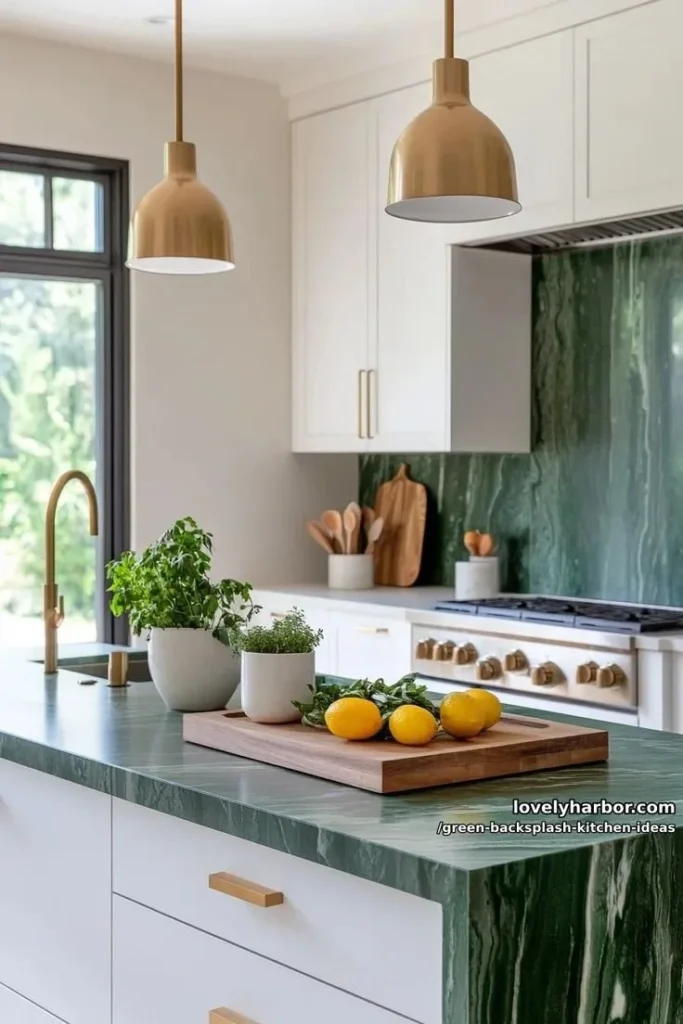
Emotionally, green connects us to nature and offers a calming influence. After a long day, a soft sage tile field can feel restorative; for mornings, a bright jade splash can energize the start to your day. Practically, green hides certain stains and lends warmth to stainless steel and wood finishes—making green backsplashes an excellent choice for busy households, frequent hosts, and families. Imagine preparing a holiday meal with guests gathered around an island framed by a deep green backdrop that complements brass hardware and wooden trays—both stylish and forgiving.
Why Choose It
Who this suits:
- Renters seeking temporary updates, homeowners wanting a bold statement, small‑space dwellers who need color with restraint, and anyone new to styling who wants big impact without replacing cabinets.
Key strengths:
- Affordable: peel‑and‑stick and paint techniques keep costs low.
- Flexible: green pairs with many metals and woods.
- Timeless: nature‑inspired hues stay relevant season to season.
- Small‑space friendly: a green backsplash can substitute for heavy cabinetry finishes and provide color without clutter.
Real‑life problem solved:
- A bland, white backsplash that shows every splatter? Installing medium‑tone green subway tiles hides wear while adding warmth. For rentals or homeowners on a short timeline, self‑adhesive mosaic sheets create a dinner‑party–ready kitchen overnight. In a dark kitchen, a glossy mint or glass tile reflects light; in a sunny, white kitchen, a deep emerald introduces dramatic contrast and anchors stainless appliances.
How to Style 15 Green Backsplash Ideas for Modern Kitchens
Ingredients
- Main items:
- Selected green tiles (subway, hex, herringbone, penny rounds, or large porcelain slabs)
- Grout (choose contrasting charcoal or matching tone for seamless look)
- Tile adhesive and grout sealer (for permanent installs)
- Peel‑and‑stick tile sheets or adhesive wallpaper (for renters)
- Tile cutter or wet saw (for custom cuts)
- Optional extras:
- Under‑cabinet LED strip lighting (warm dimmable)
- Brass or matte black trim strips
- Floating shelves in light wood or metal brackets
- Plants (pothos, herbs in terracotta pots)
- Art prints or a framed recipe board
- Budget alternatives:
- Paint with high‑gloss, washable kitchen paint + stencil
- Remnant tiles from salvage stores or thrifted ceramic
- Contact paper that mimics tile for temporary installs
Directions
- Choose the right shade: Hold sample tiles against your countertop and under the kitchen’s light at different times of day. Cool greens (teal, sea‑glass) pair well with cool marbles and stainless steel; warm olives work beautifully with warm wood tones and brass.
- Decide on finish: Glossy tiles reflect light and hide splatters, matte tiles feel modern and handcrafted. Consider how much maintenance you want—gloss shows smudges, matte hides them.
- Measure carefully: Measure length and height of the backsplash area, accounting for outlets and hood overlaps. Order 10–15% extra tile for cuts and mistakes.
- Mock up pattern: Lay tiles on the floor or create a paper template. For patterned layouts like herringbone, visualize grout line direction—this affects perceived movement.
- Prepare the wall: Clean grease, smooth imperfections, and apply primer if recommended. For peel‑and‑stick, ensure the wall is completely dry and smooth.
- Install tiles: Start from a focal point (usually over the stove or center of a sink) and work outward. Use spacers for even grout lines if installing tile.
- Grouting and sealing: Choose a grout color that either blends for a seamless field or contrasts for a graphic look. Seal porous tiles and grout to protect from stains.
- Add lighting: Install under‑cabinet LED strips to make greens pop and highlight texture at night. Warm light softens deep greens; cool light brightens minty tones.
- Accessorize: Add a shelf with small potted herbs, a rail for utensils, or a single art piece to prevent visual overcrowding.
- Common mistakes to avoid: Don’t rely on online photos—samples under your kitchen light are essential. Avoid over‑mixing metals; choose one dominant finish (brass or black) and add a small secondary accent.
Presentation Tips
A green backsplash can be showcased in many ways depending on room size and adjacent decor. In compact kitchens, limit the green to the area behind the stove and sink, pairing it with open shelving to keep sightlines airy. For open‑plan spaces, consider a full‑height green slab behind a statement range hood to anchor the kitchen within the broader living area.
Pairings:
- With plants: trailing greenery softens tile edges and echoes the backsplash color.
- With textiles: linen tea towels in neutral tones or patterned runners complement without clashing.
- With metals: brass warmers or matte black faucets create distinct looks—brass for vintage glamour, black for minimalist contrast.
- For small spaces: use lighter green tiles and reflective glass to expand visual depth.
- For larger rooms: combine two greens—darker on the main wall, lighter on a cooking nook—to create zones.
Bullet ideas:
- Entryway bar: small green tile inset behind coffee station for a cohesive flow from kitchen to entry.
- Dining area: a green backsplash visible from the table becomes conversation art—layer with warm pendant lighting.
- Office nook near the kitchen: extend a small tile splash to create a unified look across functional zones.
How to Maintain
Cleaning varies by material: glazed ceramics and glass tiles are wiped clean with mild detergent and a soft cloth; porous stone like marble needs gentle, pH‑neutral cleaners and a regular sealer to prevent staining. Avoid acidic cleaners on natural stone. For grout, use a soft brush and baking soda paste for spot cleaning; reseal grout yearly in high‑use kitchens.
Dust and wipe down tiles weekly in busy kitchens; deep clean grout and seal porous surfaces every 6–12 months. For temporary or seasonal decor accents (baskets, wood trays), store in breathable bins in a cool, dry place; avoid prolonged sunlight exposure to prevent fading. Rotate textiles and plants seasonally to keep the kitchen feeling fresh without a full overhaul.
Designer’s Advice
- Scale matters: use larger tiles in bigger kitchens and small mosaics in tight spaces to avoid busy patterns.
- Layer lighting: combine overhead, task, and accent lights to make green tiles sing at different times of day.
- Neutralize with trim: a slim stainless or brass trim strip can make a bold green tile look intentional and finished.
- Match grout to tile for a modern seamless field, or choose a dark grout for a vintage, graphic effect.
- Repeat the color: echo the backsplash shade in small accessories (mugs, cloths, vases) to make the room feel cohesive.
- Test samples in situ at different times of day to avoid regrets.
- For rentals, prioritize temporary options that protect the wall underneath.
Customization Options
Minimalist: Matte sage subway tile, thin white grout lines, matte black hardware, and a single floating oak shelf—quiet and modern.
Cozy/Traditional: Hand‑glazed emerald square tiles, warm brass fixtures, open wooden shelving with ceramic jars and potted herbs—rich and inviting.
Budget vs. Luxury:
- Luxury: full‑height porcelain slabs with marble‑veined green pattern, integrated lighting, and brass insets.
- Mid‑range: glazed ceramic herringbone with under‑cabinet LEDs and a professional grout finish.
- Budget: peel‑and‑stick mosaic sheets or painted stencil that mimic tile texture for a weekend refresh.
All Your Questions Answered
Q: How do I match a green backsplash with existing countertops?
A: Pull a sample tile next to your countertop in natural and artificial light. Choose greens with a similar temperature—cool greens with cool stone, warm olives with warm woods.
Q: Is a green backsplash renter‑friendly?
A: Yes—peel‑and‑stick tiles, adhesive panels, or painted stencils can be removed with minimal damage when done carefully.
Q: How can small apartments use a bold green without feeling closed in?
A: Use light, reflective greens and gloss finishes; limit color to a defined backsplash area rather than full walls to maintain openness.
Q: Where should I source quality tiles without breaking the bank?
A: Look at local tile showrooms, salvage stores, and national retailers that have affordable ceramic lines. Many places offer discounted remnant slabs perfect for accent sections.
Q: What’s the best way to store seasonal decor items?
A: Use labeled, breathable storage boxes; wrap ceramics in acid‑free tissue, and keep textiles in a cool, dark place to prevent fading and mildew.
Conclusion
Ready to make your kitchen sing with green? Whether you want peel‑and‑stick ease or luxury porcelain, there are options to fit every schedule and budget—start with a few samples and visualize the tile under your kitchen light. Share your before‑and‑after photos or questions in the comments and explore more kitchen inspiration on Moderndecorum.com and our community resources; for tile shopping inspiration check these curated ideas for tiles and modern backsplash designs: Backsplash Tiles for Kitchen | Glass & More | The Tile Shop and Kitchen Backsplash Ideas: 15 Modern Designs for Your 2025 Remodel.
Also explore another take on green interiors for bedroom inspiration here: moody green bedroom inspo and revisit our main green backsplash gallery for more photos and product links: green backsplash ideas for modern kitchens. Join the conversation—your kitchen is waiting for its green moment.