23 Small Dark Bathroom Ideas That Prove Black Is Beautiful
There’s something irresistibly cinematic about a small bathroom dressed in deep, velvety blacks — the way a matte tile absorbs light, how warm brass glints against an inky wall, or how a black-framed mirror brings calm geometry to a tight corner. Imagine stepping into a compact powder room where every surface whispers sophistication: textured matte paint that feels soft under fingertips, a plush dark bath mat that muffles footsteps, and the faint green scent of eucalyptus hanging above the tub. In a world of pale bathrooms, a dark design can feel like a hidden speakeasy — intimate, stylish, and purposefully curated.
Why should you consider a dark palette for a small room? Because darkness isn’t the same as making a space feel tiny — when balanced, it creates depth. Blacks and charcoals act like a velvet backdrop that lets metallics, plants, and warm woods take center stage. Whether you crave a moody weekend soak or a guest-ready powder room that makes a statement, these 23 ideas prove that black is not just bold — it’s brilliantly practical and deeply cozy. If you’re looking for inspiration or want a quick gallery to flip through, take a look at our compact collection of creative transformations in our small dark bathroom ideas gallery.
This style works for seasonal refreshes (think rich winter textures), renter-friendly tweaks (peel-and-stick tiles, dark textiles), and modern updates (swap a vanity or change lighting). It’s a mood-boosting approach for anyone who hosts dinner parties and wants to impress with every corner, or for those who simply want a peaceful, cocoon-like bathroom to recharge. Read on for practical tips, step-by-step styling, and pro tricks to make black not just beautiful, but endlessly livable.
At a Glance
Small dark bathrooms are a curated approach to compact spaces that use black and deep tones as primary elements to create drama and depth. This concept is a blend of decor, finishes, lighting, and textiles designed to transform powder rooms, ensuite bathrooms, and small washrooms into intimate design statements.
Typical styles range from modern-minimalist and moody-glam to Scandinavian with dark accents. Common materials and textures include matte black tiles, porcelain, lacquered cabinetry, aged brass fixtures, dark-stained wood, matte paint, and soft textiles in charcoal or deep green. Best zones for this approach are powder rooms, guest bathrooms, small ensuites, and compact ensuite showers. The mix of DIY vs. store-bought is flexible: some elements (paint, textiles) are easy DIY, while faucets, tiles, and vanity work are often store-bought or professionally installed.
- Item type: finishes, fixtures, wall treatments, lighting, textiles, and accessories
- Main style: modern, moody, minimalist, and glam options
- Colors/textures: black, charcoal, warm metallics, deep woods, matte and glossy contrasts
- Best rooms: powder room, guest bath, small ensuite, under-stair washroom
- DIY level: mix — easy DIY for paint and decor, store-bought or pro for plumbing and tile
Why It Works
When done thoughtfully, a dark bathroom changes the perception of size by creating visual depth rather than crowding a room. Black pulls the eye inward, especially when coupled with reflective surfaces like a mirror or a high-gloss tile back-splash; the result is a layered room that feels both intimate and expansive. Strategically placed lighting — a warm pendant, LED mirror, or sconce — reads beautifully against dark surfaces, turning shadows into design features instead of problems.
Emotionally, dark bathrooms offer a cocooning effect. After a long day, stepping into a low-lit, black-accented bathroom can feel like sinking into a silk robe. It signals luxury and calm, ideal for evening baths, relaxed grooming, or making a strong impression when guests visit. Practically, darker finishes can be more forgiving than white in small spaces where splashes, stains, or scuffs occur. For example, a charcoal vanity top hides water spots better than pristine white, while a dark towel rail makes brass hooks pop and organizes the visual field.
For families or apartment dwellers, the combination of moody paint, smart storage, and durable fixtures translates to a bathroom that’s both stylish and functional. Imagine a compact guest bath with a matte black tile floor, a slim black vanity with hidden storage, and woven baskets to tuck away extra towels — simple routines become elevated experiences.
Perfect For…
Dark bathroom styling is a smart choice for renters (with removable options), small-apartment owners, couples who entertain, and anyone who loves a bold design statement. It’s especially good for people who prefer low-maintenance finishes and want a space that reads curated without requiring constant upkeep.
Key strengths include affordability (paint and accessories can transform a space), flexibility (mix and match metals and textures), and timelessness (black is a classic base that adapts with new accents). Small-space friendly details — vertical storage, narrow vanities, and wall-mounted fixtures — make dark bathrooms both stylish and highly usable.
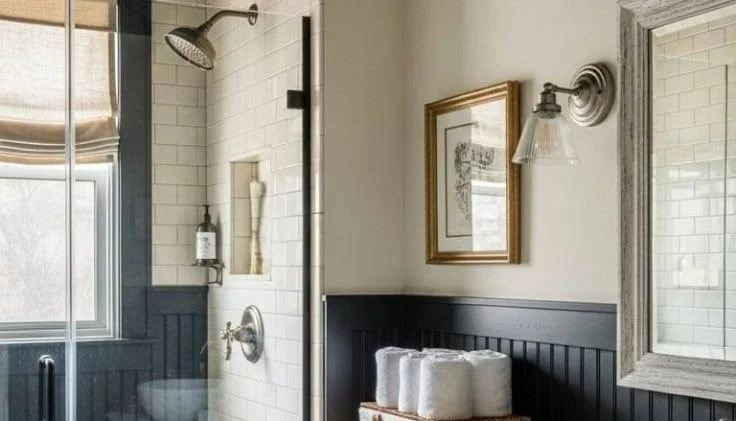
A real-life solution: a narrow, bland powder room with scuffed white walls can be transformed by painting the walls charcoal, adding a black-framed mirror, swapping a tired light for a warm sconce, and installing a slim shelf for toiletries. The result: clutter concealed, focal point created, and a formerly forgettable room turned into a guest-worthy nook.
How to Style 23 Small Dark Bathroom Ideas That Prove Black Is Beautiful
{ingredients}
- Matte black or charcoal paint (sample pots for testing)
- Black or dark-toned tiles (floor or accent wall, peel-and-stick tile options for renters)
- Black vanity or painted vanity cabinet
- Mirror with black frame or backlit LED mirror
- Warm metallic fixtures (brass, brushed gold, or copper)
- Wall-mounted sconce or pendant lighting with warm bulbs
- Textiles: dark towels, bath mat, or shower curtain
- Woven baskets or slim shelving for storage
- Protective finishes (semi-gloss trim or washable paint for high-moisture areas)
- Optional: plants (pothos, fern), eucalyptus, scented candle, small art prints
- Tools: paint rollers, painter’s tape, level, drill (for fixtures), tile cutter (if installing tiles)
Alternatives and budget substitutions:
- Peel-and-stick tiles instead of ceramic tile
- Spray-paint or refinish an existing vanity rather than replacing
- Thrifted mirrors reworked with black paint
- IKEA-style storage solutions or floating shelves
{directions}
- Start with a plan: measure your bathroom, sketch walls, and pick a primary dark tone. Tip: test paint swatches in the darkest and brightest parts of the room to see how light changes the color.
- Address moisture-prone areas: choose paint labeled for bathrooms or use a semi-gloss for trim. Mistakes to avoid: using flat paint on trim that will get wet — it’s harder to clean.
- Paint larger surfaces first: ceiling (optional), walls, then trim. Use painter’s tape to protect fixtures and tiles. Practical tip: a deep charcoal on all walls makes the room read larger when combined with consistent trim color.
- Add a focal point: install a black-framed mirror or a tile accent wall behind the vanity. Placement tip: hang the mirror so the center is roughly 60–66 inches from the floor for average heights.
- Swap fixtures: replace faucet and hardware with warm metallics to create contrast. If replacing plumbing isn’t possible, consider spray-finish options for faucets or simply switch towel bars and hooks.
- Layer lighting: add a sconce on either side of the mirror or a pendant overhead plus under-cabinet LED strips. Lighting trick: use warm 2700–3000K bulbs for a cozy glow against dark surfaces.
- Organize storage visually: use matching baskets or slim floating shelves to keep counters clear. Tip: maintain a consistent material (like woven rattan) for a calm look.
- Soften with textiles: bring in dark plush towels and a textured mat. Mistake to avoid: too many patterns — keep textiles tonal with one accent color.
- Add natural accents: a small plant or eucalyptus sprig softens the drama and brings life into a dark palette. Choose low-light tolerant plants for windowless bathrooms.
- Final edits: remove anything that competes visually; edit down toiletries to match a curated mood. Step back and test different towel arrangements or art placements until the balance feels intentional.
Showcasing Ideas
Dark bathrooms don’t live in isolation — they pair beautifully with other spaces. In an entryway or living room adjacent to a dark bathroom, echo black accents (like a black-framed mirror or a slim console) to create a cohesive flow. In a bedroom ensuite, use matching dark textiles or a wooden stool to bridge both rooms. For dining and entertaining, a moody powder room offers guests a memorable transition from bright public spaces to intimate, private design.
Pairings to try:
- Plants: soft green foliage contrasts with black and keeps air feeling fresh.
- Mirrors and metallics: brass sconces, gold towel rings, and black-framed mirrors create layered reflections.
- Textiles: charcoal towels, a patterned runner outside the bathroom, or a leather stool complement the look.
- Shelving & storage: floating black shelves with woven baskets keep the room tidy and stylish.
For small spaces, use vertical storage and a single dark accent wall to avoid overpowering the room. In larger, open-plan homes, let the bathroom be a jewel box — richly dark and contrasted with lighter adjacent rooms so it reads as intentional sanctuary rather than a design afterthought.
You can explore more detailed transformations and inspiration in our full set of ideas in another post that walks through each of the 23 looks in depth and shows before-and-after photos for reference: see the complete 23 ideas breakdown.
How to Maintain
Dark surfaces look luxurious but need simple upkeep to stay that way. Wiping down matte tiles and painted walls with a soft, damp cloth prevents soap scum build-up; for stubborn marks, a mild, non-abrasive cleaner works best. Metals like brass and copper develop a patina — treat them with a gentle polish if you want to keep the original shine, or leave them to age for a lived-in look.
Dust dark shelves and accessories weekly; wash textiles (towels, mats) every one to two weeks depending on use. Store seasonal decor in breathable bins in a clean, dry spot; avoid exposing dark-painted surfaces to prolonged direct sunlight to prevent fading. Periodically rotate small decor pieces (candles, art) so the room feels refreshed without full redesigns.
Designer’s Advice
- Embrace contrast: pair matte black with one warm metal and one natural material to avoid monotony.
- Layer light: mix overhead, task, and accent lighting to make dark tones readable any time of day.
- Scale matters: choose a mirror and vanity proportionate to the room — small mirrors can disappear on dark walls.
- Keep it simple: fewer decorative objects make each piece feel intentional.
- Texture is your friend: tactile tiles, woven baskets, and plush textiles prevent a flat look.
- Test before large changes: paint a board or sample tile and live with it for a week to see how it reads.
- Use reflection strategically: a well-placed mirror increases the sense of space without adding clutter.
Creative Variations
- Minimalist twist: all-matte black walls with a slim black vanity and a single round LED mirror. Keep hardware minimal and opt for a monochrome towel palette.
- Cozy, layered version: add warm wood accents (like a teak stool), textured dark wallpaper, and soft candlelight for a hygge-inspired bath nook.
- Budget-friendly approach: repaint the vanity and frame an over-the-sink mirror in black, add peel-and-stick tile behind the sink, and swap only the towel bars for warm metallics.
For budgets: luxury versions can include stone countertops, designer sconces, and custom cabinetry; mid-range swaps focus on quality paint, a new mirror, and good lighting; thrifted options rely on refinishing existing fixtures and hunting for vintage brass accents.
Frequently Asked Questions
Q: Will a dark bathroom make my small room feel smaller?
A: Not necessarily. When balanced with reflective surfaces, strategic lighting, and thoughtful contrast, dark tones can add depth and intimacy without shrinking the space.
Q: Is this renter-friendly?
A: Yes — focus on removable changes like peel-and-stick tiles, painted accessories, replaceable mirrors, and textiles. Avoid permanent tile or plumbing changes unless approved.
Q: How do I match a dark bathroom with light-colored furniture in my home?
A: Carry a small element of black (a framed photo, a dark towel, or a mirror) into adjacent rooms to create visual continuity without overwhelming lighter décor.
Q: Where can I source quality pieces affordably?
A: Look for local home stores, non-brand online retailers, secondhand shops for mirrors and brass accents, and budget-friendly big-box retailers for basics like towels and storage.
Q: How should I clean dark finishes?
A: Use soft cloths and mild cleaners; avoid abrasive pads that can dull matte surfaces. For metal hardware, a soft polish will restore shine when needed.
Conclusion
Black is more than a color choice — it’s a design strategy that turns small bathrooms into intimate, memorable spaces. Whether you opt for a fully moody makeover or small, renter-friendly tweaks, these 23 ideas show that black can be beautiful, practical, and endlessly stylish. Try one idea this season, share your progress and photos with our community, and explore more transformations on Moderndecorum.com.
For additional moody inspiration, check out this curated collection of dark and dramatic baths for visual ideas: dark & moody bathroom inspiration. If you’re considering paint choices before you begin, this resource on top bathroom paint colors will help you select the perfect shade: best bathroom paint colors.
We’d love to see what you create — leave a comment, share photos, or ask a question to join the conversation.