Apartment Renovation Ideas 2026: Soft Geometry In Modern Apartment Bedrooms
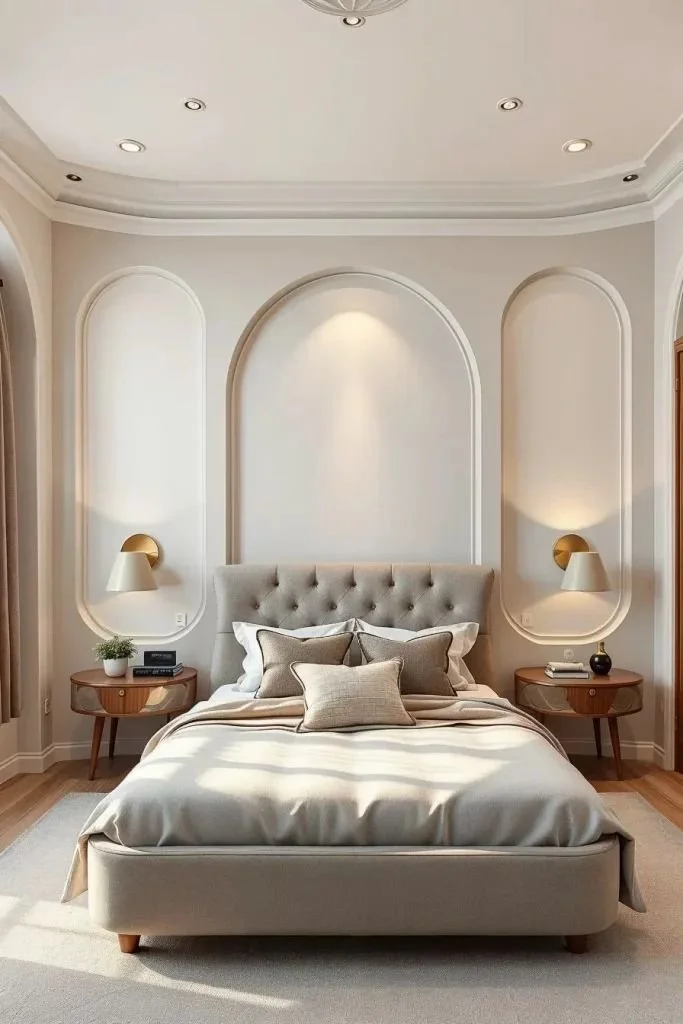
Imagine stepping into your bedroom and feeling an instant, gentle hush. The lines are rounded rather than rigid; furnishings have soft arcs that invite touch. A low, curved headboard in boucle, the matte sweep of a crescent-shaped nightstand, and an abstract wall mural of overlapping ovals in muted clay, dusty teal, and warm grey. Light spills from a globe lamp with a frosted glass shade, casting pools of warm amber across a plush rug whose geometric pattern looks hand-drawn rather than precise. The room feels modern but approachable — balanced, calming, and quietly joyful.
Soft geometry is a 2026 refresh that trades stark angles for sculptural curves and softened shapes. It’s about translating the crisp language of modern design into something cozier and more tactile: rounded corners, organic arcs, and geometric motifs with softened edges. Textures are key — bouclé, washed linen, matte ceramics, and brushed metals play together with color palettes that nudge toward warmth: terracotta, blush, sage, and smoky blue, all grounded with warm neutrals. The overall mood is intimate yet curated, the kind of space that reads as carefully considered without feeling fussy.
Why does this matter for real apartments? Because soft geometry gives people permission to live beautifully and comfortably at once. It suits a renter who wants an immediate style update without structural changes, a couple preparing their home for holiday guests, or someone working from home who craves a bedroom that doubles as a serene workspace. This approach also works wonderfully as a seasonal refresh: swap pillows, repaint a single accent wall, or add a sculptural lamp and the room feels new. If you’re thinking about cohesive updates across rooms — from the bedroom to the dining area — try combining soft shapes with complementary materials for a seamless flow. For more room-to-room inspiration, you might also explore our ideas on dining room renovation ideas.
SECTION 1
Style Snapshot
Soft Geometry in modern apartment bedrooms is a decor approach — a combination of furniture choices, textiles, wall treatments, and lighting that emphasizes gentle curves and rounded geometric motifs. It sits comfortably in the modern and Scandinavian families, with nods to minimalism and a touch of warm boho through texture.
Typical colors include warm neutrals (greige, warm white), muted pastels (dusty rose, sage), and earthy hues (terracotta, clay, smoked teal). Materials and textures favor bouclé, washed linen, velvet, matte ceramics, soft oak or walnut with rounded edges, brushed brass or blackened steel for accents, and low-pile rugs with hand-drawn geometric patterns. Best rooms: bedrooms, but elements translate well to living rooms, entryways, and home offices. Level of DIY vs. buying: a mix — many elements are easy to buy ready-made, while accent walls, headboards, and shelving can be straightforward DIY projects.
SECTION 2
Why It Works
Soft geometry changes how a bedroom feels by balancing visual focus with tactile warmth. Curved shapes break up the linear lines of radiators, windows, and built-ins, making a compact room appear more layered and intentional. Rounded furniture and oval motifs guide the eye gently across the space, creating a relaxed flow rather than the abrupt stops caused by harsh angles. In practical terms, curved furniture often feels less imposing in small rooms; a crescent bench or rounded nightstand can save walkway space while still offering surface area.
Emotionally, this style invites calm and comfort. The human eye responds positively to rounded forms — they read as safe and friendly. Picture easing into an upholstered headboard that hugs the shoulders, or tracing the soft arc of a nightstand as you reach for a bedside book. For daily life, the design supports different scenarios: peaceful mornings, cozy reading nooks lit by a globe lamp, or an overnight guest who appreciates a room that looks polished and lived-in. For those working part-time at their bedside table, soft geometry helps create a pleasant backdrop that reduces visual clutter and stress.
SECTION 3
Perfect For…
This approach is ideal for renters, young professionals, small households, and anyone who loves a contemporary look with a softer edge. Beginners will find it approachable: you don’t need to overhaul the room — layering textiles, swapping hardware, and adding a statement lamp do a lot of the heavy lifting. Families in small apartments can benefit because the scale and rounded profiles are child-friendly; fewer sharp corners are safer and the textures withstand everyday use.
One everyday problem it solves is the “empty wall” behind a bed. Instead of hanging a large, precise grid of frames, consider a multi-panel soft-edge mural or a trio of rounded shelves. These solutions add dimension and storage while avoiding the coldness of a huge, flat artwork. Another common issue is cramped corners: replace a bulky square nightstand with a rounded table or floating shelf to open circulation and make the room feel airier.
SECTION 4
How to Style Apartment Renovation Ideas 2026: Soft Geometry In Modern Apartment Bedrooms
{ingredients}
- Rounded or curved headboard (bouclé, upholstered, or removable freestanding)
- Soft-edge nightstands or floating shelves
- Low-pile geometric rug (oval or abstract shapes)
- Textiles: linen duvet, velvet or boucle throw pillows, knitted throw
- Lighting: globe pendant, frosted glass bedside lamp, LED strip (warm)
- Wall treatment: peel-and-stick mural, paint in layered, curved shapes, or layered fabric panels
- Accent decor: matte ceramic vases, small sculptural trays, brass or blackened hardware
- Tools (for DIY): staple gun, foam, plywood, spray adhesive, painter’s tape, sanding block
- Optional extras: indoor plants (potted fern or olive), woven baskets, mirrored tray, floor cushion
Alternatives & budget-friendly substitutions:
- IKEA-style rounded headboard hacks (use plywood + foam + fabric)
- Thrifted chairs reupholstered in boucle or velvet
- Peel-and-stick wallpaper instead of custom painted murals
- Secondhand lamps with new shades for instant updates
{directions}
- Start with color and mood: choose a warm-neutral base (soft greige or warm white). Add a single accent color (clay, dusty teal, or blush) for accessories and one larger element like a rug or headboard. Tip: pick the hue that complements existing furniture undertones (cool wood pairs with smoky blue; warm wood pairs with terra or blush).
- Anchor the layout with a rounded headboard or low-profile bed. If you rent, use a freestanding upholstered headboard or a tension-mounted canopy frame to avoid drilling.
- Choose a rug that extends at least 18 inches beyond the sides of the bed; if the room is narrow, use a runner layered under the lower two-thirds of the bed. Low-pile options read cleaner and are easier to maintain.
- Add lighting layers: a warm globe pendant overhead (2700–3000K), a frosted bedside lamp for reading, and an LED strip behind the headboard for ambiance. Position the pendant slightly off-center over a bench or seating nook to create an intentionally modern asymmetry.
- Build an accent wall using soft, overlapping shapes. For DIY, use painter’s tape to block rounded shapes, paint in two or three muted colors, then sand edges lightly for a hand-painted look. Or apply peel-and-stick fabric panels for texture without permanence.
- Balance furniture scale: keep bulkier storage opposite the bed and prefer lower-profile dressers to maintain sightlines. Use rounded shelves to display small plants and ceramics; stagger heights for visual interest.
- Layer textiles for comfort — linen sheets for breathability, a velvet lumbar pillow for contrast, and a knit throw for tactile warmth. Vary scale and texture but keep patterns minimal: one geometric print, one small-scale pattern, and one solid textured piece.
- Add functional accents: a sculptural tray for jewelry, a sleek basket for extra blankets, and a bedside dish for phone and keys. Keep surfaces decluttered—soft geometry reads best when shapes are allowed to show.
- Final styling: step back and edit. Remove or relocate any object that competes with your main curved elements. Aim for three visual focal points: the headboard, the rug, and a statement light or plant.
- If coordinating with other rooms, echo the same accent color or a repeated curve motif in the hallway or living area. For kitchen coordination ideas, you can review our kitchen renovation ideas.
SECTION 5
Room Setting Inspiration
Soft geometry feels natural across apartment zones. In the bedroom, use a rounded headboard, curved nightstands, and a sculptural lamp to create an intimate sanctuary. In the entryway, try a half-moon console table with a matching rounded mirror to make a warm, welcoming first impression. In living areas, a crescent sofa paired with a low, oval coffee table makes socializing effortless.
Pairings that work well:
- Plants: potted fiddle-leaf or snake plant for vertical contrast.
- Candles & ceramics: matte vases and sculptural candleholders to complement curves.
- Rugs & throws: neutral base rug with an abstract geometric pattern; layered throws for texture.
- Mirrors & art: round or softly edged mirrors to echo the theme; abstract prints with hand-drawn shapes.
Small-space idea: pick one accent wall and a compact rounded bedside table, plus a single statement lamp — you get the look without crowding. Large open-plan rooms: create zones using a large oval rug under the bed area and a semi-circular screen or shelving unit to demarcate a small seating nook.
SECTION 6
How to Maintain
Caring for soft-geometry materials is straightforward. Vacuum low-pile rugs weekly and spot-clean with a mild detergent for stains; test an inconspicuous area first. Bouclé and velvet upholstery should be gently brushed and spot-treated with fabric cleaner; steam cleaning once a year keeps fibers fresh. Dust matte ceramics and wood surfaces with a microfiber cloth; avoid abrasive cleaners that strip finishes.
Wash linen bedding according to labels (usually cool machine wash, tumble low) and rotate pillows and throws seasonally to prevent wear patterns. Keep textiles out of direct sunlight to avoid fading, and store seasonal cushions in breathable bags in a dry closet. For metal accents, a soft polish or damp cloth restores luster; for brass, a gentle brass cleaner will revive patina without damaging surrounding materials.
SECTION 7
Designer’s Advice
- Scale matters: choose furniture that leaves 24–30 inches of circulation space around the bed where possible.
- Rule of threes: group decor in odd numbers (three vases, three frames) for a natural composition.
- Layer light sources: ambient, task, and accent lighting create depth — use dimmers where you can.
- Mix textures not patterns: balance a geometric print with solid textures (bouclé, linen, wood).
- Warm bulbs (2700–3000K) make a bedroom feel cozy; cool bulbs are better for task areas only.
- Let negative space breathe around statement curves; clutter dilutes the sculptural effect.
- Edit surfaces weekly — clear nightstands and trays keep the look intentional.
SECTION 8
Style Twists
Minimalist: Keep the palette monochrome (warm white and greige), use one curved element (headboard or lamp), and limit accessories to two or three sculptural pieces.
Cozy & Colorful: Layer jewel-toned velvet pillows (teal, rust) on a neutral bed, add a hand-drawn geometric rug, and use warm brass accents for a richer, layered feel.
Budget/Thrifted Version: Reupholster a thrifted headboard with a soft fabric, use peel-and-stick geometric wallpaper for an accent, and hunt for secondhand globe lamps to replicate designer looks affordably.
SECTION 9
Frequently Asked Questions
Q: Can soft geometry work with my existing mid-century furniture?
A: Yes — mid-century pieces often have gentle angles that pair well. Introduce a few rounded textiles or a curved lamp to bridge styles.
Q: Is this renter-friendly?
A: Absolutely. Use freestanding headboards, peel-and-stick wallpapers, removable hooks, and floor lamps to avoid permanent changes.
Q: How do I adapt the idea for a tiny bedroom?
A: Focus on one or two curves (headboard and a rounded shelf), light colors to open the room, and multi-use furniture like an ottoman with storage.
Q: Where can I find quality items on a budget?
A: Look for local markets, online marketplaces, and secondhand stores for unique pieces. Simple DIY upholstery and peel-and-stick solutions make high-look results affordable.
Q: What’s the best way to store seasonal textiles?
A: Clean them first, then store in breathable cotton bags in a cool, dry place. Avoid plastic bags which trap moisture.
Conclusion
Soft Geometry in modern apartment bedrooms is a gentle yet transformative trend for 2026 — one that makes contemporary design feel more livable and personal. Try a single curved headboard or a hand-painted soft-edge mural to start, and build from there. If you want a broader read on how rounded, comfortable forms are shaping interiors, check out Living Room Trends 2026: The Future of Comfort and Style. And if you’re considering a fresh rug to ground your new bedroom layout, consider options like the EWEDUD Modern Minimalist Design Graffiti Area Rug for a soft, modern geometric anchor.
Ready to try soft geometry at home? Share photos, questions, or your own tips in the comments — we love seeing how readers personalize these trends. For more room ideas and step-by-step projects, explore Moderndecorum.com and join our newsletter and community for regular inspiration.