Backyard Fence Landscaping Ideas 2026: Artistic Fence Panels For Unique Backyard Landscaping
Imagine stepping into your backyard and being greeted by a wall that feels less like a barrier and more like a gallery. Warm sunlight filters through laser-cut metal silhouettes, casting lace-like shadows on a bed of low-growing succulents. Weathered wood panels, hand-painted with soft ombré blues and greens, create a coastal breeze even on still summer days. A vertical arrangement of planter boxes breaks up the fence with living color—small herbs releasing minty, citrusy scents as you brush past. The textures mix: cool metal, rough cedar, soft moss, and glossy leaves. The mood is intentional, cozy, and quietly sophisticated—your outdoor room, curated.
Artistic fence panels are the difference between a generic property edge and an immersive outdoor experience. They change how you use the space: the fence becomes a backdrop for dinners under string lights, a stage for kids’ chalk drawings, or a focal point for a peaceful morning coffee. These panels can be subtle and refined or bold and sculptural, tuned to your personality and how you live outdoors.
This idea matters because fences are everywhere—but rarely embraced as design opportunities. Artistic panels let homeowners express style, improve privacy, and create pockets of comfort without a full renovation. They’re perfect for a seasonal refresh, for defining cozy corners, for modern updates that elevate curb appeal, and for renters who want temporary transformations. Whether you’re decorating on a budget, prepping for a summer gathering, or dreaming up holiday displays, creative fence panels deliver high visual return for relatively little effort.
For more inspiration on transforming fence surfaces into privacy-enhancing design features, see 21 unique ways to decorate a backyard privacy fence.
At a Glance
Artistic fence panels are a decor piece that turns ordinary fence sections into wall art and living installations. They function as wall art, privacy screens, and structural planters—blurring the line between landscaping and decor.
- Main style: Modern-boho with options across minimalist, rustic, coastal, and industrial interpretations.
- Typical colors/materials/textures: Powder-coated metal (black, rust, white), stained or painted cedar, composite slats, reclaimed wood, woven reeds, living plant panels (moss, succulents). Textures range from perforated metal to rough-sawn timber and soft, living greenery.
- Best zones: Backyard perimeter, patio backdrop, balcony fence, poolside screens, and patio dividers.
- DIY vs. ready-made: Mix — many homeowners combine store-bought powder-coated panels or laser-cut designs with DIY frames, planter boxes, or paint treatments.
Why It Works
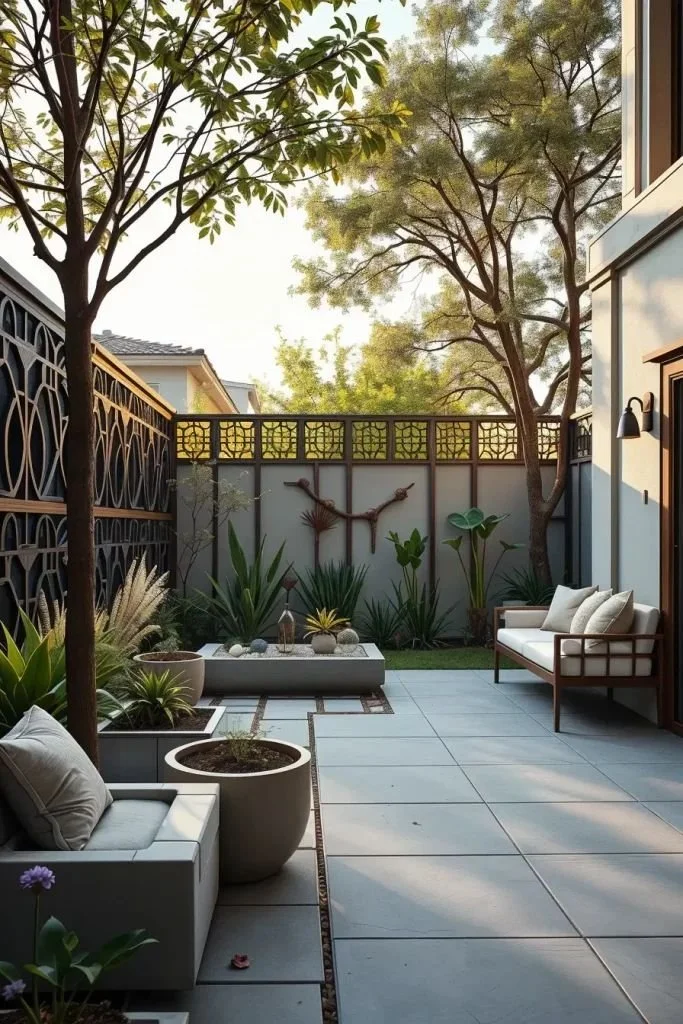
Replacing a plain fence with artistic panels transforms the visual flow of your backyard. Instead of an imposing, flat boundary, the fence becomes a layered, changeable surface that plays with light and shadow. Perforated metal and cutouts throw intricate shadows across pavers and cushions, making afternoons feel longer and more textured. Vertical planters add depth and break the monotony of tall planes, visually widening narrow yards and creating pockets of shade and privacy.
Emotionally, a thoughtfully styled fence fosters comfort and personality. It can feel like a private room—cozy for intimate dinners, playful for family barbecues, and calming for solo reading sessions. Practical benefits are tangible: panels can add windbreaks, increase privacy in urban plots, provide trellis support for vines, and create mounting surfaces for lighting or storage hooks. Picture a work-from-home afternoon where your laptop sits beside a planter-filled fence that muffles street noise and offers green views—simple changes like this improve daily wellbeing and the way you experience your outdoor home.
Perfect For…
Artistic fence panels are a smart pick for a wide range of homeowners. Renters can use freestanding panel systems or hang lightweight slats to personalize without permanent changes. Families benefit from durable materials and the ability to install storage hooks, play-friendly chalkboard sections, or climbing frames. Small-lot homeowners can visually expand tight yards with vertical gardens and reflective metallic panels that bounce light. Design lovers will appreciate the opportunity to create a cohesive exterior style that mirrors the interior.
Key strengths include affordability (compared to landscaping rebuilds), flexibility (mix and match panels and planters), and timelessness when you stick to natural materials and classic palettes. One real-life example: a narrow townhouse backyard felt like a corridor until homeowners installed staggered wooden panels with integrated planters and a strip of warm LED lights. The space now reads as a cozy outdoor room perfect for evening gatherings and gives a clear dining zone—solving the problem of a long, unused strip of lawn.
How to Style Backyard Fence Landscaping Ideas 2026: Artistic Fence Panels For Unique Backyard Landscaping
Ingredients
- Main items:
- Powder-coated metal panels or laser-cut garden panels (various sizes)
- Cedar or composite fence slats or frames
- Mounting hardware: brackets, screws, rustproof anchors
- Vertical planter boxes (wood, metal, or felt pockets)
- Outdoor-grade paint or stain and primer
- Optional extras:
- Weatherproof LED string lights or strip lighting
- Climbing plant starter kits (clematis, jasmine, climbing roses)
- Low-voltage spotlighting for evening drama
- Hammock hooks or hanging chair mounts
- Outdoor textiles: cushions, rugs, poufs
- Budget-friendly alternatives:
- Reclaimed pallet wood sanded and sealed instead of new cedar
- Thrifted metal screens or decorative room dividers painted and sealed
- DIY stencil cut plywood panels sealed with exterior paint instead of laser-cut metal
Directions
- Plan your layout: Measure the fence length and identify focal points—seating areas, BBQ, or entry path. Decide whether panels will cover the entire fence or act as punctuation pieces. Tip: odd-numbered groupings (3 or 5 panels) read as intentional.
- Choose materials to match climate: Use cedar or composite in wet climates; powder-coated metal or stainless fasteners if you live near the coast. Mistake to avoid: using untreated wood outdoors—seal every surface to prevent rot.
- Test finishes with samples: Paint or stain swatches applied to small sections show how color changes in morning vs. evening light. For bold looks, pair a dark metal panel with a warm wood frame to soften the contrast.
- Mounting basics: Use spaced brackets attached to posts or rails rather than screwing directly into slats—this allows airflow and reduces warping. For renters, use freestanding frames or tension-mounted panels that don’t penetrate structure.
- Integrate Greenery: Plant a mix of trailing and upright species in planter boxes to create layered texture. Use lightweight soil mixes for hanging planters and secure drainage holes to avoid rot on wooden panels.
- Lighting and accents: Add low-voltage uplights for metal panels to emphasize cutouts at night. String lights strung horizontally soften tall panels and create a cozy ceiling effect for evening gatherings.
- Create symmetry with furniture: Align a bench or outdoor sofa with the center panel to create a focal zone. Tip: leave 18–24 inches clearance between seating and planter walls for circulation.
- Seasonal swaps: Mount removable hooks or rails for holiday decor or seasonal baskets—this keeps the core panels fresh without permanent changes.
- Mistakes to avoid: Don’t overcrowd panels with too many planters—let negative space highlight artful panels. If paint chips, sand and recoat whole sections to avoid patchiness.
- Finalize with textiles: Use cushions and rugs that echo the fence palette—warm terracotta with rusted metal, or cool indigo with bleached wood—to make the outdoor room feel cohesive.
Ways to Display
Artistic panels can be styled to suit many backyards and moods. In a small urban patio, hang a single metal panel above a narrow bench and place a slim planter below—this creates a visual anchor without taking floor space. In larger backyards, consider alternating tall slatted panels with living walls to create rhythm and depth across long fences. A corner cluster of panels with a hanging chair and a string of warm lights makes a sculptural reading nook.
Pairings elevate the effect:
- Plants: vertical herb gardens, trailing ivy, or ornamental grasses soften metal and wood.
- Lighting: uplights on cutout panels, Edison string lights, and lanterns for layered warmth.
- Textiles: outdoor rugs and cushions that echo panel tones to tie the whole patio together.
- Accessories: metal baskets, mounted shelves, and artful hooks create function and interest.
For small spaces: use one dramatic panel as a backdrop to a bistro table; add a slim planter and mirror to double the perceived depth. For open-plan yards: run a sequence of panels to create “rooms”—dining, lounging, play—each with a slightly different panel style so the eye flows through the landscape. For more ideas that pair fences and outdoor focal points, browse these rustic fire pit ideas for your backyard to see how panels complement gathering spaces.
Keeping It Fresh
Maintenance varies by material. For wood panels, inspect and reseal annually with exterior-grade stain or oil. Metal panels should be checked for surface rust and wiped with mild soapy water; spot-treat any rust with a rust converter and repaint if necessary. Living panels require regular watering regimes—consider a simple drip irrigation line behind planters to keep plants vibrant without constant tending.
Dust and pollen can settle on cutout panels; a seasonal rinse with a hose and soft brush is often enough. For textiles and cushions near the fence, rotate and store them during heavy rain or winter months to prevent mold and fading. If you use string lights, check connections and bulbs in spring to ensure safe, uninterrupted ambiance as warmer months return.
For seasonal storage, dismount fragile or painted pieces and store them in a dry shed or garage. Preserve living wall plant types by moving frost-sensitive species inside or replacing them with hardier varieties for winter interest. Regularly refresh pots with new soil and deadhead spent blooms to keep the fence display feeling intentional year-round.
Styling Success
- Use odd numbers of panels to create balanced groupings that feel natural.
- Layer lighting: combine ambient string lights with spotlighting to highlight texture and create depth at night.
- Match scale: taller panels need grounding—use a long planter or bench at the base to avoid a top-heavy look.
- Mix materials: pair metal cutouts with warm wood to soften industrial edges.
- Keep a restraint palette: limit to two primary colors and one accent to avoid visual clutter.
- Use modular mounts: choose systems that let you swap panels seasonally without heavy tools.
- Consider sightlines from inside your home when placing focal panels—your fence art should be visible and welcome from living spaces.
Creative Variations
- Minimalist Coastal: Bleached cedar slats with simple, horizontal metal insets echoing ocean tones. Use low, breezy grasses and blue textiles for a serene vibe.
- Cozy Rustic: Reclaimed wood panels with carved details, paired with warm string lights and copper planters. Mid-range budget: hand-weathered stain and thrifted lanterns give a luxe feel for less.
- Bold Sculptural: Laser-cut powder-coated panels with geometric motifs, backed by colored backboards for contrast. Luxury twist: integrated backlighting to highlight patterns at night.
- Seasonal Party Setup: Swap in bright, festive panels and floral planters for summer entertaining; change to evergreen swags and warm lights for holiday gatherings.
Frequently Asked Questions
Q: Can I use artistic panels on an existing fence?
A: Yes—panels can be mounted onto existing posts or rails using brackets. For renters, consider freestanding frames or tension-mounted systems to avoid permanent changes.
Q: How do I match panel color to my house?
A: Pick one dominant color from your home’s exterior (roof, trim, or door) and use it as an accent on the panels. Neutral wood tones and black metal pair well with most palettes.
Q: Are living wall panels high maintenance?
A: They require more regular care—watering, fertilizing, and seasonal plant swaps—but drip irrigation and hardy plant choices (sedums, succulents) can reduce upkeep.
Q: Will artistic panels withstand harsh weather?
A: Choose materials rated for your climate—stainless or powder-coated metal and treated cedar are reliable. Secure mounting and proper sealing extend longevity.
Q: Where can I find quality panels affordably?
A: Look for local metal fabricators, garden center specials, or upcycle reclaimed materials for budget-friendly and unique options.
Conclusion
Ready to transform your outdoor boundary into a stylish, functional backdrop? Artistic fence panels offer a high-impact way to express personality, increase privacy, and create outdoor rooms that invite relaxation and entertaining. If you’re considering metal panels, check options like the rustproof metal garden fence panels for durable, decorative solutions. For a nature-forward idea that works beautifully in winter landscapes, consider building a living structure—learn how in this dead hedge building guide.
We’d love to see your projects—share photos, questions, and tips in the comments, and explore more backyard inspiration at Moderndecorum.com. Join our community newsletter for seasonal ideas, how‑tos, and curated shopping lists to bring your outdoor spaces to life.