Backyard Fence Landscaping Ideas 2026: Privacy-Focused Backyard Fence Landscaping Ideas
Introduction
Imagine stepping into your backyard and feeling instantly sheltered from the bustle of the neighborhood — a private, verdant room that smells faintly of eucalyptus and cut grass, where dappled light filters through layered plantings and textured fencing. The right privacy-focused fence landscaping transforms a simple boundary into a tactile backdrop: warm cedar grain, cool black metal posts, the soft rustle of pampas and bamboo. In 2026, the focus is smart, sensory design that gives homeowners a sanctuary to lounge, host, or garden without sacrificing style.
Privacy-focused backyard fence landscaping matters because it answers more than one need. It provides comfort — a place to sip coffee in the morning or read at dusk — while expressing personality through color, texture, and curated plantings. It also supports lifestyle goals: thoughtful screening creates intimate dining nooks for dinner parties, quiet corners for meditation, and protected play areas for kids and pets. Whether you crave a minimalist, modern edge or a lush, boho retreat, a privacy-conscious design defines the backyard’s mood and function.
This idea is perfect for seasonal refreshes, cozy autumn corners, modern property updates, or renters wanting renter‑friendly screening solutions. It’s also ideal for decorating on a budget — think layered plantings, trellises with climbing vines, and DIY slatted panels — as well as for hosting summer gatherings where guests feel wrapped in a private oasis. For more creative fence ideas and ways to make your boundary sing, explore this practical guide to backyard privacy treatments on our site: 21 unique ways to decorate backyard privacy fence.
Style Snapshot
What privacy-focused fence landscaping is: a mix of decor and functional landscape solutions — fencing, trellises, living green screens, and decorative panels — designed primarily to block sight lines and noise while beautifying the perimeter.
Main style: adaptable — most often modern-rustic, contemporary, or natural/bohemian depending on materials and plants used.
Typical colors, materials, and textures:
- Natural warm woods (cedar, redwood), charcoal-stained boards, black metal posts
- Living textures: dense evergreens, flowering vines, bamboo, ornamental grasses
- Accents: woven screens, reclaimed wood panels, textured ceramic planters
Best zones: patios, dining terraces, poolside areas, play yards, vegetable garden borders.
DIY vs. store-bought: mix — many elements are easy DIY (slatted screens, planter boxes), while higher-end panels, pergolas, or professional plantings may be store-bought or installed by pros.
Design Impact
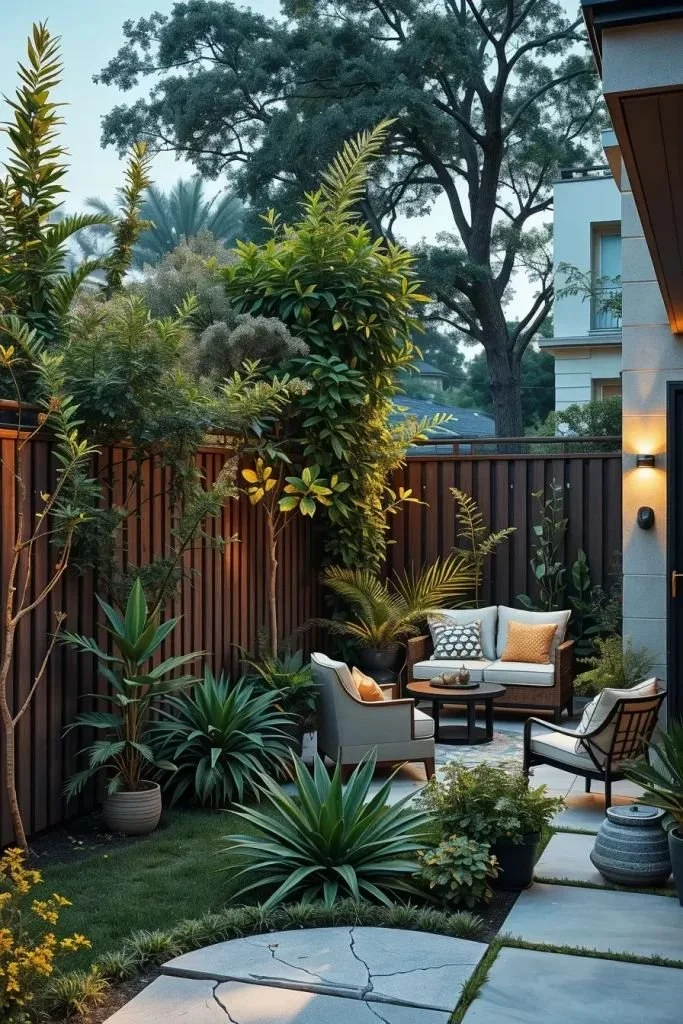
A well-designed privacy fence is as much about how it shapes light and flow as it is about blocking views. Visually, layered height — tall shrubs behind low planter boxes, a wooden slat fence with staggered vine pockets — creates depth, softening what would otherwise be an abrupt boundary. Dark-stained fences recede and make plant colors pop; lighter wood and pale paints brighten shady yards. Thoughtful landscaping around fences can funnel sightlines to focal points like a fire pit, hammock, or sculptural planter, improving spatial balance and creating natural “rooms” outside.
Emotionally, privacy landscaping lends calm, a cocooning warmth that encourages relaxation and social connection. You might picture warm string lights under a trellis, the scent of night-blooming jasmine as guests arrive, or a quiet morning with filtered sun on a woven chair. Practically, this approach offers sound buffering (with dense plantings), wind protection, and screening of unsightly views. Consider a family with noisy street-facing windows: a layered hedge with sound-dampening bamboo and a staggered wood fence can cut traffic noise and create a safer play area. Or think of a renter who wants privacy without permanent alterations — freestanding trellises with climbing vines deliver instant seclusion and can be removed later.
Why Choose It
Privacy-focused fence landscaping is smart for a wide range of homeowners. Renters who need temporary screening can use planters, lattice panels, and tall grasses to create privacy without permanent fences. Families appreciate the safety and seclusion — fenced play zones and screened patios keep children and pets secure. Design lovers who want a high-impact perimeter will enjoy mixing materials and layers for a custom look without redoing the entire yard.
Key strengths: affordable when DIYed with reclaimed wood and box planters, flexible — easy to update seasonally, and timeless when using natural materials like cedar and evergreen plantings. It’s also small-space friendly: vertical plantings and narrow planter walls maximize privacy without consuming lawn. A common problem this solves is the “boring blank fence”: a plain board fence becomes a living, textured wall with hanging planters, staggered shelves, and vertical gardens, immediately transforming a neglected boundary into a feature.
How to Style Backyard Fence Landscaping Ideas 2026: Privacy-Focused Backyard Fence Landscaping Ideas
Ingredients (materials, tools, products)
- Main items:
- Fence panels (cedar slats, metal screens, or existing wood fence)
- Trellises or lattice panels (freestanding or attached)
- Planter boxes (wood or composite), large pots
- Climbing plants (clematis, jasmine, climbing roses, honeysuckle)
- Screening shrubs / trees (bamboo in contained root barriers, arborvitae, photinia)
- Soil, compost, and slow-release fertilizer
- Landscape fabric and mulch
- Optional extras for upgrading the look:
- String lights or low-voltage LED strips
- Wall-mounted lanterns or sconces
- Decorative metal panels or laser-cut screens
- Outdoor fabric cushions, poufs, rugs
- Trellis-mounted window boxes and herb planters
- Alternatives and budget substitutions:
- Thrifted wooden doors or shutters for reclaimed panels
- Bamboo reed rolls for temporary screening
- Pallet wood for DIY slat panels
- Fast-growing annual vines (morning glory, sweet potato vine) for quick coverage
Directions (step-by-step)
- Assess sightlines and needs. Walk the yard at different times of day and note where privacy is needed most — next to seating areas, near a pool, or by windows. Measure heights required (typically 6–8 feet for effective screening).
- Choose a design language. Decide on modern (horizontal black-stained slats), natural (raw cedar and evergreen plantings), or boho (mixed textures, hanging planters). Stick to 2–3 materials to avoid a cluttered look.
- Build or update the fence base. Repair or replace rotten boards, sand rough edges, and apply stain or paint if changing the color. For a modern look, paint or stain boards a deep charcoal or natural oil.
- Install structural supports. Add trellises or freestanding lattice where vines will grow. Ensure posts are anchored and spaced to support plant weight and potential wind loads.
- Plant in layers. Put taller evergreen backlines (arborvitae, bamboo in containers) behind medium shrubs and shorter accent plants in front. Use staggered heights every few feet for depth.
- Add climbers and vertical planting. Train vines onto trellises or wires with soft ties; start small and encourage coverage over 1–2 seasons. Use seasonal annuals in window boxes for instant color.
- Integrate lighting and decor. Weave warm string lights along the top edge, add wall sconces at seating zones, and hang metal art or mirrors sparingly to reflect light.
- Anchor with hardscape. Place a bench, gravel path, or low retaining wall in front of the fence to create a transitional zone and prevent soil from burying wooden posts.
- Maintain sightlines to focal points. Keep one or two sight corridors that lead the eye to a patio, fire pit, or water feature to avoid creating an impenetrable wall.
- Seasonal refresh and layering. Replace annuals seasonally, prune for shape in spring, and add winter-interest plants (evergreen sprays, structural grasses) to keep the fence lively year-round.
Best Pairings
Pair privacy fencing with textural plants and cozy outdoor furnishings to amplify the mood. In a formal patio, combine charcoal-stained slats with symmetrical boxwood hedges, potted citrus in glazed containers, and a modern fire bowl. For a boho lounge, use woven reed screens, trailing bougainvillea, pampas grass, rattan sofas with plush cushions, and toss rugs to create a warm, layered scene.
In the entryway or gate area, flank a narrow path with tall planters filled with aromatic herbs for a fragrant arrival. In a home office that backs onto a fence, install a green wall outside the window to soften the view and reduce glare. For dining terraces, string overhead café lights attached to fence posts and plant fragrant climbers like star jasmine to scent evening meals. For more inspiration on pairing outdoor gathering zones with boundary designs — especially if you’re dreaming of a fire feature by your new fence — check out creative options in our roundup of outdoor fire setups: 25 rustic fire pit ideas for your backyard.
Small-space idea: use slim, tall planter boxes with columnar evergreens and a narrow slatted screen to create privacy without losing floor area. Large open-plan yards: combine staggered living screens, pergolas, and sculptural panels to break up space into distinct zones — dining, lounging, and play — while maintaining a cohesive palette.
How to Maintain
Different materials require different care. For wood fences and planters, clean surfaces with a gentle soap solution each spring, check for rot around post bases, and reapply stain or seal every 2–4 years depending on sun exposure. Metal panels and screens benefit from occasional rinsing and a rust-inhibitor touch-up; for powder-coated finishes, avoid abrasive cleaners.
Plant maintenance: prune hedges and climbing plants in early spring to control size and encourage flowering. Bamboo in containers should be thinned and root-pruned annually to prevent overcrowding. Refresh soil in planters each season by adding compost and replacing 20–30% of potting mix to replenish nutrients.
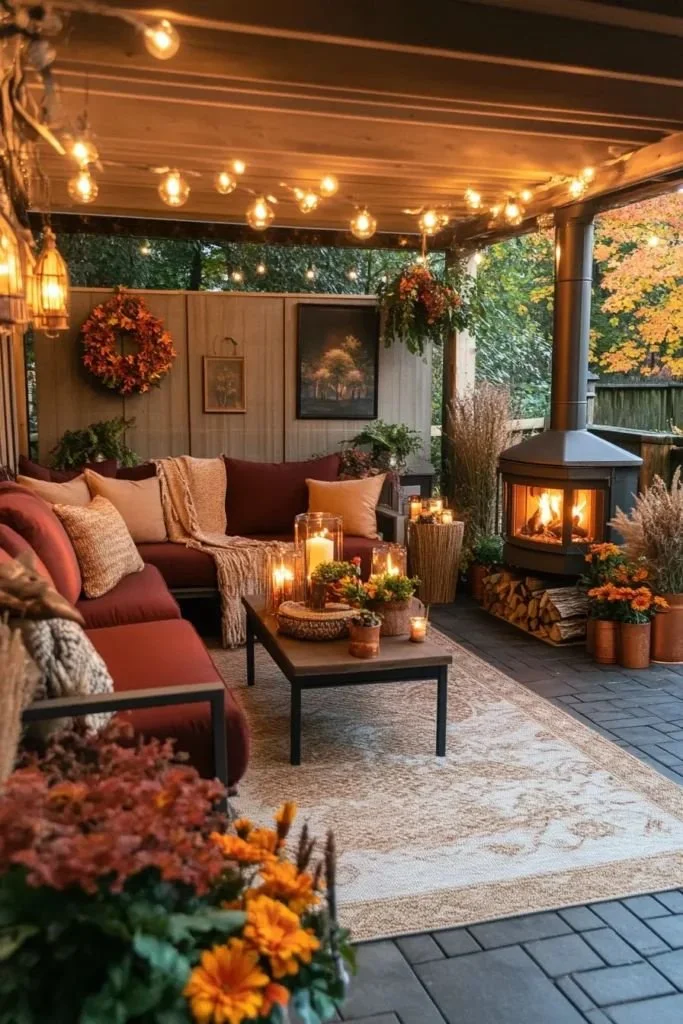
Seasonal storage: move delicate pots and textiles indoors before hard freezes; cover wall-mounted lanterns and string lights to protect from moisture. Rotate annuals and swap color palettes for seasonal interest — e.g., warm-hued mums and ornamental grasses in fall, bright petunias and sweet peas in summer.
Designer’s Advice
- Balance scale: match fence height and planting masses to the size of the yard — heavy, tall features in tiny yards feel overpowering.
- Layer textures: mix broad-leaf evergreens, fine-textured grasses, and climbing vines for a lush, three-dimensional wall.
- Use warm lighting: choose warm (2700–3000K) LEDs to make evenings feel intimate and inviting.
- Repeat materials: echo wood or metal accents from the house in fence details for cohesion.
- Leave breathing space: keep 6–12 inches between planter backs and fence surfaces for airflow to prevent moisture damage.
- Think maintenance-first: plant low-maintenance species if you travel often or want a hands-off yard.
- Test before committing: try fast-growing annual climbers in temporary trellises to preview a look before investing in permanent structures.
Creative Variations
Minimalist urban: black metal slats with alternating vertical living pockets of succulents and sedums. Budget version: painted pallet slats with fast-growing morning glories in recycled planters. Luxury resort: tall cedar paneling, layered evergreen hedges, uplighting, and a built-in bench with plush outdoor cushions.
Coastal twist: pale-washed wood, beach grasses, and rope accents for a breezy, salt-ready border. Holiday party setup: add removable fabric panels with fairy lights for a festive backdrop that’s easy to hang and store.
Frequently Asked Questions
Q: Can I create effective privacy if I rent?
A: Yes — use freestanding planters, trellises, bamboo reed rolls, and tall potted plants that don’t require permanent attachments. These solutions provide strong visual screening and can move with you.
Q: How quickly will plants provide privacy?
A: Fast-growing annual vines and some bamboo varieties can give coverage in one season, while denser evergreen hedges may take 2–4 years to fully mature. Combine quick fillers with slower, long-term plants for immediate results.
Q: Will adding plants near a wood fence cause rot?
A: Plants touching wood can increase moisture exposure. Keep at least a 6-inch gap between soil and fence boards, paint or seal the fence, and ensure proper drainage to reduce rot risk.
Q: How do I match my fence landscaping with my existing furniture and colors?
A: Pick a palette of 2–3 neutrals and 1–2 accent colors. Echo furniture materials (metal, rattan, wood tones) in fence details and planter finishes for continuity.
Q: Where can I source good quality screening plants and panels?
A: Look locally for nursery stock suited to your climate and check garden centers for pre-grown hedging. For panels, local builders, home centers, and salvage yards offer a range of options; thrift stores and reclamation yards are great for unique, budget-friendly finds.
Conclusion
Ready to make your backyard a private, beautiful extension of your home? Try layering wood, living screens, and thoughtful lighting to create a 2026-forward backyard that feels both intimate and stylish. Share your results, photos, or questions in the comments — we love seeing how readers bring these ideas to life. For deeper reading on deer-resistant, fence-free planting options that complement privacy strategies, explore this helpful resource on deer-resistant fence-free garden solutions, and for a designer’s take on how to build privacy using landscaping techniques, see this guide to landscaping ideas for privacy. Join our community at Moderndecorum.com for more backyard inspiration and seasonal styling tips.