Behr Muted Sage N350-5: A Soothing, Stylish Palette for Real Homes
Imagine the hush of a late afternoon when sunlight filters through linen curtains, casting a warm, dappled glow across a room. The walls feel like a soft exhale — a serene, muted green with a whisper of gray that calms the eye and the mind. That’s the effect of Behr Muted Sage N350-5: a color that reads as gentle moss and weathered eucalyptus, neither too bright nor too flat. It’s tactile in perception — think crushed velvet sofas, matte ceramics, woven jute rugs — and invites you to linger.
Muted Sage doesn’t shout; it suggests. It pairs the freshness of nature with the subdued poise of a well-worn heirloom, creating spaces that feel lived-in and curated. A painted wall in this hue can make a sunlit corner feel contemplative, while soft textiles in the same tone will ground an open-plan living room. The color’s gray undertones ensure it plays nicely with both warm brass accents and cool chrome finishes, making it flexible for a wide range of styles.
Why does this matter for real homes? Because decorating isn’t just about looks; it’s about how a space supports daily life. Behr Muted Sage is a palette for comfort — ideal for evenings spent reading, hosting relaxed dinners, or creating a focused home office. It’s a smart choice for seasonal refreshes, renter-friendly updates, or anyone decorating on a budget who still wants a high-impact result. If you’re refreshing a cozy corner for holiday guests, updating a modern flat, or seeking a calming bedroom sanctuary, this color does the heavy lifting without demanding a complete overhaul.
If you’re looking for ideas and pairings that work in bedrooms specifically, check out this roundup of sage green bedroom ideas to help you visualize how Muted Sage can transform a sleeping space.
At a Glance
Behr Muted Sage N350-5 is a paint color — versatile for walls, trim, cabinetry, and even accent furniture when used in appropriate finishes (eggshell for walls, satin or semi-gloss for trim and cabinets).
This look leans toward modern farmhouse, Scandinavian, and relaxed contemporary styles, but it can be adapted to boho and coastal schemes as well. Typical materials and textures paired with this color include linen and cotton fabrics, matte ceramics, distressed wood, woven seagrass, and brushed metals.
Best rooms and zones:
- Living rooms and dens for calm, layered color.
- Bedrooms and nurseries for soothing atmospheres.
- Entryways and mudrooms as welcoming first impressions.
- Kitchen cabinetry or island for a subtle statement.
- Home offices to support focus and low visual stress.
Level of DIY vs. buying ready-made: Mix — easy paint updates for walls or furniture make this renter-friendly, while textiles and décor accents are typically store-bought or simple DIY (stenciling, pillow covers, painted frames).
- Item type: Paint color (walls, cabinetry, accents)
- Main style: Modern farmhouse / Scandinavian / Contemporary
- Typical colors paired: soft whites, warm beiges, charcoal, brass
- Materials: linen, wood, ceramic, woven fibers, metal hardware
- Best rooms: living, bedroom, entryway, kitchen island
- DIY level: Easy to moderate (painting walls/cabinets; mixing textiles)
Why It Works
Muted Sage transforms a room by softening contrasts and introducing a natural anchor without dominating the palette. Visually, it reduces glare in bright spaces, helps define seating zones in open-plan layouts, and creates a flattering backdrop for both light and dark furniture. In small rooms, it reads as more expansive than deep greens because of its gray base; in large rooms, it provides enough substance to hold oversized sofas and gallery walls.
Emotionally, this color fosters calm. It references nature — leaves, lichen, soft moss — which subconsciously signals rest to the brain. That makes it ideal for winding down after work, hosting intimate dinners, or building a bedroom that encourages sleep. For parents, it’s forgiving: it hides minor scuffs better than pristine white while keeping rooms feeling bright.
Practically, Muted Sage supports multi-use living. Painted cabinets or a single accent wall can pull a room together without costly renovations. It pairs beautifully with layered storage solutions — woven baskets, open shelving, and textured trays — making clutter feel intentional rather than chaotic. Picture an evening: warm lamp light, a Muted Sage wall behind a bookcase, a tray of candles on the coffee table — the room feels curated, cozy, and welcoming.
Perfect For…
Behr Muted Sage N350-5 is perfect for:
- Renters who want a soft, sophisticated change that can be returned or muted with removable wallpaper and textiles.
- Families who need a practical backdrop that resists showing dirt and pairs well with natural materials.
- Small apartments where calm, neutral-but-colored walls make spaces feel larger.
- Design beginners who want an easy-to-pair shade that complements existing furniture.
Key strengths include affordability (paint is one of the most cost-effective room updates), timelessness (a modern but enduring hue), and flexibility (works across seasons). It solves common décor problems: an empty wall suddenly becomes cohesive with artwork and shelves painted in or contrasted with Muted Sage; a bland sofa gets life with sage throw pillows; a dark corner brightens when paired with soft white trim and layered lighting.
Real-life example: A narrow hallway in a rental felt like a tunnel. Painting one long wall in Muted Sage and adding a runner in warm neutrals immediately opened the space and created a welcoming path from entry to living room — without needing structural changes.
How to Style Behr Muted Sage N350-5
{ingredients}
- Behr Muted Sage N350-5 paint (sample for testing; 1-gallon for small rooms, more for larger spaces)
- Painter’s tape, drop cloths, rollers (medium nap), quality brush for trim
- Soft white or warm white paint for ceilings and trim
- Textiles: linen curtains, wool throw, sage or neutral cushions
- Accent pieces: brass or aged bronze hardware, woven baskets, oak or walnut furniture
- Lighting: table lamps with warm (2700K–3000K) bulbs, floor lamp for layers
- Optional extras: matte ceramics, indoor plants, rattan pendant, gallery frames
- Budget swaps: thrifted wooden frames, IKEA-style floating shelves, DIY-stenciled cushions
{directions}
- Test first: Paint a 2×2 ft sample on different walls and observe at various times of day. Tip: View against your chosen sofa and curtains before committing.
- Choose finish: Use eggshell or matte for walls to hide imperfections; satin or semi-gloss for cabinetry and trim for durability. Tip: Use satin for kitchens and bathrooms where wipeability matters.
- Plan the palette: Pair Muted Sage with warm whites, soft beiges, or charcoal accents. Tip: Add one metallic (brass or brushed gold) to bring warmth.
- Prep the surface: Clean, sand glossy spots, prime if needed. Tip: For rental walls, use a peelable primer or test whether you can match original paint for repainting later.
- Paint strategically: For an accent wall, choose the wall behind a focal point (headboard, fireplace, or media console). For cabinetry, remove doors and sand lightly before painting.
- Layer textures: Add linen curtains, woven rugs, and a mix of smooth ceramics and rough wood. Tip: Mix a plush cushion in a complementary color (muted rust or terracotta) for contrast.
- Position lighting: Use warm bulbs to emphasize the color’s cozy side; add uplighting for wall-mounted art and table lamps near seating.
- Create balance: If the room is mostly Muted Sage, introduce white or wood elements to prevent the space from feeling monochrome. Tip: A white ceiling and natural wood furniture keep the room grounded.
- Accessorize with intent: Group items in odd numbers and vary heights to create rhythm. Tip: Avoid too many cool blues nearby, which can make the green appear dull.
- Adjust seasonally: Swap in brighter throws or metallic ornaments for summer and richer textures (velvet, knit) for winter.
Common mistakes: painting a whole room without testing (fix: sample first), pairing only cool metals (fix: add warm metals or woods), using too-cool lighting (fix: warm bulbs).
Presentation Tips
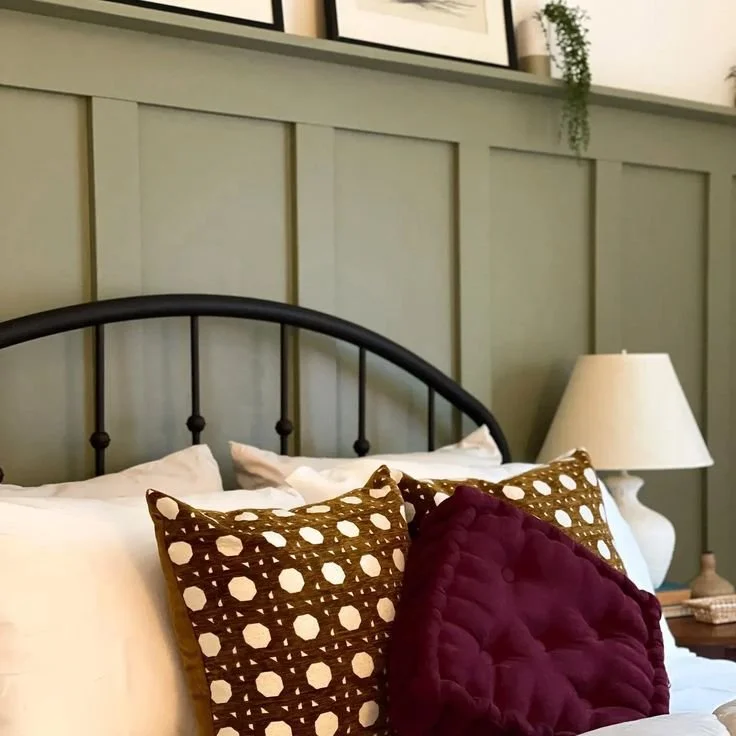
Muted Sage is a chameleon: it adapts to entryways, living rooms, bedrooms, dining rooms, and home offices with ease. In an entryway, it sets a welcoming tone — paint one wall and pair with a mirror, a slim console table, and woven baskets for shoes and umbrellas. In living rooms, use it on the wall behind shelving or as the color of a statement couch. For bedrooms, it’s ideal on the wall behind the headboard or on closet doors for a restful backdrop.
Pairings that work well:
- Plants (ferns, rubber plant) — green-on-green with depth.
- Throws and cushions in warm neutrals, burnt orange, or honey mustard.
- Rug choices: natural jute for texture or soft low-pile wool in cream for contrast.
- Mirrors framed in aged brass or dark wood to reflect light and add depth.
- Shelves styled with ceramics, books with neutral spines, and small baskets.
Small-space idea: Paint one wall or the inside of a recessed shelf in Muted Sage to create depth without overwhelming a compact room. Large open-plan rooms: use blocks of the color — an island, an accent wall, and a large rug — to define zones within the space.
For more bedroom-specific styling inspiration that complements Muted Sage, you might like these curated ideas on sage bedrooms: sage green bedroom decor.
Keeping It Fresh
Maintaining painted surfaces is straightforward. For painted walls and cabinetry, dust monthly with a soft cloth and spot-clean with a mild soap solution for fingerprints or marks. Avoid harsh chemicals that can strip a low-sheen finish. Fabric pieces like linen curtains and cushion covers should be washed or dry-cleaned according to care labels — typically every 3–6 months for high-use items.
Rotate textiles seasonally to keep the look fresh: lighter linens in spring and summer; velvet and knit throws in autumn and winter. Store seasonal items in breathable cotton bags in a dry, dark place to avoid yellowing or mildew. For wooden furniture paired with Muted Sage, use coasters and felt pads to protect finish; polish with a product suited to the wood type once or twice a year.
To keep the palette vibrant over time, consider occasional accessory swaps (new cushions, artwork) rather than repainting. A quick repaint of a high-traffic area every 3–5 years will keep walls crisp.
Designer’s Advice
- Scale matters: Pair large furniture with larger art or rugs to avoid the room feeling top-heavy.
- Layer light: Ambient + task + accent lighting makes the green sing and adds depth.
- Warm metals bring balance: Add brass or bronze to prevent the color from feeling too cool.
- Texture is everything: Mix smooth ceramics with nubby textiles and raw wood.
- Odd-number groupings: Group accessories in threes or fives for a natural look.
- Anchor with neutrals: A creamy white ceiling and natural wood tones keep Muted Sage grounded.
- Test in context: Colors shift with light; inspect samples at three times of day.
Style Twists
- Minimalist Muted Sage
- Keep lines clean, furniture sparse, and accents minimal. Muted Sage walls with white trim, a low-profile sofa in gray, and a single sculptural lamp create a calm, modern feel.
- Cozy Rustic
- Layer with warm wood, plaid or knit textiles, and aged brass. Paint an exposed beam or a pantry door in Muted Sage and accessorize with woven baskets and a chunky wool rug for hygge vibes.
- Coastal Fresh
- Pair Muted Sage with soft sand tones, driftwood textures, and sea-glass accents. Use it on bedroom walls with crisp white bedding and rattan light fixtures for a relaxed, beachy mood.
Budget approach: Paint an accent wall and update textiles from thrift finds. Luxury version: Custom-painted cabinetry, new brass fixtures, and tailored linen draperies.
Decor Q&A
Q: Will Muted Sage clash with my dark wood furniture?
A: No — its gray undertones harmonize with both dark and light woods. Add warm metals to bridge the tones.
Q: Is this color renter-friendly?
A: Yes. Use it as an accent wall or on furniture for easy reversibility; samples and peelable primers help when repainting.
Q: How do I adapt the shade for a small apartment?
A: Use it sparingly — one wall, shelving backs, or in textiles — to add depth without closing the space.
Q: Where can I find quality items to pair with this color?
A: Look for natural fabrics, matte ceramics, and vintage markets or local decor shops for unique pieces.
Q: Best cleaning method?
A: Dust weekly, spot-clean walls with a mild soap solution, and launder textiles per care labels.
Conclusion
Behr Muted Sage N350-5 is a quietly confident color that brings calm, versatility, and tactile warmth to real living spaces. Whether you’re refreshing a bedroom, updating cabinetry, or styling a cozy reading nook, Muted Sage provides a foundation that’s easy to live with and lovely to look at. For the exact paint spec and inspiration swatches, view the official color details here: MUTED SAGE N350-5 | Behr Paint Colors. If you want a small sample to test the hue at home before committing to a larger project, consider this sample product listing: BEHR PREMIUM PLUS 8 oz. #N350-5 Muted Sage Satin Enamel.
We’d love to see how you use Muted Sage in your home — share photos, questions, or tips in the comments, and explore more ideas on Moderndecorum.com. Join our community for seasonal guides, styling challenges, and exclusive tips.