Cozy Living Room Meets Open Kitchen Idea: Warmth, Flow, and Everyday Magic
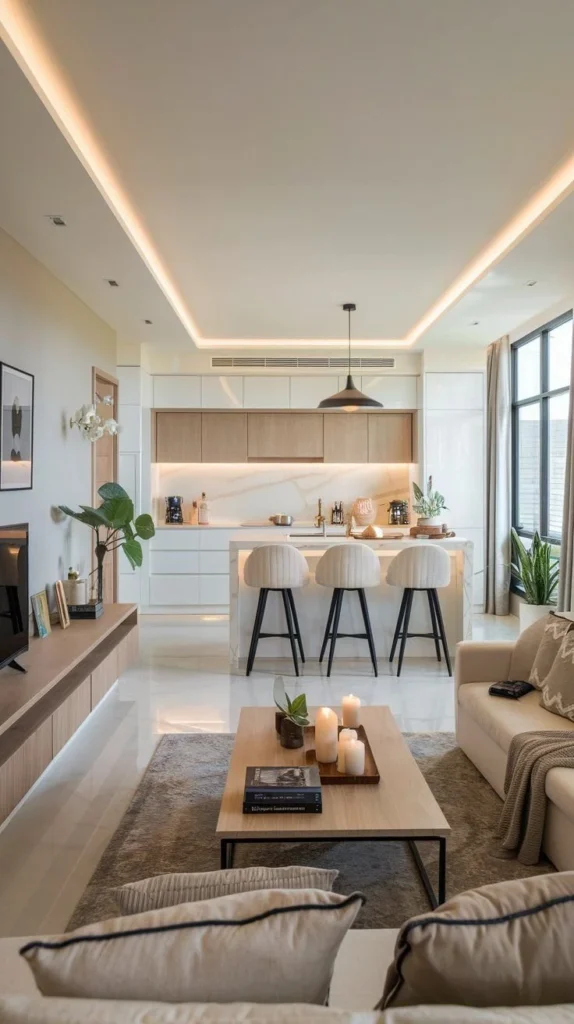
Imagine stepping into a space where the scent of freshly brewed coffee drifts from the kitchen and the soft glow of a lamp wraps the sofa in a warm embrace. The textures around you — a chunky knit throw, raw timber on the island, smooth ceramic mugs — invite you to sit, linger, and enjoy. Colors are gentle: warm neutrals anchored by deep olive or navy accents, brass hardware catching light, and layered rugs marking zones without walls. Conversation flows easily from the couch to the counter; cooking becomes part of the gathering instead of a separate task.
This is the essence of the Cozy Living Room Meets Open Kitchen idea — an intentional blend of comfort and function where the living room’s softness meets the kitchen’s practicality. It’s not about matching every piece, but about creating a mood: tactile, intimate, and lived-in. The tactile contrast of a velvet armchair beside a butcher-block counter, the visual rhythm of pendant lights aligned over the island, and the audio of a playlist that carries between spaces all compose a setting that feels both curated and effortless.
Why does this matter? Because our homes have to work harder than ever. They host dinners, school projects, late-night emails, and quiet Sundays. A cozy living room that opens into the kitchen supports life’s messy, beautiful moments — hosting friends, making homework visible (but not intrusive), or keeping an eye on the oven while watching a movie. If you’re planning a seasonal refresh, preparing for holidays, or simply craving a change that’s renter-friendly and budget-conscious, this idea delivers comfort and personality without costly remodels.
If you need inspiration for small touches that warm a shared space, see our roundup of ideas at 10 Cozy Living Room Ideas to Warm Your Heart. That article pairs nicely with tips here as you imagine a home that feels open, intimate, and ready for life.
At a Glance
What this idea is
- A lifestyle-oriented decorating approach that unifies a cozy living room and an open kitchen using textiles, lighting, furniture placement, and layered accessories. It’s a mix of decor pieces (rugs, pillows, lighting), furniture (sofas, low-profile coffee tables, bar stools), wall art, and practical kitchen textiles.
Main style
- Warm modern with influences from Scandinavian and rustic styles: clean lines softened by organic materials and textured fabrics.
Typical colors, materials, and textures
- Colors: warm whites, soft beiges, muted greens or navy accents, and warm metallics.
- Materials: wood (reclaimed or light oak), matte metals (black or brass), linen, boucle, ceramic, and wool.
- Textures: chunky knits, woven baskets, ribbed pottery, and natural fiber rugs.
Best rooms or zones
- Open-plan living/dining/kitchen spaces, studio apartments, and family rooms that flow into kitchens or breakfast nooks.
DIY vs. store-bought
- Mostly a mix: many elements are ready-made (sofa, lighting, stools), while smaller touches are easy DIY (floating shelves, art frames, textile dyeing).
Why It Works
This interior approach changes both the look and the feel of your home. Visually, it creates continuous sightlines that make small spaces feel larger and more cohesive. Layered lighting — pendants over the island, a floor lamp by the sofa, under-cabinet kitchen lights — sculpts the space so activities have their own light quality while still feeling connected. A well-placed rug anchors the living area, while matched or complementary cabinet hardware and metal finishes create a subtle through-line that ties kitchen and living together without being matchy.
Emotionally, the combination cultivates ease. When your kitchen life and living room life are part of the same scene, meal prep feels social rather than isolating; evenings feel more relaxed because there’s no rush to "finish up" in one room. Practical benefits are plentiful: the counter becomes a homework station or buffet; open shelving stores ceramics and cookbooks beautifully; a storage bench doubles as extra seating. Picture arriving home after work, dropping keys in a woven tray on the console, sliding onto a plush sofa with a mug still warm from the stove — this layout encourages slow, everyday rituals.
Perfect For…
Families, renters, and anyone who values sociable, flexible spaces will find this idea especially smart. It’s ideal for small families who need multifunctional areas, couples who love to host, and apartment dwellers who want a high-impact style without structural changes. Beginners will appreciate that styling is forgiving: layered items and lived-in textures hide imperfections and evolve over time.
Key strengths include affordability (swap pillows and rugs seasonally), adaptability (swap colors to refresh the vibe), and longevity — warm neutrals and natural textures rarely feel dated. A common real-life problem this solves is clumsy traffic flow: a narrow walkway between a sofa and island can be awkward. Introducing a low-profile sofa, installing slim bar stools, and defining the seating area with a rug instantly clarifies paths and makes movement intuitive. Another frequent issue is visual clutter; replace mismatched accessories with curated groups on trays and baskets to create calm.
How to Style Cozy Living Room Meets Open Kitchen Idea
Ingredients
- Main items:
- Low-back sofa or compact sectional
- Natural fiber area rug (jute or wool blend)
- Kitchen island or slim counter stools
- Pendant lighting over the island
- Floor lamp and one table lamp for the living area
- Coffee table (round or oval to soften flow)
- Open shelving or a narrow console
- Optional extras:
- Throw pillows in mixed textures (linen, boucle, velvet)
- Chunky knit throw and lightweight cotton throws
- Woven baskets for storage
- Tray for the coffee table and entry console
- Plants (potted and hanging)
- Ceramic vases and wooden cutting boards as styling props
- Budget-friendly substitutions:
- Thrifted side tables or painted furniture for a refreshed look
- DIY pendant shades (repurposed baskets or drum shades)
- IKEA-style shelving for open storage and display
Directions
- Measure and plan the layout before buying anything. Ensure at least 30–36 inches of clear walkway between sofa and island for comfortable traffic flow.
- Anchor the living area with a rug sized to include front sofa legs (or at least the front two legs) to visually separate it from the kitchen without walls.
- Choose a low-profile sofa to maintain sightlines; higher backs can cut the space into awkward halves. If you need more privacy, use an open shelving unit as a divider to keep light flowing.
- Layer lighting: install pendants centered above the island, add a warm-toned floor lamp near the sofa for reading, and use under-cabinet lights for kitchen tasks. Always choose bulbs with a warm color temperature (2700–3000K) to keep the mood cozy.
- Create a material story: pick 2–3 main materials (wood, brass, natural fiber) and repeat them in both zones for cohesion — a wooden coffee table, wooden cutting boards, and wooden stool seats link areas visually.
- Edit surfaces to prevent clutter: keep daily items in baskets or a tray on the island; reserve open shelving for curated groups — a stack of books, a plant, and two ceramics per shelf.
- Use textiles to soften the kitchen edge — a runner by the sink, a chair pad on a stool, and soft cushions on nearby seating. Choose patterns sparingly: one patterned pillow balanced with solid textures.
- Include at least one living-room-friendly kitchen accessory (a pretty teapot, a bowl of citrus fruit, a wooden mortar) so the kitchen reads as lived-in and part of the decor.
- Consider acoustic comfort: add heavier curtains, a rug with good underlay, and soft furnishings to reduce kitchen clatter echoing into the living space.
- Update seasonally with small swaps: switch pillows, change a rug, or bring in seasonal greens to refresh the mood without repainting.
Room Setting Inspiration
This concept translates well across settings. In a compact apartment, place a narrow console behind the sofa to define zones and offer stash space for keys and mail. Use slim counter stools that tuck in fully to keep sightlines open. For a larger, open-plan room, create distinct zones using a pair of armchairs facing the sofa to form a conversation area, and place pendant lights at varying heights for visual interest.
Pairings make the style sing:
- Plants: a tall fiddle-leaf by a window and trailing pothos on open shelving.
- Candles: cluster a few on a tray on the island for intimate glow during dinners.
- Rugs: choose natural fibers for texture; layer a softer wool rug over a jute base in high-traffic zones.
- Mirrors: hang a round mirror in the dining nook to bounce light and add depth.
For lighting inspiration and more cozy lighting ideas that complement this setup, check our guide on 29 Chic Cozy Living Room Lighting Ideas.
How to Maintain
Different materials need tailored care. Vacuum rugs weekly and spot-clean spills promptly using a gentle detergent; for wool, use a cleaner labeled safe for wool. Wipe wood surfaces weekly with a damp cloth and dry immediately; use a beeswax or oil treatment every 6–12 months for unfinished wood. Metal finishes like brass or matte black can be maintained with a soft cloth and mild soap; avoid abrasive cleaners.
Refresh textiles seasonally: wash removable cushion covers every 1–3 months depending on use, launder throws, and rotate pillows to distribute wear. Store seasonal decor (holiday cushions, extra throws) in breathable bins in a cool, dark place to prevent fading and moisture damage. To keep your space feeling new, rotate one or two pieces each season — swap a pillow, a small art piece, or the arrangement on a shelf.
Designer’s Advice
- Stick to a 3:2:1 color rule — three neutrals, two mid-tones, one accent — for harmony.
- Warm lighting is non-negotiable; layer ambient, task, and accent light for a lived-in feel.
- Scale matters: choose a coffee table that’s one-third the length of your sofa for balance.
- Mix textures, not patterns: combine boucle, linen, and wood before introducing multiple prints.
- Use trays to corral small items and make cleanup effortless.
- If in doubt, remove one item — editing gives the room breathing space.
- Test stool heights by sitting before buying to ensure comfort and proportion.
Style Twists
Minimalist cozy: Keep palettes monochrome, streamline furniture with clean lines, and invest in a single high-quality sofa. This variation emphasizes function and calm, with subtle textures like a ribbed cushion or a single wool throw.
Coastal-inspired cozy: Bring in light blues, driftwood finishes, and woven seagrass baskets. Use linen curtains and white ceramics to evoke breezy, relaxed living that still feels intimate.
Budget-friendly version: Thrift rug layers, refinish an old coffee table, and make inexpensive pendant shades from baskets. Focus on textiles and lighting to transform the mood without big spending.
Frequently Asked Questions
Q: How can I match this decor with my existing furniture and colors?
A: Start by identifying one dominant neutral in your existing pieces and use it as the anchor. Introduce two complementary shades and one accent color via pillows, rugs, and accessories to tie both zones together.
Q: Can this work in a tiny studio apartment?
A: Yes. Use low-profile furniture, a single rug to define the living area, and multifunctional pieces (folding dining table, storage ottoman) to maximize flow.
Q: Is this renter-friendly?
A: Absolutely. Focus on movable elements: lighting (plug-in pendants or floor lamps), textiles, open shelving, and peel-and-stick backsplash or temporary hooks for art.
Q: Where should I look for quality items on a budget?
A: Mix thrift finds with a few new statement pieces. Local flea markets, secondhand platforms, and budget-friendly retailers offer good options; prioritize comfort and material quality for high-use pieces.
Q: How do I store seasonal decor?
A: Use breathable fabric bags for textiles, acid-free tissue for delicate ceramics, and clear plastic bins in a climate-controlled area to prevent moisture damage.
Conclusion
Ready to bring cozy flow and effortless hosting to your own home? Try the steps above, start with small swaps, and watch how warmth and function transform everyday life. For more inspiration on creating a collected, inviting living room, take a look at this beautifully styled example: A Cozy, Collected Living Room for Everyday Gathering. If you love dramatic before-and-after stories to spark a room revival, you’ll enjoy this makeover feature: Before & After: Moody, Cozy, Luxe Living & Dining Room Reveal.
Share your photos, questions, or styling wins in the comments below and explore more ideas on Moderndecorum.com — join the community and subscribe to keep the inspiration coming.