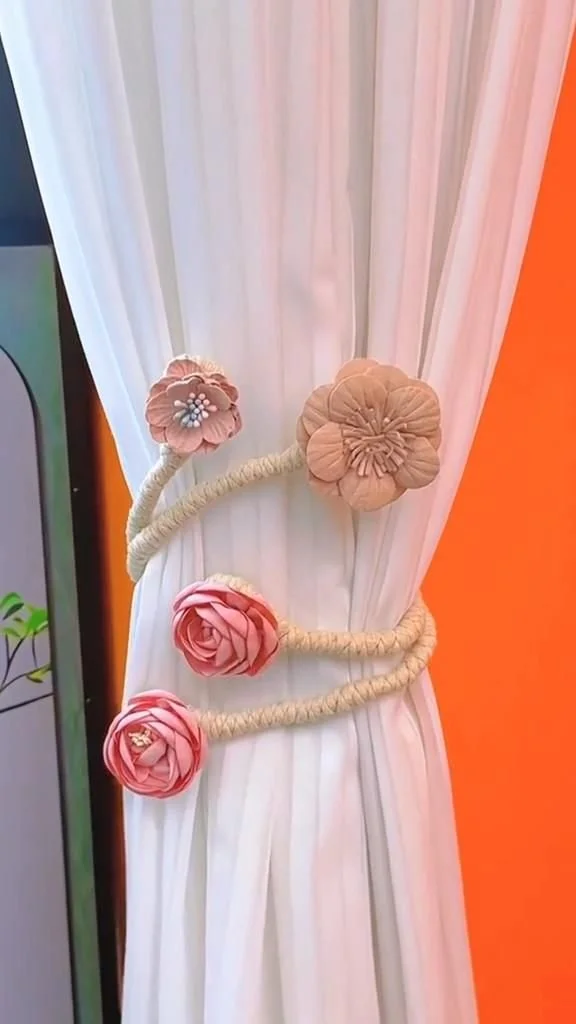
Curtain tieback clips are those small finishing touches that quietly transform a room from “nice” to “welcoming.” Picture soft linen panels swept to the sides with a simple, gleaming clip catching the light—metal tones flashing against warm wood, tassels brushing a textured sofa, or a leather strap hugging velvet curtains. They are tactile, often metallic or woven, and they bridge function and style: securing fabric, shaping light, and creating little pockets of shadow and glow that change the mood of a space as the sun moves across the room.
Think about the feeling of a late afternoon in a reading nook—the curtain held back with a brass clip creates a soft shaft of light that warms your cup of tea, while the fabric’s pleats add rhythm and motion to the wall. In a dining room during a gathering, matched clips keep draperies tidy and reveal more window, making the space feel airy and intentional. In a bedroom, a plush tassel tieback clip can make the bed’s canopy of curtains feel indulgent, while minimalist magnetic clips add calm geometry to a Scandinavian palette.
This small decor idea matters because it’s one of the easiest ways to add personality—comfort, hospitality, or polish—without a major renovation. Curtain tieback clips are perfect for seasonal refreshes (swap brass for wicker in summer), cozy corners (accent a chair or bay window), renter‑friendly updates (no drilling if you choose magnetic or clip‑on styles), budget‑conscious decorating, and those last‑minute touches before hosting friends. If you’ve been exploring ideas for window treatments, pairing tiebacks with a curated backdrop can be transformative—see this guide on creating a curtained backdrop for a fuller look. Curtained backdrop ideas
At a Glance
Curtain tieback clips are small decor pieces used to hold curtains open; they belong to the window‑treatment and soft‑furnishing family. Depending on the design, they can be considered both functional hardware and decorative accessories.
Stylistically, tieback clips lean into modern, minimalist, rustic, glam, boho, and classic looks—there’s a version for every aesthetic. Common colors are brass, matte black, soft gold, white, and natural fibers; materials include metal, leather, rope, fabric tassels, and wood. Textures range from smooth polished metal to braided jute and fringed textiles.
Best rooms or zones:
- Living room windows and bay windows
- Bedrooms and canopy setups
- Dining rooms (for formal or seasonal styling)
- Entryways with layered textiles
- Home offices with focused daylight control
Level of DIY vs. buying ready‑made:
- Mix: many clips are ready‑made and plug‑and‑play, while simple DIY leather loops, magnetic snaps, or beaded tassels are easy weekend projects.
Design Impact
Tieback clips subtly alter how light and space behave in a room. Visually, they create vertical and horizontal lines that can lengthen a window, emphasize ceiling height, or define a view by gracefully framing the outdoors. A neat cluster of pleats held by a sleek clip becomes an intentional focal point; conversely, utilitarian cords can make a casual space feel relaxed and lived‑in. If you’re working with heavy drapes, tiebacks reveal more glass and invite natural daylight, making rooms feel larger and more connected to the outside.
Emotionally, tiebacks add a tactile sense of care. They say someone pauses to arrange the space—prepping a room for conversation, a movie night, or a quiet morning. Different materials shift the mood: soft braided rope reads cozy and coastal; metallic clips read refined and party‑ready; leather straps feel modern and grounded. Practically, they reduce curtain clutter, keep fabric off furniture, and create consistent sightlines—important when you’re hosting or working from home and want clean backdrops or better light on a screen. Imagine a home office where curtains are clipped back to reduce glare during meetings but can be easily released to soften the room for evening relaxation—that’s daily convenience wrapped in style.
Perfect For…
Choosing tieback clips is smart for a wide audience. Renters appreciate magnetic or clip‑on versions that require no drilling and no permanent changes. Families benefit from sturdy, easy‑to‑use holdbacks that keep young hands from tugging on long drapes. Small apartments gain visual breathing room when curtains are consistently held aside; the resulting light can make tiny spaces feel open and fresh. Beginners in decor can use tiebacks as a low‑cost way to introduce texture and metallic accents while design lovers can curate high‑end metals and artisanal tassels to heighten a scheme.
Key strengths include affordability, flexibility, and timelessness: swapping one set of clips for another is an instant seasonal update. They’re small, packable, and easy to store—great for rotating between summer and winter looks. A real‑life problem they solve: a dark living room with heavy curtains that swallow light. Swapping in simple clips and pulling the curtains back daily opens the room, highlights artwork, and prevents furniture from feeling cramped. Another scenario: a rental bedroom with no room to attach hardware; magnetic tieback clips create a boutique hotel feel without violating lease terms.
How to Style Curtain Tiebacks Clips
{ingredients}
- Main items:
- Curtain tieback clips (metal, magnetic, clip‑on, rope, or tassel styles)
- Curtains or drapes (light to heavy fabric depending on room)
- Tools:
- Measuring tape
- Pencil or painter’s tape for marking
- Step stool
- Optional extras to upgrade:
- Coordinating curtain rods and finials
- Accent cushions and throws in matching colors
- Floor or table lamps to layer light
- Indoor plants in window sills or nearby baskets
- Budget substitutions:
- Leather belts, decorative scarves, or vintage brooches as clips
- Thick cord or braided rope from a craft store
- Thrifted tassels or curtain rod rings repurposed as holdbacks
{directions}
- Assess your window and curtain weight. Tip: heavy velvet needs strong metal clips or holdbacks; lightweight linen works well with rope or magnetic clips.
- Choose a clip style that matches your room’s mood. Tip: brass or gold lifts warm palettes; matte black suits industrial or modern rooms; natural rope complements coastal and boho looks.
- Decide the placement height. Rule of thumb: place tiebacks about one‑third of the way up from the floor for balanced proportions. For floor‑length curtains, this typically means 36–40 inches from the floor; shorter curtains adjust accordingly.
- Mark placement with painter’s tape or a pencil point. Tip: check symmetry by measuring from the floor and from the window’s edge so both sides read identical to the eye.
- Test the tension and pull. Clip the curtain and stand back. If the pleats look too forced, move the clip slightly outward; if the window looks too exposed, bring the clip inward for fuller folds.
- Layer with accessories. Add a floor lamp or basket near the window to create a vignette; the clip will frame this scene when curtains are pulled back. Tip: use warm bulbs to complement golden metal clips for a cozy glow.
- Avoid overcrowding. Common mistake: pairing large patterned curtains with oversized tassel clips—if both are bold, the eye gets confused. Fix: choose one statement and one subtle element.
- Consider functionality. For frequently used windows, pick clips that are easy to clip and unclasp (magnetic or pinch clips). Tip: test in the first week and swap if opening the curtains feels cumbersome.
- Seasonal swap. Rotate materials seasonally—switch to wicker or rope for summer and lux velvet or leather for winter to refresh textures without replacing rods.
- Final polish. Straighten pleats with your hand and press gently for crisp folds. For delicate fabrics, avoid metal clips that might snag; instead use fabric loops or scarves.
Presentation Tips
Curtain tieback clips can be showcased in many rooms and settings. In an entryway, a single decorative clip draws a visitor’s eye up and encourages an inviting flow—pair with a narrow console table, a mirror, and a small ceramic bowl for keys. In the living room, frame the view or a garden vista; choose larger clips for oversized drapes and smaller, subtler clips for airy sheers. In bedrooms, use plush tassels or leather straps to amplify a cozy, hotel‑like atmosphere; add coordinating cushions and a textured throw to extend the palette.
Pairings that work beautifully:
- Plants: a trailing pothos or a potted fiddle leaf nearby adds organic softness to metal clips.
- Rugs & Throws: match motifs or colors from your curtain fabric with a rug or throw to create a layered look.
- Mirrors & Art: tiebacks create a tidy backdrop for gallery walls by keeping fabric off frames.
- Lamps: side lamps with warm light highlight metallic clips and deepen textures after sunset.
Small space idea: use slim, lightweight clips and sheer curtains to allow light while visually expanding the room. For larger open‑plan rooms, opt for robust, decorative holdbacks on formal drapes to create “rooms within rooms” by framing seating areas and clarifying zones. For more ideas on curtain choices and styles, check out this overview of different curtain styles to match your tiebacks. Different curtain styles
How to Maintain
Curtain tieback clips are low maintenance, but a little care keeps them looking new. For metal clips: dust weekly with a soft cloth and wipe with a damp microfiber for fingerprints; avoid abrasive cleaners that strip finishes. Brass or copper can be lightly polished if they tarnish, but a patina can also be attractive—decide whether you want aged character or shine. Fabric or tassel tiebacks: vacuum with a soft‑brush attachment monthly and spot‑clean with mild detergent; let them air‑dry flat to maintain shape.
How often to refresh: dust curtains and clips at least once a month; deep‑clean drapes seasonally or as needed based on sunlight and pets. For storage, place seasonal tassels or fragile clips in breathable fabric bags and keep them in a cool, dry place away from direct sunlight to prevent fading and degradation. Rotate tiebacks occasionally to avoid uneven sun exposure—and inspect attachment points for wear, especially in homes with active kids or pets.
Designer’s Advice
- Keep scale in mind: choose clip size proportional to curtain weight and window size—tiny clips vanish on floor‑length drapes.
- Balance metals: if you have brass tiebacks, bring that metal into small accents (lamp base, picture frame) for cohesion.
- Layer light: add a lamp behind or beside your window to make tiebacks sparkle in the evening.
- Texture mix: pair smooth metals with woven or fringed textiles to avoid a flat look.
- Symmetry vs. asymmetry: symmetrical tiebacks create formality; a single accent tieback on one side reads modern and casual.
- Test one set before committing room‑wide—live with the look for a few days and adjust height or style.
- Use painter’s tape to mark placement before any hardware is installed—this saves holes and hassle.
Creative Variations
Minimalist: slim matte black clamp clips on airy white sheers create crisp lines and a clean Scandinavian feel. Use leather straps instead of tassels for a modern twist.
Cozy & Colorful: chunky, braided rope tiebacks or tasseled fabric clips in jewel tones bring warmth to a Scandinavian or boho bedroom. Add patterned cushions that pick up the same accent color to tie the scheme together.
Budget & Thrifted: repurpose an old belt as a leather loop, or use vintage brooches hooked onto curtain fabric for an eclectic, personalized look. For a mid‑range update, choose a set of matte brass clips that elevate the room without splurging on bespoke holdbacks.
Frequently Asked Questions
Q: Can I use tieback clips in rentals without drilling?
A: Yes—magnetic clips, clip‑on rings, or fabric loop tiebacks that attach to curtain rods avoid drilling and are renter‑friendly.
Q: How do I choose the right color for my clips?
A: Match the clip metal to existing hardware (lamp bases, door handles) or use it as an accent: warm metals for warm palettes, black or nickel for modern cool schemes.
Q: Are tiebacks suitable for small apartments?
A: Absolutely—choose lighter fabrics and slim clips to allow maximum light and avoid visual clutter. They can help a small space feel curated.
Q: Where can I find quality tieback clips for different budgets?
A: Look for handcrafted options at local markets or artisan sellers for specialty pieces; home stores and online marketplaces offer a wide selection across price points.
Q: How should I store seasonal tiebacks?
A: Place in breathable bags, wrap delicate tassels in acid‑free tissue, and store in a cool dry closet to avoid fading and moisture damage.
Conclusion
Curtain tieback clips are an effortless, high‑impact way to elevate everyday spaces—balancing light, texture, and mood with minimal fuss. Try swapping a couple of clip styles this season to see how a small change can refresh a room’s personality. If you’re ready to shop, browse a wide selection of options on Curtain Tieback Clips – Amazon.com or explore curated holdback and tieback choices at Curtain Holdbacks and Tiebacks : Curtain Rods : Target.
Share your before‑and‑after photos, questions, or favorite finds in the comments—we love seeing how readers make spaces their own. For more decorating inspiration and step‑by‑step projects, visit Moderndecorum.com and join our community.