DIY Modular Outdoor Sectional Sofa — With Building Plans
A modular outdoor sectional sofa is one of the most satisfying DIY projects: it transforms your patio into a flexible, cozy living space and lets you tailor size, style, and finish to fit your home. This guide walks through the concept, materials, construction tips, and finishing touches so you can build a durable, attractive sectional that adapts to gatherings large and small. If you want to complement the finished seating with outdoor artwork, check out this creative wall art ideas to give your space personality.
Why Choose a Modular Design
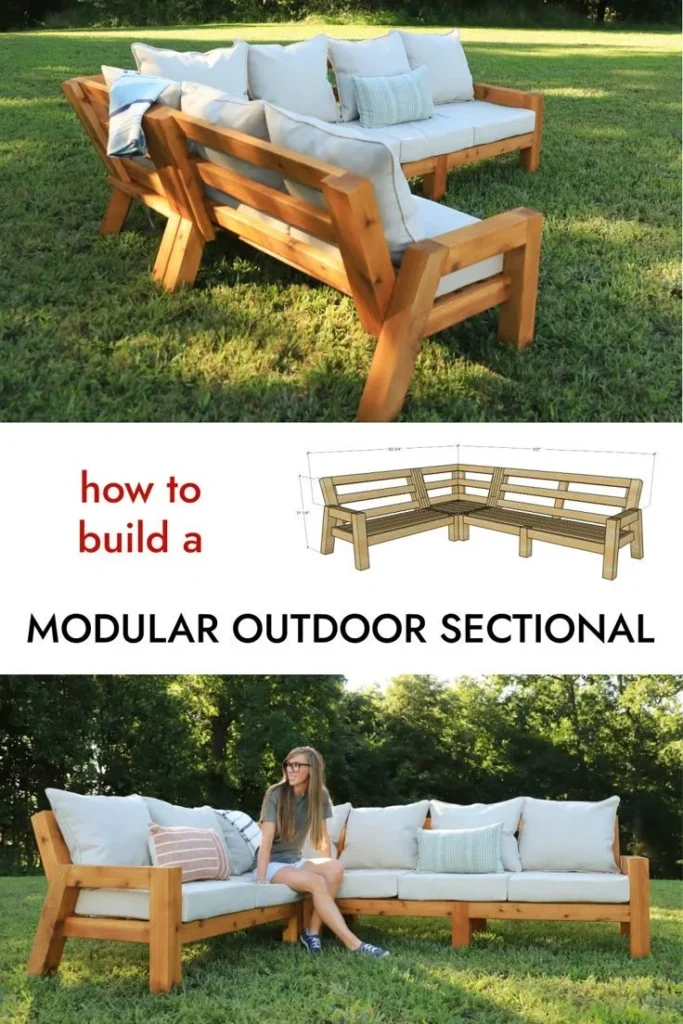
Modular sectionals are composed of separable units (corners, armless seats, ottomans) that can be rearranged as needed. Advantages include:
- Flexibility: reconfigure for a small evening or a large party.
- Transportability: move individual pieces more easily than one large sofa.
- Custom sizing: add or remove modules to fit your patio layout.
- Simpler repairs and refinishing: work on one module rather than disassembling an entire couch.
Materials and Tools
Materials
- Exterior-grade lumber (cedar, pressure-treated pine, or redwood) for frames
- 2x4s and 2x6s for structural supports
- Exterior plywood (for base where needed)
- Stainless steel or galvanized screws and bolts
- Exterior wood glue and construction adhesive
- Outdoor-grade foam and weather-resistant cushions or quick-dry foam
- Exterior paint or stain and sealer
- Optional: composite decking boards for slatted surfaces
Tools
- Circular saw or miter saw
- Kreg jig or pocket-hole system (or drill/driver for screws)
- Drill/driver, impact driver
- Orbital sander or sanding block
- Tape measure, square, pencil, clamps
- Router (optional for rounded edges)
- Paint sprayer or brushes/rollers
Basic Module Plans (Overview)
A straightforward module typically consists of:
- A rectangular base frame made from 2x4s, sized to standard cushion dimensions (e.g., 30" deep by 30–36" wide).
- Legs made from 2x4s or 4×4 posts, recessed inside the frame for stability.
- Seat slats or plywood deck secured to the frame.
- Optional back support: an angled backrest built from 2x4s and slats for comfort.
Plan tip: design one armless center module, a corner module (90°), and an arm module. Combine these to form left/right sectionals, chaise configurations, or islands.
Step-by-Step Build Highlights
- Cut all lumber to dimension using a cutting list; label pieces for each module.
- Assemble base frames with pocket holes or metal corner brackets. Ensure frames are square before securing.
- Attach legs flush with the inside corners of the frame to create a recessed look and protect the legs from weather exposure.
- Fasten seat slats or plywood onto the frame. If using slats, leave small gaps for drainage.
- Construct backrests and securely attach them to the base. Angle them slightly (about 10–12°) for comfortable reclining.
- Sand all surfaces smooth, round sharp edges, and apply a weatherproof finish.
- Add cushions and place modules together; use hidden connectors or non-slip pads to keep modules from sliding apart.
Design Tips and Customization
- Cushioning: invest in high-quality outdoor foam and Sunbrella or similar fabric; removable covers make maintenance easy.
- Color and finish: stain highlights wood grain; paint gives a bold look. Apply a clear sealer for UV and moisture resistance.
- Storage: design one module as a storage bench for cushions and accessories.
- Versatility: create a matching coffee table module or ottoman with storage inside.
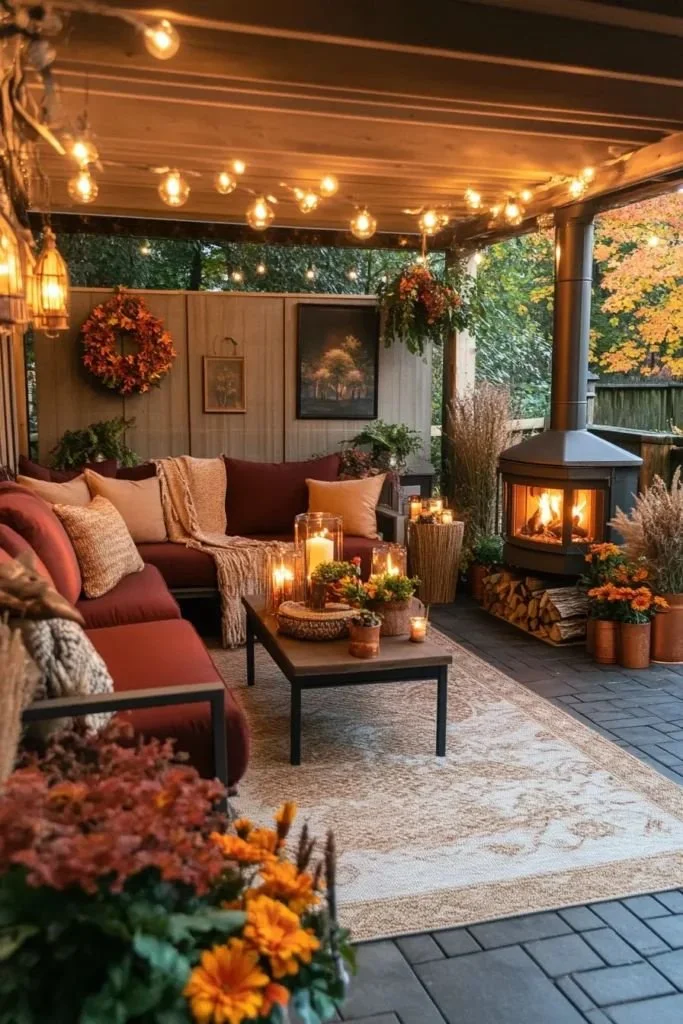
- Styling: enhance the setting with eclectic or vintage decor—try pairing your new sectional with some charming DIY decor pieces from this vintage home decor ideas for a cohesive outdoor vibe.
Maintenance and Longevity
- Clean regularly with mild soap and water to remove dirt and pollen.
- Reapply sealer or touch up paint every 1–2 years depending on exposure.
- Store cushions in a dry spot or in a storage module during harsh weather.
- Tighten hardware seasonally and replace any corroded fasteners promptly.
Sizing and Layout Ideas
Measure your outdoor living area and plan modular sizes accordingly. Common layouts:
- L-shape for corner patios
- U-shape for larger entertaining areas
- Separate chaise and ottoman combos for lounge-style relaxation
Use painter’s tape on the floor to visualize different configurations before building.
Safety Notes
- Use outdoor-rated hardware to avoid rust and failure.
- Ensure frames are square and legs firmly attached to prevent wobble.
- When stacking or joining modules, use secure connectors or recessed bolts to keep units together under load.
Conclusion
Building a modular outdoor sectional gives you a custom, flexible seating solution tailored to your style and space. For complete step-by-step plans and cutting lists, see the detailed DIY Modular Outdoor Sectional Sofa | WITH BUILDING PLANS. If you want a broader perspective on layouts, cushions, and alternative construction ideas, consult this DIY Outdoor Sectional (Guide) – Home and Kind. These resources will help you move from idea to finished, comfortable outdoor living area.