DIY Wood Slat Wall Art Painting Process: A Step‑by‑Step Guide to Modern, Textured Walls
Imagine a wall that greets you like an embrace: the gentle rhythm of wood slats casting soft shadows, a hand‑painted gradient that warms a living room, or a crisp geometric pattern that catches the light and makes a small apartment feel curated and intentional. DIY wood slat wall art is tactile, sculptural, and surprisingly versatile — it reads as both art and architecture. The surface invites a touch: the slight grain under your fingertips, the faint scent of fresh paint and sawdust, the subtle play of matte and satin finishes that changes with the hour.
This kind of wall treatment elevates a room from “nice” to “memorable.” It’s not just about decoration; it’s about texture and mood. Narrow slats introduce vertical movement that lifts low ceilings, while wider slats give a relaxed, reclaimed‑wood vibe. Painted hues can range from soft linen neutrals that nestle into Scandinavian minimalism to saturated teal or sunset ochre for a boho statement. Add soft lighting and a plush armchair, and suddenly your corner is an invitation to linger.
DIY wood slat art matters because it personalizes space in a tangible way. It’s ideal for seasonal refreshes—swap painted panels for a brighter palette in spring, or add metallic accents for holiday entertaining. It’s renter‑friendly when built as a freestanding panel or mounted with reversible hardware. Whether you’re staging a home for guests, carving out a calm work‑from‑home nook, or refreshing a tired gallery wall, this project blends personality with function.
If you’re looking for more wall art inspiration before you begin, you may enjoy this roundup of 15 fun DIY wall art ideas that spark creative ways to treat walls without a full renovation.
Decor Details
What is it: DIY wood slat wall art is a decorative wall treatment composed of multiple narrow boards (slats) arranged in a pattern and painted or stained to create a large-scale, textured artwork.
Main style: Most commonly modern, Scandinavian, and rustic contemporary, but easily adapted to boho, minimalist, or glam.
Typical colors, materials, textures:
- Colors: neutrals (warm greys, creams), earthy tones (clay, ochre), or bold accents (navy, forest green).
- Materials: pine, poplar, MDF for budget builds; oak or reclaimed wood for higher end.
- Textures: smooth painted finishes, wire‑brushed grain, and occasional metal or leather inlays.
Best rooms:
- Living room focal wall, bedroom headboard wall, entryway statement, dining area backdrop, or behind a home office desk.
DIY level: mix — straightforward for confident beginners (basic cutting and painting) with room for advanced customization.
Design Impact
A wood slat wall creates an immediate focal point that organizes visual energy in a room. Vertically oriented slats draw the eye up, making ceilings feel taller; horizontal groupings widen a space and emphasize lounging zones. A painted slat piece acts like a giant piece of art — it anchors furniture, frames mirrors or sconces, and can delineate zones in open‑plan living.
Emotionally, the texture of wood slats brings warmth and tactility. The contrast of hard edges with soft textiles — a velvet sofa or a wool throw — produces a comforting layered effect. Imagine winding down on a cool evening with the slatted wall catching the warm glow of a lamp, or hosting a dinner where the textured backdrop elevates your table setting. Practically, a freestanding slat panel can hide a cluttered corner or provide acoustic dampening in a busy living room. For those working from home, a painted slat wall behind your desk becomes a professional and calming video call background that also reduces echo.
Why Choose It
DIY wood slat wall art is perfect for people who want big visual impact on a manageable budget. Renters can use freestanding panels or non‑permanent mounting systems to avoid damage; homeowners can opt for nailed or glued installations. It’s ideal for small apartments that need a strong focal point without bulky furniture, and for families who want durable, wipeable surfaces that still feel homey.
Key strengths:
- Affordable: basic lumber and paint cost significantly less than framed art or millwork.
- Flexible: easy to paint over for seasonal updates or new palettes.
- Timeless: wood and clean geometry age well across trends.
- Space‑smart: can replace a headboard, define a hallway, or stand behind a sofa.
Real life problem solved: a long, blank hallway becomes a curated gallery with low cost and high style; the vertical slats add rhythm and reduce the “tunnel” effect, while a painted mural on the slats adds personality without cluttering limited square footage.
How to Style DIY Wood Slat Wall Art Painting Process
ingredients
Main items:
- 1×4 or 1×2 pine/poplar boards (cut to length), or pre-cut slats
- Plywood or MDF backing (optional for freestanding panels)
- Wood glue and finishing nails or brad nails
- Sandpaper (120–220 grit), wood filler
- Primer and paint (latex or acrylic), paint roller and brush
- Painter’s tape and drop cloths
- Stud finder and mounting hardware (Z‑clips, French cleats, or heavy-duty picture hangers)
Optional extras:
- LED strip lighting for backlighting
- Metal rods or leather straps between slats
- Wood stain and sealer instead of paint
- Decorative hooks for keys or hats (entryway version)
- Plants, woven baskets, and sculptural ceramics to style nearby
Budget substitutions:
- MDF battens in place of solid wood
- Reclaimed pallet slats sanded and primed
- Pre-stained wood-look veneer panels for a faster install
directions
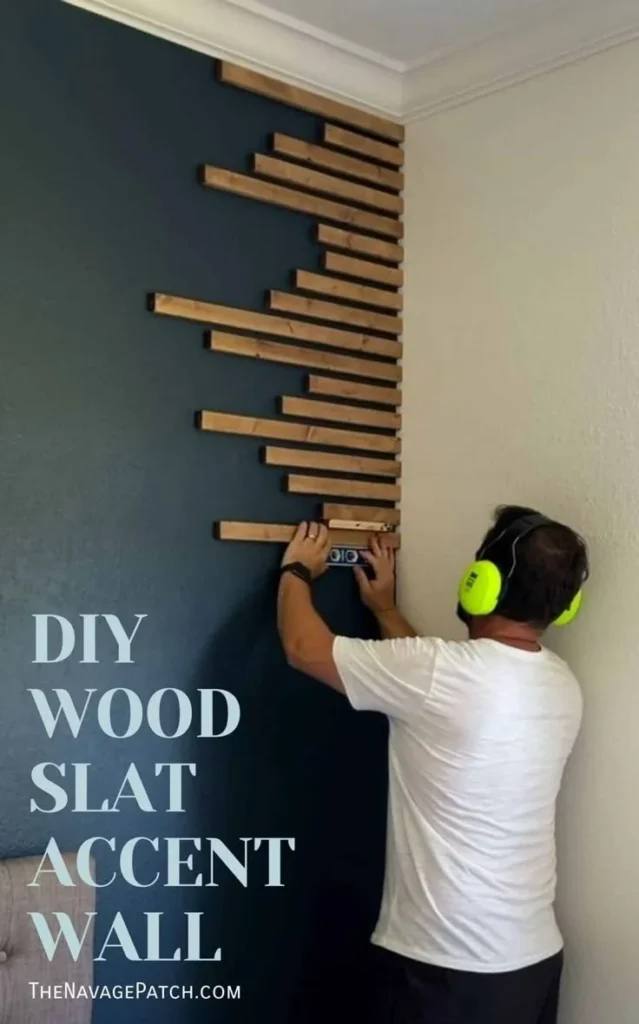
Plan your design. Measure the wall and sketch the slat layout, including slat width, gap spacing (1/4"–1/2" typical), and overall pattern (vertical, horizontal, chevron, staggered). Tip: Keep slat spacing consistent for a tidy look; use a spacer block while installing.
Choose your color. For a calming look, pick toned neutrals (greige, soft white). For drama, choose a deep matte (navy or charcoal). If you want a coastal vibe, select soft seafoam blues and whitewash the wood. Tip: Paint sample boards and look at them at different times of day.
Prep the wood. Sand all slats smooth, fill knots or gaps with wood filler, and sand again. Prime raw wood unless staining. Tip: If using reclaimed wood, de-nail and clean thoroughly.
Cut and lay out. Cut slats to length; lay them on the floor to confirm the pattern. For a freestanding panel, attach slats to a backing board with glue and brad nails. Tip: Keep the first and last slat flush to the edge for a polished frame.
Paint before or after assembly. You can paint each slat individually for crisp edges, or assemble then paint the entire panel. For two-tone or ombre effects, paint in stages and use painter’s tape to mask clean lines. Tip: Use a foam roller for a smooth finish without brush marks.
Install lighting (optional). Attach LED strips to the back edge of the panel for halo lighting, or position wall washers above the slats to accentuate texture.
Mount the panel. Use studs and heavy hardware for fixed installations; use removable picture‑hanging systems for renter‑friendly mounting. Tip: Have a friend help lift large panels to prevent damage and ensure level placement.
Style around it. Add a slim console table in the entry, pair with a woven rug and mirror, or use the slat wall as a headboard with floating shelves and bedside sconces.
Fix common issues. If a slat is uneven, gently sand the high side and refinish; for paint runs, lightly sand, spot prime, and repaint.
Enjoy and update. Change accessories seasonally or repaint select slats to refresh the look.
Ways to Display
This artwork is utterly flexible. In an entryway, a narrow slat panel behind a slim console table immediately signals “home” and pairs beautifully with a bowl for keys and a woven runner rug. In a living room, a full wall of vertical slats creates a dramatic backdrop for a sofa; add floating shelves for books and ceramics to break up the rhythm. Use a short, horizontal slat panel behind a bed instead of a headboard to visually anchor the sleeping area.
Pairing tips:
- Plants: trailing pothos or sculptural fiddle leaf figs soften the geometry.
- Textiles: layer rugs, throws, and cushions in complementary textures.
- Lighting: warm bulbs and layered lamps highlight wood grain and color.
- Mirrors: a round mirror over a slat wall creates contrast and reflects light.
Small spaces: Choose a narrow, vertical slat panel behind a corner chair to create a reading nook without consuming floor area. Large open rooms: Use multiple slat panels to define zones — a dining area panel behind the table and a living panel behind the sofa to create distinct atmospheres.
If you want more bedroom‑specific wall art ideas to pair with a slat headboard, see this collection of 35 DIY wall art ideas for the bedroom for easy inspiration.
How to Maintain
Cleaning and care are simple but important. Dust slats weekly with a dry microfiber or use a soft brush attachment on a vacuum to remove dust from narrow gaps. For painted surfaces, spot clean with a damp cloth and mild soap; avoid saturating wood. If you used stain and sealer, a damp cloth and occasional application of furniture oil will keep grain vibrant.
Frequency: dust weekly in high-traffic areas; deep clean or touch up paint once or twice a year depending on wear. Storage: if you build freestanding panels to rotate seasonally, store them upright in a dry, temperature‑stable room; protect painted surfaces with a sheet or acid‑free paper to prevent scratching.
To keep the look fresh, rotate nearby textiles, swap seasonal decor on adjacent shelves, or repaint a single accent slat to refresh the palette every year.
Decor Expert Tips
- Scale rule: slat width should relate to wall size — narrow slats suit tall, skinny walls; wider slats read better on big walls.
- Lighting trick: warm 2700–3000K bulbs enhance wood warmth; layer with directional accent lights to emphasize texture.
- Balance: pair dramatic slat walls with understated furniture to avoid visual competition.
- Color pick: coordinate slat hues with three main room colors — wall/base, upholstery, and accent — for cohesion.
- Pattern mixing: keep one dominant pattern (the slat rhythm) and use small‑scale patterns in textiles.
- Mounting safety: always anchor into studs on heavy, full‑wall installations.
- Test first: build a small sample panel to test paint, spacing, and lighting before committing to a full wall.
Creative Variations
Minimalist: Narrow pale oak slats, matte white paint, hidden mounting — clean, airy, and subtle.
Cozy/Boho: Reclaimed wood with staggered widths, warm stain, and a hand-painted ochre stripe. Pair with macramé and plants.
Budget thrifted: Salvaged pallet wood sanded and whitewashed, mounted on an MDF backing — charm without splurging.
Occasion styling: For holidays, weave fairy lights through the gaps and swap round ornaments or wreaths for seasonal cheer; for parties, add clusters of metallic balloons against a painted accent slat to amplify festivity.
Frequently Asked Questions
Q: How do I choose the right slat width for my wall?
A: Match slat width proportionally to wall size: small walls (1–2" slats), medium walls (2–3"), and expansive walls (3–4+"). Visual tests on cardboard help.
Q: Is this renter‑friendly?
A: Yes — build a freestanding or panelized version that leans or uses removable hanging strips to avoid holes.
Q: Can I use MDF instead of wood?
A: MDF is budget‑friendly and smooth for painting; use proper primer and avoid heavy moisture exposure.
Q: How durable is painted slat art with kids or pets?
A: Use semi‑gloss or satin paint for easier wiping and touch up with spare paint for scuffs.
Q: Where can I find good slats inexpensively?
A: Local lumberyards, home centers (cut to size), or reclaimed wood sources work well — hunt early for the best pieces.
Conclusion
Ready to transform a wall into a tactile, painted masterpiece? A DIY wood slat wall marries art and architecture to give your home personality, warmth, and great style with manageable effort. For a beautiful, step‑by‑step visual guide, consider this post on Transform Your Space with a DIY Wood Slat Wall, and if you’d like a detailed build tutorial, this resource for Step by Step DIY Wood Slat Wall – Hana’s Happy Home walks through construction techniques.
Give it a try: paint a sample slat, assemble a small panel, and share the result. We’d love to see your photos, questions, and styling tips — leave a comment or join the conversation at Moderndecorum.com to discover more projects and community inspiration.