Front Yard Landscaping Ideas 2026 — Low Maintenance, Modern, Budget Friendly
Imagine arriving home to a front yard that feels like a calm exhale: clean lines, soft textures, and a compositional palette of warm stone, muted greens, and matte black accents. Picture stepping across a path of large, flat pavers that sink into low, aromatic groundcover, hearing the faint crunch of pea gravel underfoot, and catching the dappled shadow of ornamental grasses swaying in the breeze. The colors are subtle but intentional — charcoal planters, sandy gravel, silver foliage, and the occasional burst of sunset orange from a daylily or rusted corten steel sculpture.
This low‑maintenance, modern, budget‑friendly front yard style is about restraint that feels rich. It’s tactile — the cool smoothness of concrete, the coarse texture of bark mulch, the soft whisper of pampas grass — yet it’s designed for people who value time as much as aesthetics. Whether you host casual weekend gatherings, enjoy slow morning coffees on the porch, or simply want a welcoming curb that makes you smile coming home, these ideas marry comfort and function.
This approach is perfect for seasonal refreshes and renter‑friendly updates alike. Swap out a few pots for seasonal blooms, add a string of warm outdoor lights for an evening party, or reconfigure modular planters when you want a fresh look. If your property has a blank strip by the sidewalk or a tired front bed, think of this as an easy, high‑impact project that won’t break the bank — and won’t demand daily care.
If you’re considering a bigger outdoor update that includes fencing or boundary planting, this collection pairs beautifully with modern fence options — see more inspiration for finishing touches in our roundup of modern fence and landscaping ideas for help integrating materials and scale.
Style Snapshot
Front Yard Landscaping Ideas 2026 — Low Maintenance, Modern, Budget Friendly is a landscaping and outdoor decor approach focused on hardscape accents, structural plants, and durable materials that require minimal upkeep. It blends functional landscape elements (paths, beds, planters) with decorative touches (lighting, seating, sculptures), emphasizing longevity and clean design.
Main style: modern-minimalist with touches of Scandinavian warmth and a hint of industrial accents.
Typical colors, materials, and textures:
- Colors: charcoal, soft greys, sandy neutrals, sage and silver greens, rust accents.
- Materials: concrete pavers, pea gravel, corten steel, matte ceramic or metal planters, native ornamental grasses, succulents.
- Textures: smooth pavers, coarse gravel, feathery grasses, structured succulents.
Best zones for this approach: front entryway, pathway borders, porch planters, driveway edges, corner beds by the sidewalk.
DIY vs. store-bought: mix — many elements are easy DIY (laying gravel, assembling modular planters), while some items (prefab pavers, high‑quality LED lighting) are best bought ready-made.
Why It Works
A modern, low‑maintenance front yard changes not only how your home looks but how it feels to live in it. Visually, it reduces clutter and creates clear focal points: a bold planter and sculpture by the entry, a rhythmic line of grasses flanking the path, or a contrast of dark containers against pale gravel. These elements guide the eye and make small yards feel ordered and larger by simplifying the palette.
Emotionally, this style fosters calm and ease. You don’t have to fuss over weekly trimming schedules or delicate annuals: choose resilient plants like lavender, ornamental grasses, and succulents, and the yard will reward you with year‑round structure and subtle seasonal shifts. For homeowners who work from home or enjoy quiet mornings, the front yard becomes an outdoor room that invites a cup of coffee and a moment of rest.
Practically, low‑maintenance landscapes save time and money. Gravel beds and drought-tolerant plantings reduce watering; durable materials mean fewer replacements; modular planters let you rearrange without hiring labor. Imagine hosting friends with a clean, defined path for guests, good lighting that enhances safety, and seating tucked near aromatic herbs — the yard performs for daily life and for celebrating moments, big or small.
Why Choose It
This front yard approach is perfect for renters with permission to update containers, busy families who need durability, small‑lot homeowners who want big visual gains, and design beginners seeking high impact with low effort. It’s especially smart for anyone who likes the clean lines of modern design but wants a warm, welcoming curb.
Key strengths include affordability (focus on a few durable anchors rather than many delicate plants), flexibility (moveable planters, removable sculptures), and timelessness (neutral materials that age gracefully). Because the design is modular, you can start small — a single statement planter and a fresh path — then expand over seasons without a full overhaul.
Real-life problem solved: if you have an overgrown, tired flower bed that demands constant attention, replace it with a layered, low-water scheme: a base of gravel, grouped clumping grasses for movement, a few bold succulents for structure, and an LED path light. The visual clutter disappears, maintenance drops, and the space instantly feels intentional.
How to Style Front Yard Landscaping Ideas 2026 – Low Maintenance, Modern, Budget Friendly
{ingredients}
- Main items:
- Concrete or large format pavers (stepping stones or slab pavers)
- Pea gravel or decomposed granite for groundcover
- A selection of planters (1–3 sizes) in matte black, terracotta, or corten steel
- Low‑water plants: ornamental grasses (miscanthus, pennisetum), lavender, rosemary, sedum, agave
- Outdoor LED path lights and one statement spotlight
- Mulch or landscape fabric (optional)
- Edging material (metal, timber, or poured concrete)
- Optional extras for upgrading the look:
- Corten steel planter or sculpture
- Trellis or minimalist fence panel
- Outdoor bench or built-in seat
- Solar string lights or wall lanterns
- Budget-friendly substitutions:
- Reclaimed bricks or salvaged pavers for stepping stones
- Plastic planters spray-painted matte black
- Thrifted metal buckets or wooden crates as planters
{directions}
- Start with a simple plan: mark the path from sidewalk to door and note sunlight patterns. A good path anchors the yard and simplifies planting decisions.
- Prepare the ground: remove weeds, level the soil, and add landscape fabric where you’ll lay gravel (avoid fabric under plant locations to allow root growth).
- Lay pavers with consistent spacing (2–6 inches for a modern look) and backfill with pea gravel; for a floating-stepping-stone effect, sink pavers slightly for stability.
- Install edging to keep gravel contained and create a crisp line between hardscape and planting zones — metal edging gives a clean modern edge.
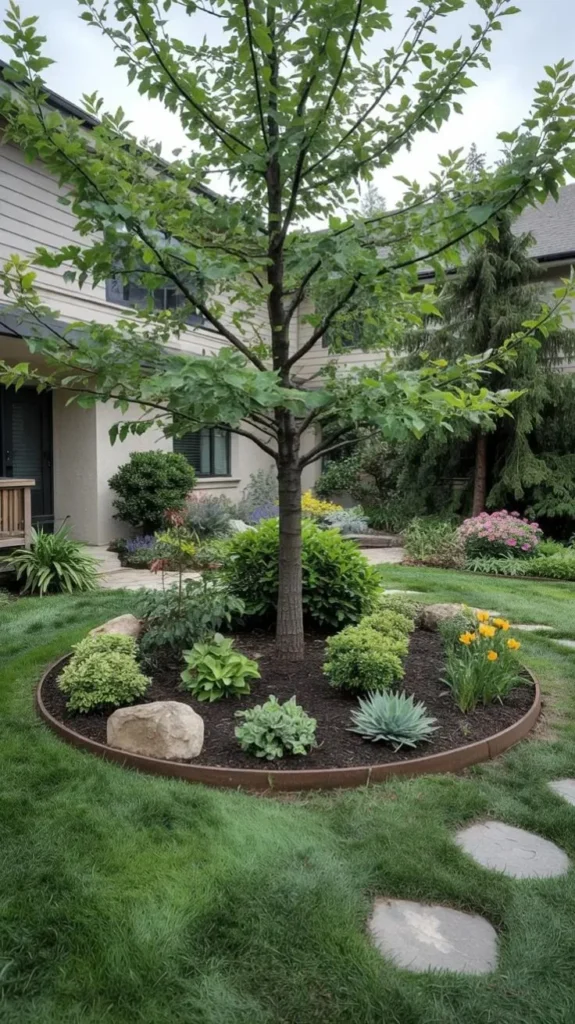
- Group plants in odd numbers and by texture: a trio of ornamental grasses, punctuated with two low succulents, and a single taller specimen near the porch make a balanced composition.
- Place planters near the entrance and porch in sizes that relate to door scale — a large planter on one side and a medium one opposite can frame the entry without symmetry fatigue.
- Add lighting after planting: low-level path lights for safety, and one uplight to highlight a focal plant or architectural element at night. Use warm LED bulbs (2700–3000K) for a welcoming glow.
- Mulch around plants with a thin layer of decorative gravel or bark to suppress weeds and unify textures; keep mulch depth moderate for water penetration.
- Accessorize sparingly: a simple bench, a small rug on the porch, and one outdoor art piece provide personality. Avoid too many colors; let materials be the palette.
- Mistakes to avoid: overcrowding plants (leave room for mature size), mixing too many plant types with different water needs, and overusing bright colors that disrupt the calm modern scheme. Fix overcrowding by thinning and relocating plants gradually.
Presentation Tips
Styling is about composition: think of the front yard as an outdoor living room with furniture (planters), flooring (pavers/gravel), and lighting (lamps). In small yards, keep things linear and vertical — a narrow bed of grasses alongside the path, tall slim planters to add height, and a single focal point near the door. For larger, open-plan front yards, create "zones": a path to the door, a seating alcove, and a planting bed that anchors the corner.
Pair this look with natural textiles and simple accents: woven doormats, a neutral outdoor rug, and a compact bench in reclaimed wood. For ideas on combining fences and plantings to frame these zones, check our suggestions for backyard fence landscaping ideas that translate well to front-yard borders.
Display options:
- Entryway: two asymmetric planters flanking the door; a paver step with a low spotlight.
- Living room view from inside: frame the window with a row of medium-height grasses for privacy and movement.
- Small spaces: a single tall planter with cascading succulents and a narrow gravel strip creates the illusion of depth.
- Large yards: weave a curved paver path with alternating plant clumps to soften the geometry.
How to Maintain
Cleaning and upkeep are minimal but regular care keeps the scheme fresh. Sweep gravel beds annually to remove debris; use a leaf blower on low power to avoid spreading gravel. Prune ornamental grasses once a year — late winter is ideal — by cutting them back to a few inches above the ground to encourage spring regrowth.
Watering: group plants by water needs and use a drip irrigation line for easy, efficient watering. Succulents should be watered sparingly; grasses and lavender appreciate deep, infrequent soaking. Replace top dressing gravel or mulch every 2–3 years to refresh color and suppress weeds.
Storage and seasonal care: protect movable cushions and small decor from harsh winter weather by storing them in a dry place. For planters with sensitive plants, consider swapping in cold-hardy varieties in winter or moving containers to a sheltered spot. Rotate a few seasonal pots with inexpensive annuals during summer for a fresh burst of color.
Designer’s Advice
- Use the “rule of threes” for planters and focal elements to create visual interest without clutter.
- Keep a consistent material palette (two primary materials + one accent) to maintain cohesion.
- Choose warm LED bulbs (2700–3000K) for all outdoor lighting to enhance evening ambiance.
- Place taller plants at the back of beds and lower plants in front to maintain clear sightlines.
- Balance cool and warm tones: pair cool grey pavers with warm wood or rust accents for depth.
- For scale, match planter sizes to architectural features (taller planters near tall columns).
- Test plant combinations in small pots before committing to large beds to see how textures work together.
Creative Variations
Minimalist: Stick to monochrome materials — charcoal pavers, white gravel, silver-gray plants like artemisia — for a crisp, gallery-like front yard. Budget: use salvaged pavers and DIY concrete planters.
Cozy Cottage Twist: Introduce softer textures and blooms — lavender, rosemary, and a small climbing rose on a simple trellis — while keeping gravel and pavers for low maintenance. Mid-range budget: invest in ceramic planters and a bench.
Drought-Friendly Mediterranean: Use terracotta pots, rosemary hedges, olive-lookalike shrubs, and native succulents. Luxury version: corten steel raised beds and a sculptural water feature; budget: upcycled terracotta and thrifted metal accents.
Frequently Asked Questions
Q: Can I match this look to my existing house colors?
A: Yes — choose two neutrals from your house palette (trim and siding) and echo them in hardscape and planter tones; add plants that complement rather than compete.
Q: Is this approach renter‑friendly?
A: Absolutely. Many elements (planters, gravel retreatments, string lights) are removable. Use container plantings that can be taken when you move.
Q: How do I adapt this for a very small front yard?
A: Go vertical: tall skinny planters, narrow pavers, and a single focal piece create depth without taking up horizontal space.
Q: Where can I source materials affordably?
A: Look for local stone yards for end-of-line pavers, salvage stores for planters, and garden centers for native plants. Seasonal sales and community plant swaps are great for budget finds.
Q: How often should I refresh the design?
A: Small tweaks seasonally (one or two new pots) and a bigger refresh every 2–3 years keep the look current without major expense.
Conclusion
Ready to transform your curb into a calm, modern welcome that’s easy to live with and gentle on your wallet? Try starting with one defining element — a bold planter, a clear path, or a statement light — and build from there. We’d love to see your before-and-after photos or hear your questions in the comments below; your experiences help the community grow.
For practical cost breakdowns and more planting suggestions, check this helpful guide on Front Yard Landscaping Ideas to Transform Your Home’s Curb … and for inspiration on pairing low-maintenance planting with curb appeal, read Front Yard Landscaping Ideas for Boosted Curb Appeal – Post ….
Explore more ideas on Moderndecorum.com and join our newsletter to get seasonal updates, DIY plans, and styling tips delivered to your inbox.