Front Yard Landscaping Ideas 2026 – Low Maintenance, Modern, Budget Friendly
Imagine stepping out your front door into a tidy, modern oasis where drought-tolerant grasses whisper in the breeze, smooth gravel paths crunch softly underfoot, and a sculptural evergreen anchors the view like a piece of outdoor art. The palette is calm and considered — warm concrete grey, soft sage, charcoal accents and the metallic glint of an outdoor light — and every surface invites touch: matte cedar slats, cool river rock, the velvety softness of lamb’s ear. This is front yard landscaping for 2026: low maintenance, contemporary in silhouette, and friendly to wallets and busy schedules.
This approach creates a mood as much as it creates a scene. It’s relaxed sophistication — a space that feels intentional without shouting for attention. Whether you arrive after a long day or welcome friends for a weekend barbecue, the front yard becomes a prelude to the comfort inside. Textures and tones set the pace for the whole home: clipped boxwood by the path gives structure, potted succulents add contrast, and a bench or two offers a cozy pause that begs you to sit and breathe.
Why this matters for real homes: good curb appeal boosts pride of place and practicality. A front yard that lives easily — drought-tolerant planting, weed-free hardscaping, lighting that’s both safe and flattering — saves time and money while reflecting personality. This style is perfect for seasonal refreshes, renter-friendly updates (think container planting and movable screens), modern updates to mid-century facades, or a budget overhaul before hosting the holidays. If your goal is to create a welcoming entrance that’s simple to maintain, this guide gives you the ideas and step-by-step confidence to make it happen — and it complements backyard solutions like these backyard fence landscaping ideas for a cohesive exterior look.
At a Glance
Front Yard Landscaping Ideas 2026 – Low Maintenance, Modern, Budget Friendly is a design approach and a set of practical elements — hardscape, plant palette, lighting, and minimal furnishings — that transform a front yard into a modern, easy-care outdoor room. It’s not a single decor piece but a cohesive landscaping concept.
Main style: Modern-minimal with nods to Mediterranean and xeriscape planting.
Typical colors, materials, and textures: Neutrals (concrete greys, warm beige), charcoal metal, natural cedar or larch, river rock, decomposed granite, gravel, succulents, ornamental grasses, and evergreen shrubs. Texture mixes include smooth paving, rough stone, soft foliage, and crisp architectural plants.
Best zones: Entryway, walkway, porch, and small front lawns or strip gardens.
DIY vs. buying: A mix — many elements are easy DIY (laying gravel paths, planting container arrangements, installing solar lights), while irrigation upgrades or major stonework might benefit from hired help.
Benefits
Adopting low-maintenance, modern front yard landscaping changes how your home functions day to day. Visually, it simplifies complex gardens into clean lines and restrained colors that make small yards feel larger and find a focal rhythm that guides visitors toward your door. Hardscaping elements like defined paths and raised beds create clear flow, reduce lawn to manage, and frame the house so architectural details pop. Thoughtful lighting extends use into the evening, turning arrival into a pleasant ritual.
Emotionally, this landscape promotes calm. No frantic mowing or constant pruning means more time for relaxation and entertaining. For families, the tidy, durable surfaces allow kids to play safely while parents entertain on the porch. For renters or busy professionals, containerized planting and modular screens deliver instant impact without permanent alterations. Practically, this approach reduces water bills, lowers maintenance hours, and often increases property appeal — a smart investment whether selling or simply savoring year-round curb pride. Picture a quiet summer evening: soft amber path lights, a gentle scent of rosemary when you brush past a planter, and a bench to rest on while guests arrive — that’s the everyday magic low-maintenance landscaping buys you.
Why Choose It
This approach suits a wide audience: renters who want temporary upgrades, first-time homeowners on a budget, families who need durable design, and style lovers who want a modern curb. Its key strengths are affordability, flexibility, and timelessness. Neutral palettes and simple geometry won’t date quickly, while plants can be swapped seasonally to refresh the look affordably.
A real-life problem this solves: a patchy lawn that invites weeds and constant upkeep. Replace it with an efficient combination of gravel beds, drought-tolerant plants, and a few potted specimens. The result is reduced maintenance, year-round interest, and a front yard that looks deliberate rather than neglected. Or, if your entry feels dark and uninviting, add layered lighting and a mirror-like metal planter to bounce light — instant improvement with minimal cost.
How to Style Front Yard Landscaping Ideas 2026 – Low Maintenance, Modern, Budget Friendly
{ingredients}
- Main items:
- Decomposed granite or pea gravel for pathways
- Concrete or composite pavers
- Raised bed materials (corten steel, timber, or preformed planters)
- Drought-tolerant plants (ornamental grasses, lavender, rosemary, succulents, manzanita, boxwood)
- Mulch and landscape fabric
- Solar or low-voltage path lights
- Outdoor bench or simple seating
- House number sign and mailbox, modern finish
- Optional extras for upgrading:
- Corten steel planters or feature pots
- Drip irrigation kit
- Accent boulders or river stones
- Outdoor rug for porch
- String lights or wall-mounted up/down lights
- Decorative screening (slatted wood panel)
- Budget-friendly substitutions:
- Thrifted or painted bench instead of new
- Reclaimed pavers instead of poured concrete
- Large nursery pots instead of custom planters
- Solar stake lights rather than hardwired fixtures
{directions}
- Start with a plan: Sketch the front yard footprint and note existing features (door, windows, slope). Decide the path from curb to door and aim for a path width of at least 36 inches for comfortable passage.
- Define zones: Choose areas for hardscape (path/steps), planting beds, and seating. Use a simple rule: one focal element (a specimen tree or large planter), one functional area (path or bench), and supporting plants for texture.
- Remove problem lawn or weeds: Sheet-mulch thin grassy patches with cardboard and cover with mulch or install landscape fabric before laying gravel — an inexpensive way to suppress regrowth.
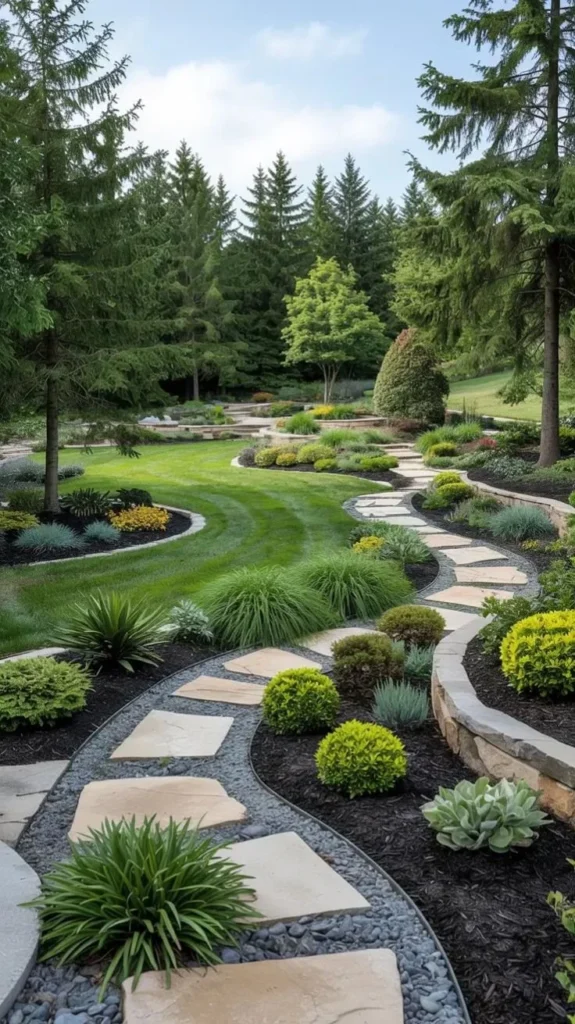
- Lay the path: Compact the ground, add a base of crushed rock, then set pavers or poured concrete. Leave consistent gaps and keep lines clean for a modern look. Tip: stagger pavers for visual interest or align them for a minimalist grid.
- Plant in masses: Use blocks of the same plant to create modernity — a line of blue fescue or several lavender mounds feels purposeful. Mix one evergreen, one grass, and one low groundcover for each bed to ensure year-round structure.
- Add containers: Place two matching pots flanking the door or a large pot at a corner to anchor the composition. Use textured ceramics for contrast against smooth siding.
- Install lighting: Solar path lights provide soft glow; install wall-mounted sconces for door lighting. Aim for layered lighting — path + accent + door — to create depth.
- Mulch and finish edges: Use river rock or metal edging to separate gravel from planting beds for a crisp finish that keeps mulch where it belongs.
- Accessorize sparingly: A bench, a modern house number, and a seasonal wreath add personality without cluttering. Avoid too many competing ornaments; the modern aesthetic thrives on restraint.
- Maintain smartly: Set up a drip irrigation timer and prune once a season. Replace a couple of plants each year if you want seasonal variety without all-new planting.
Presentation Tips
Show your new front yard in ways that welcome and impress. In an entryway context: place two matching tall planters near the door with sculptural succulents to frame the entrance and provide symmetry. On the porch, add a woven cushion, a narrow outdoor rug, and a small side table to turn the space into a pause point for morning coffee.
In the wider yard, create a layered look with low boxwood hedges close to the house, mid-height grasses in the middle, and groundcovers or gravel closer to the curb. Pairings that work particularly well:
- Plants: rosemary, lavender, nepeta, sedum, and ornamental grasses.
- Hardscape: charcoal pavers, light gravel, corten steel edging.
- Accessories: warm LED lighting, simple metal house numbers, woven bench cushion, a textured doormat.
Small space idea: use tall narrow planters and a single sculptural tree to create vertical interest without taking ground space. Large open-plan yards: build low berms and pathways that guide visitors through a staged experience — seating nodes, a focal boulder, and layered planting beds. For more ideas that connect fence and planting strategies with your front yard, consider reading these complementary fence and privacy planting ideas.
Care Instructions
Keeping this style fresh requires light, scheduled upkeep. Most plants chosen are drought-tolerant and need less watering; a drip irrigation system on a timer once or twice a week (depending on climate) is an efficient approach. For pots, check moisture weekly in hot months. Prune perennials lightly after bloom, and trim evergreen hedges once or twice a year to maintain clean shapes.
Cleaning materials: sweep gravel paths to remove leaves and use a leaf blower sparingly to avoid displacing stone. Wipe down metal and ceramic planters with a damp cloth; treat wood benches with a protective oil annually to preserve finish. Refresh mulch or decorative rock every 1–2 years to maintain a tidy look, and store seasonal decor (string lights, holiday items) in dry, labeled bins to protect from moisture and UV damage.
Designer’s Advice
- Scale matters: choose plants and pots in proportion to your entryway; oversized pots can overwhelm a narrow porch.
- Create rhythm: repeat a plant or material three times (pots, grasses, lights) for a cohesive, intentional look.
- Layer light: combine path, accent, and door lighting to create depth and safety after dusk.
- Contrast textures: pair smooth pavers with rough stone and soft foliage to keep the palette interesting.
- Keep it evergreen-heavy: one or two evergreen anchors maintain structure in winter and reduce seasonal replanting.
- Limit colors: stick to a restrained palette of two to three dominant colors plus a metallic accent to preserve a modern aesthetic.
- Use containers strategically: containers let renters and budget-conscious homeowners make big changes with minimal permanence.
Style Twists
- Minimalist Monochrome: For a stark modern look, choose charcoal pavers, black metal planters, and silvery-green succulents. Use geometric lines and a single specimen tree to create impact.
- Cozy Cottage-Modern: Mix warm timber seating, soft-textured grasses, and blooming lavender for scent. Add string lights and a woven outdoor rug for a welcoming, lived-in feel.
- Budget Refresh: Paint an existing bench, swap in large nursery pots painted with a neutral color, lay pea gravel over compacted soil for a new surface, and plant inexpensive massing perennials for an affordable transformation.
Frequently Asked Questions
Q: Will this style work for a small urban lot?
A: Yes — modern low-maintenance landscaping excels in small footprints. Use vertical planters, narrow beds, and a single focal point to maximize impact without crowding.
Q: Is this renter-friendly?
A: Absolutely. Use containers, movable planters, and temporary path materials (gravel, stepping stones) that don’t require permanent changes to the property.
Q: How can I match this to my existing house color?
A: Pick one accent color from the house (door or trim) and echo it in a pot or planting. For warm homes, choose golden grasses and terracotta pots; for cool-toned siding, use grey pavers and blue-gray foliage.
Q: Where should I buy materials on a budget?
A: Look for local nurseries for plant bargains, reclaimed stone yards for pavers, and hardware stores for basic hardscape supplies. Thrift stores often have quality benches and ceramics that can be refreshed with paint or new cushions.
Q: How often will I need to replace plants?
A: With drought-tolerant choices and evergreens, many plants last years. Expect to replace a few annuals or perennials each season for color, and rotate container plants annually for freshness.
Conclusion
Ready to make your front yard the calm, modern gateway your home deserves? Start small — update the path, add two matching planters, and introduce drought-tolerant masses — and you’ll be amazed at the curb appeal payoff. For a simple cost overview as you plan, consult this guide to cost breakdown for front yard landscaping to budget wisely. If you want more low‑maintenance inspiration and step-by-step ideas, explore this curated collection of low-maintenance landscaping ideas to help you finalize your plan.
We’d love to see your before-and-after photos and hear your questions — share them in the comments, sign up for our newsletter, and follow Moderndecorum.com for more practical, stylish updates that make home life better.