Front Yard Landscaping Ideas 2026 — Low Maintenance, Modern, Budget Friendly
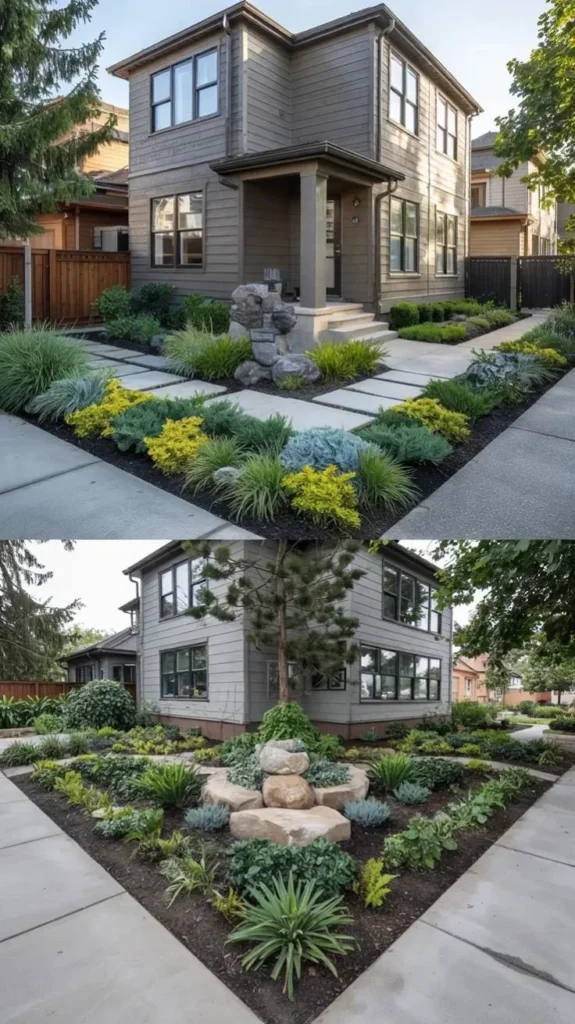
Imagine stepping out your front door into a pared-back landscape that feels both fresh and welcoming: the crunch of decomposed granite underfoot, the cool matte of charcoal pavers, sculptural native grasses catching the light, and a single bold statement plant framed by warm LED uplighting. The mood is modern but approachable — restrained colors, layered textures, and purposeful plant choices that whisper rather than shout. This is front yard landscaping for 2026: low-maintenance, modern, and budget friendly.
This approach blends practical living with design-forward sensibility. It’s not about a manicured show garden; it’s about creating an entry sequence that calms, guides, and expresses personality. Your front yard becomes an outdoor room — a transition zone where morning coffee meets evening light, where kids’ bikes park without creating chaos, and where guests know immediately they’ve arrived someplace thoughtfully kept.
This style shines at seasonal refreshes, when you want to update curb appeal quickly without a full overhaul. It’s ideal for cozy corners near porches, modern updates for older homes, renter-friendly swaps that don’t alter property forever, and anyone decorating on a budget ahead of gatherings or holidays. For inspiration that ties the rest of your outdoor spaces together, consider pairing these ideas with modern backyard fence treatments like the ones in these modern backyard fence landscaping ideas.
At a glance, this plan is efficient: less lawn, more thoughtful hardscape and drought-tolerant planting. You’ll get a crisp, modern curb that reads as intentional from the street yet delights up close with tactile finishes and subtle, layered lighting.
At a Glance
Front Yard Landscaping Ideas 2026 — Low Maintenance, Modern, Budget Friendly is an outdoor decor and landscape treatment plan that focuses on reducing upkeep while maximizing visual impact. Think of it as an outdoor makeover that includes hardscaping, simplified planting palettes, and smart lighting rather than traditional, high-maintenance flowerbeds.
- Item type: Landscape design package — hardscape, plantings, lighting, and simple structural elements (no heavy architecture).
- Main style: Modern minimalism with touches of natural, sculptural planting.
- Typical colors/materials/textures: Charcoal pavers, warm wood accents or composite decking, crushed gravel or decomposed granite in tan or gray, matte black metal, native grasses, succulents, and textured perennials.
- Best zones: Front yard, pathway, entryway, small porch garden, and curb strips.
- DIY vs. store-bought: Mix — many elements are DIY-friendly (gravel, pavers, planting), while lighting and specialist materials may be store-bought or installed by pros.
Why It Works
Visually, this style simplifies the scene. Replacing a large expanse of turf with contrasting hardscape planes and grouped plantings creates the illusion of more usable space and draws the eye along purposeful lines. Dark, neutral paving grounds the composition while lighter gravels add contrast. The result is a balanced, modern façade that reads clean on the curb and rich up close.
Emotionally, low-maintenance landscaping reduces decision fatigue. It frees time for morning coffee on the stoop, weekend gatherings, and relaxed evenings under soft lights instead of hours of mowing and weeding. The restrained palette and rhythmic plantings create calm and sophistication — welcoming for guests and restorative for residents.
Practically, these ideas save water, time, and money. Using drought-tolerant plants and replacing lawn with gravel and pavers lowers irrigation costs and reduces mowing. Grouped planting beds with mulch and drip irrigation minimize weeds. And because the look is modular, you can phase the project over weekends or seasons based on budget and time.
Why Choose It
This approach is perfect for busy families, empty-nesters downsizing maintenance, renters with permission for non-permanent upgrades, and novice gardeners who want big visual payoff with little fuss. It’s also an excellent option for homeowners preparing to sell who want strong curb appeal without overcapitalizing.
Key strengths: affordability, flexibility, longevity, and ease of updating. A modern front yard built with modular pavers and gravel can be shifted, extended, or softened with seasonal containers. It’s timeless because the backbone — neutral hardscape and sculptural plantings — reads contemporary year after year.
Real-life problem solved: an awkward, patchy lawn can be turned into a low-care entry sequence. Narrow or sloped yards become usable when you add terraced gravel beds and a clear path. Dark, uninviting entries get brightened with layered lights and reflective materials like a pale gravel path or light-colored steps.
How to Style Front Yard Landscaping Ideas 2026 – Low Maintenance, Modern, Budget Friendly
{ingredients}
- Main items:
- Decomposed granite or crushed gravel (1–3 cubic yards depending on yard)
- Concrete or charcoal pavers (stepping stone size or modular slabs)
- Low-water, native plants (ornamental grasses, rosemary, lavender, agave, sedum)
- Mulch or small river rock for planting beds
- Drip irrigation kit and a programmable timer
- Low-voltage LED path lights and an uplight or two for focal plants
- Landscape edging (metal or plastic)
- Landscape fabric (optional for weed control)
- Optional upgrades:
- Warm wood slat screen or composite accent
- Metal house numbers and mailbox in matte black
- Bench or compact bistro set for a porch
- Larger specimen plant or sculptural pot
- Budget-friendly substitutions:
- Reclaimed pavers or thrifted flagstone
- Recycled plastic edging instead of metal
- Thrifted or painted pots for instant focal points
- DIY gravel planters formed with timber frames
{directions}
- Plan your flow: Walk the route guests will take from the curb to the door. Sketch a simple path and mark zero, one, or two focal points (a tree, a specimen pot, a bench). Keep the path width at least 3 feet for comfortable movement.
- Remove high-maintenance turf: Use a sod cutter or manual spade to remove grass where the new gravel beds and pavers will be. Rake and level the soil. Tip: Work in sections so you can finish small zones at a time.
- Install edging and base: Lay landscape edging to define gravel areas and prevent spread. For pavers, excavate 3–4 inches, add compactible base material, and compact firmly. Common mistake: skipping compaction — pavers will shift if not properly bedded.
- Lay pavers and gravel: Lay pavers in your chosen pattern and fill joints with fine gravel or sand. Spread decomposed granite around pavers, rake smooth, and compact with a plate compactor for stability.
- Plant in groups: Create drifts of 3–7 plants per species rather than single specimens. Group plants by water needs and bloom time. Tip: Place taller plants toward the back or near the house and low, textural plants near paths to avoid overgrowth into walkways.
- Mulch and install irrigation: Add mulch or rock around plants and run a drip irrigation line on a timer. Adjust emitters to match each plant’s requirements. Common mistake: using overhead sprinklers — they encourage disease and waste water.
- Layer lighting: Place path lights 6–8 feet apart for even illumination. Add an uplight for your main focal plant or a porch light to create a warm pool of light at the entrance. Use warm (2700–3000K) LEDs for a welcoming glow.
- Add finishing accents: Anchor the design with a few large pots, a simple bench, or a sleek mailbox. Keep accents minimal and in the same color family as your hardscape for cohesion.
- Test and tweak: Observe the space at different times of day. Move potted plants as needed, prune any specimens that encroach on walkways, and adjust lighting angles for shadow control.
- Maintain seasonally: Top up gravel annually, refresh mulch or rocks, and replace one or two plants each year to keep the look lively without heavy work.
Best Pairings
This front yard style pairs beautifully with natural materials and simple accents. Think a warm wood house number, a matte black mailbox, and a light, textural mat at the door. For green companions, use sculptural succulents in a modern pot and a low, flowing groundcover along the edges.
For ideas that coordinate with boundary elements like fences and screens, check out these practical fence-friendly planting options in our roundup of backyard fence landscaping ideas — many translate perfectly to a front-yard context.
Small-space idea: For tight front strips, use a single row of evenly spaced pavers with gravel between them and tall, narrow plantings (ornamental grasses or dwarf bamboo) to create height without bulk.
Large or open-plan front yards: Break the yard into three zones — arrival path, social porch, and planting field — using different gravel colors, a larger paver platform near the door, and a sculptural specimen tree to anchor the composition.
Pairing suggestions:
- Plants + lighting: grasses illuminated from below for soft motion at night.
- Textures: mix matte concrete, warm wood, and fine gravel for contrast.
- Accessories: one statement pot or bench, not many small accessories.
Care Instructions
Cleaning and maintenance are minimal but regular touches keep the design sharp. Sweep or blow loose debris from pavers monthly. Wipe down metal and wood accents with a damp cloth; treat wood annually with a UV oil if it’s natural timber. For metal, mild soap and water prevent buildup; avoid harsh abrasives.
Refresh plantings seasonally by cutting back ornamental grasses in late winter and deadheading perennials after bloom. Replace mulch or top up gravel each fall to keep edges crisp and suppress weeds. Check your drip irrigation at least twice a year for clogs or misaligned emitters.
For storage of seasonal decor (wreaths, extra pots, or lighting), keep items in a dry, covered area. Protect any fabric cushions with breathable covers and store metal items in a shed if you expect heavy winter storms to avoid oxidation or dents.
Designer’s Advice
- Balance scale: ensure pavers and planting groups are proportionate to house height; larger homes can take bolder, chunkier pavers.
- Rule of threes: group plants in odd numbers for natural-looking clusters.
- Layer light: combine path lights, uplights, and porch lighting to create depth after dark.
- Use repetition: repeat one plant or material across the frontage to unify the composition.
- Limit color: stick to two or three plant colors to maintain a modern, calm look.
- Edge neatly: crisp edges make simple landscapes feel intentional; use metal edging for a contemporary line.
- Plant for seasons: include at least one plant with winter interest (evergreen or architectural form) so the yard reads well year-round.
Style Twists
- Minimalist modern: Use large charcoal slabs, white gravel, and a single sculptural olive or Japanese maple. Luxury-ish but still low maintenance with sparse irrigation.
- Cozy cottage-modern: Swap some gravel for a meadow mix and add a small bench, soft outdoor textiles, and a mix of scented herbs like lavender and rosemary for sensory charm.
- Budget/thrifted: Reclaimed pavers, thrifted pots painted matte black, and nursery-scale natives will keep costs low while achieving the same structure and flow.
Frequently Asked Questions
Q: Will this work for a steep front yard?
A: Yes. Use terraced gravel beds, retaining timber or modular blocks, and set paths on switchbacks to reduce slope and erosion.
Q: Is this approach renter-friendly?
A: Absolutely. Many elements are reversible: pavers on a gravel base, container plants, and removable lighting that requires minimal holes or permanent changes.
Q: How much water will I save?
A: Replacing lawn with drought-tolerant plantings and drip irrigation can significantly cut water use — often by 50% or more, depending on climate and plant choices.
Q: Where should I buy materials without overspending?
A: Look for recycled or clearance pavers, local landscape supply yards for bulk gravel, and community plant sales for affordable, adapted plants.
Q: How often should I refresh the look?
A: Annual top-ups of gravel and occasional plant replacements (one or two per year) keep the space current without major work.
Conclusion
Ready to transform your curb without the constant upkeep? These Front Yard Landscaping Ideas for 2026 offer modern impact, easy maintenance, and budget-friendly flexibility — perfect whether you’re updating for daily comfort, hosting friends, or preparing your home for sale. For a useful cost and scope overview to plan your project, see this helpful front yard landscaping cost guide, and for more low-maintenance concept inspiration check this collection of low‑maintenance front yard landscaping ideas.
We’d love to see your before-and-after photos or hear questions from your own front-yard projects — share them in the comments below. Explore more fresh ideas at Moderndecorum.com and join our community for seasonal tips and styling guides.