Front Yard Landscaping Ideas 2026 – Low Maintenance, Modern, Budget Friendly
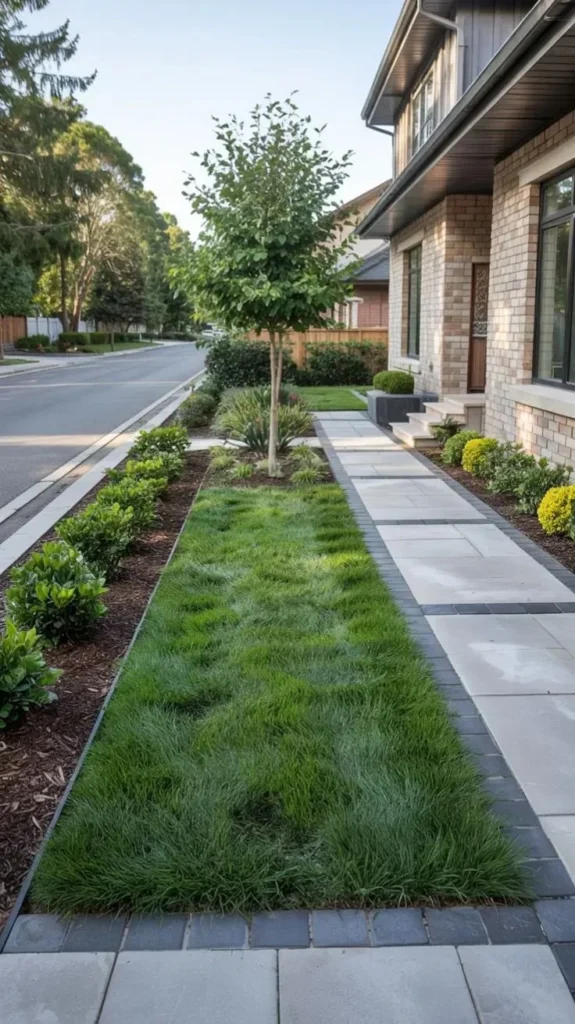
Imagine pulling up to a home whose curb feels calm, purposeful, and unexpectedly fresh—an entry that whispers “welcome” with a palette of stone, soft grasses, and sculptural plantings rather than shouting with cluttered flowerbeds and tired ornamentals. In 2026, front yard landscaping leans into quiet confidence: streamlined plant palettes, tactile edging, drought‑tolerant textures, and pops of warm lighting that make evenings glow. Picture textured concrete pavers underfoot, low mounds of blue fescue swaying in the breeze, a tidy line of river rock, and a single sculptural tree anchoring the scene—simple, modern, and humane.
This low‑maintenance, modern, budget‑friendly approach is about more than looks. It’s about time: fewer weekly chores, lower water bills, and more room for the weekend ritual of enjoying your porch or hosting a casual evening with neighbors. The mood is calm and contemporary—cool greys and warm neutrals, punctuated by chartreuse foliage or the copper patina of a planter. Surfaces are practical yet tactile: smooth pavers, crushed gravel that whispers underfoot, and matte black accents on lighting and house numbers.
This concept works wonderfully as a seasonal refresh—swap a few containers and lights for holidays—or as a renter‑friendly update that relies on freestanding planters and temporary edging rather than permanent hardscaping. It’s also a lifesaver when preparing for gatherings: low fuss, high impact layouts make paths easy to navigate and create natural places for guests to mingle. If your front yard feels outdated or high‑maintenance, these ideas will help you reinvent it without a major budget or long construction timelines. For fence‑adjacent projects and ideas that extend this curb story into your backyard, consider how these principles pair with our guide to 65 backyard fence landscaping ideas.
At a Glance
Front Yard Landscaping Ideas 2026 – Low Maintenance, Modern, Budget Friendly is a landscape design approach that prioritizes simple hardscaping, drought‑tolerant plantings, and economical materials to create a contemporary curb with minimal upkeep. It’s a mix of decor and structural elements—think planters, lighting, pathway materials, and sculptural plant choices.
- Main style: Modern/minimalist with touches of contemporary and xeriscape sensibility.
- Typical colors/materials/textures: Neutral pavers (greys, sand), black metal accents, warm wood or composite decking, gravel or river rock, ornamental grasses, succulents, and architectural shrubs. Textures are smooth pavers, rough stone, soft grasses, and matte metals.
- Best zones: Front yard, entryway path, porch, driveway edges, and small planting beds near the house.
- DIY vs. store‑bought: Mix — many elements (planters, lighting, edging) are DIY‑friendly while items like pavers, specialist lighting, and high‑quality planters are easier bought ready‑made.
Design Impact
Adopting these front yard landscaping ideas changes both how a home looks and how you live in it. Visually, the design simplifies and amplifies: fewer plant varieties, repeated materials, and deliberate negative space give the eye a clear path, making the yard feel larger and more modern. A well‑placed focal point—an architectural tree, a vertical planter, or a water bowl—creates a calm center for the composition, improving balance and flow from the curb to the front door.
Emotionally, low‑maintenance landscapes reduce decision fatigue and stress. On busy weekdays, you’ll appreciate that your yard looks composed without daily upkeep. Evenings become softer and more inviting with layered lighting—step lights along a path, a warm wash highlighting a tree, and a welcoming porch pendant. Practically, these solutions lower water usage, simplify lawn care (or eliminate it), and make the front of your house easier to maintain year after year. Picture spending a Saturday morning sipping coffee on your stoop while the ornamental grasses sway and the pathway lights guide visitors without any frantic last‑minute tidying.
Why Choose It
This approach is perfect for renters, busy professionals, small families, and anyone who values modern aesthetic on a realistic budget. Renters appreciate that many components are non‑permanent: container gardens, modular planters, and removable gravel beds that can travel with you. Families benefit from durable surfaces and easy‑care plantings that don’t require delicate pruning or constant watering. Design beginners can achieve a high‑end look by repeating a few elements and sticking to a restrained palette.
Key strengths include affordability (choose gravel over full concrete, reuse boulders or pavers), flexibility (modular planters and lighting that can be adjusted over time), and timelessness; neutral materials and classic silhouettes don’t date quickly. Real‑life fix: if your front yard has an overgrown lawn that demands time and money, replace it with a simple layout—central path, two planting beds of drought‑tolerant shrubs, and gravel groundcover—to instantly remove hours of maintenance and create a modern entrance.
How to Style Front Yard Landscaping Ideas 2026 – Low Maintenance, Modern, Budget Friendly
ingredients
- Main items:
- Concrete or porcelain pavers (rectangular for modern look)
- Crushed gravel or decomposed granite for groundcover
- Low‑water shrubs (e.g., dwarf yucca, lavender, rosemary, boxwood where appropriate)
- Ornamental grasses (blue fescue, miscanthus, carex)
- One focal tree (ornamental pear, Japanese maple, or small olive tree)
- Matte black or bronze path lights and house numbers
- Large planters (fiberglass, concrete, or lightweight composite)
- Landscape fabric and edging (optional)
- Optional upgrades:
- Drip irrigation kit for planters and beds
- Outdoor rugs for porch seating
- Copper or corten steel planters for warm patina
- Solar bollard lights or LED string lights
- Budget substitutions:
- Reclaimed pavers or bricks from salvage yards
- Thrifted or DIYed planters painted matte black
- River rock in place of purchased decorative stones
directions
- Start with a plan: sketch the front yard and mark existing features (driveway, utility boxes, slope). Identify the path from curb to door and visualize a clear, straight or gently curving route—modern schemes favor a single, confident path.
- Choose a restrained palette: limit hardscape colors to two neutrals (e.g., charcoal pavers + warm sand gravel) and keep plant colors grayscale with one accent (a tree with burgundy leaves or lime‑green succulents).
- Establish the focal point: place the focal tree or sculpture near the front door axis or to one side for asymmetry. This anchors the design and reduces the need for many small plantings.
- Lay durable surfaces first: install pavers on compacted base and edge with metal or plastic edging to keep gravel in place. For budget installs, create a stepping‑stone layout in decomposed granite to reduce material costs.
- Group plants in mass: plant 5–7 of the same species in drifts rather than mixing many species—this looks modern and is easier to maintain. Position taller plants at the back near the house and shorter ones closer to the path.
- Add texture with gravel and grasses: use banding—solid pavers next to narrow strips of gravel edged by grasses—to create contrast and low upkeep groundcover.
- Plan lighting for safety and mood: step lights every 6–8 feet, a focused uplight for the focal tree, and a warm porch light. Use 2700K–3000K bulbs for a welcoming glow.
- Use planters for flexibility: place large planters at the porch or on the path edges to add seasonal color and to create a renter‑friendly option that can be swapped easily.
- Install drip irrigation or soaker hoses to minimize watering time. Group plants by water needs to avoid over‑ or under‑watering.
- Finish with small accents: a matte house number, a low bench, and a tidy mulch or rock layer to suppress weeds. Avoid clutter—every piece should serve a visual or practical purpose.
Best Pairings
This modern, low‑maintenance front yard pairs beautifully with clean exterior finishes and simple porch styling. On an entryway, a pair of matching planters flanking the door creates symmetry; consider matching the planter color to your door or metal trim for continuity. In a small yard, favor vertical elements—tall narrow trees or a slim trellis with a trained vine—to create height without taking up precious ground area. For larger, open front yards, create zones: a defined path, a sculptural planting bed, and a casual seating nook near the porch.
Pairings to consider:
- Plants: combine ornamental grasses with evergreen shrubs to maintain structure year‑round.
- Soft elements: an outdoor rug and two chairs on the porch add comfort and invite lingering.
- Accessories: black lanterns, a simple bench, and natural woven baskets for storing shoes or umbrellas near the door.
- Small space idea: use narrow, rectangular planters along a walkway to frame the path without crowding.
- Large space idea: lay a broad gravel field with a repeating grid of pavers to create a dramatic, low‑maintenance front court—convenient for guest parking and gatherings.
For examples that bridge front and backyard aesthetics, explore complementary layouts in our follow‑up guide to backyard fence landscaping ideas 2026 — part two.
How to Maintain
Low‑maintenance doesn’t mean no maintenance. Plan for light upkeep: dust off outdoor cushions seasonally, sweep gravel once or twice a year, and check lighting bulbs every fall and spring. For planted areas, prune perennials in early spring, deadhead sparingly, and divide clumping grasses every 3–4 years to keep them tidy.
Cleaning materials safely:
- Pavers: sweep regularly and pressure‑wash on low setting for stains; reapply joint sand if needed.
- Metal accents: wipe with mild soapy water and dry to prevent spotting; use a soft brush for textured finishes.
- Planters: lift containers briefly and wipe undersides to prevent moisture buildup that can stain hardscape.
- Fabric cushions: follow label instructions—most outdoor fabrics can be spot‑cleaned or machine‑washed on a gentle cycle.
Store seasonal items—string lights, extra cushions, and holiday décor—in breathable bins in a dry place to prevent mildew and fading. Keep a rotation: swap a seasonal planter or cushion color each quarter to refresh the aesthetic without a major overhaul.
Designer’s Advice
- Use odd numbers when grouping plants (3, 5, 7) for natural rhythm and balance.
- Scale lighting to human height: path lights 12–18 inches tall, uplights hidden low to create drama.
- Keep contrast high: pair smooth pavers with rough gravel and soft grasses for tactile interest.
- Limit trim colors to two choices—choose one for metalwork and one for wood or composite accents.
- Repeat a material or color at least three times across the yard for cohesion.
- Mask utilities with a low shrub or a narrow screen planter rather than tall fences.
- When in doubt, less is more—empty space in a modern yard is intentional and elegant.
Creative Variations
- Minimalist twist: use large square pavers with gravel joints and a single specimen tree. Monochrome palette, very clean lines.
- Cozy twist: add warm wood slatted planters, string lights over the porch, and a plush outdoor rug for a welcoming, lived‑in feel.
- Budget/thrifted twist: source reclaimed brick or pavers, paint inexpensive planters matte black, and use salvaged rocks for edgings; combine with perennial herbs for scent and function.
- Occasion styling: for holidays, swap planter liners for seasonal foliage and add battery‑operated lanterns; for summer gatherings, add modular seating and low tables.
Frequently Asked Questions
Q: How do I match this style with an older home?
A: Use modern elements sparingly—keep the palette and plant choices modern but choose materials that complement your home’s age (e.g., warm stone instead of stark concrete). A simple path and restrained planting can modernize without clashing.
Q: Is this suitable for small apartments with only a tiny yard?
A: Absolutely—use vertical planters, narrow beds, and a simple stepping stone path. Containers can do most of the heavy lifting and are easy to swap.
Q: Are these ideas renter‑friendly?
A: Yes—favor movable planters, temporary gravel beds with edging, and lighting that clips on or is solar so nothing is permanent.
Q: Where can I find quality items on a budget?
A: Look at local salvage yards, garden centers’ clearance sections, and community marketplaces for used pavers and planters that can be refreshed.
Q: What’s the best way to store outdoor textiles in winter?
A: Clean and fully dry cushions and rugs, then store in breathable containers in a dry space away from direct sunlight.
Conclusion
Ready to transform your curb with low‑maintenance, modern, budget‑friendly landscaping? Try one small change first—replace a worn lawn strip with a gravel bed and a pair of matching planters—and build from there. We’d love to see your before‑and‑after photos, answer questions, or hear what worked for your front yard—share them in the comments below and join our community for more ideas.
For a practical cost breakdown and additional project ideas, check this resource: Front Yard Landscaping Ideas to Transform Your Home’s Curb …. For inspiration focused on low‑maintenance plantings and curb appeal, explore this gallery: Front Yard Landscaping Ideas for Boosted Curb Appeal – Post ….
Explore more projects and keep styling at Moderndecorum.com—your next curb refresh is closer than you think.