Front Yard Landscaping Ideas 2026: Trends And Inspiration
Imagine stepping out your front door into a layered scene of texture and scent: low, silver-green grasses whisper with the breeze; a warm-stone path edged in moss leads past a cottage-style pollinator patch; solar lanterns cast a soft, amber glow that feels like an invitation. The 2026 front yard is not just a first impression — it’s a slow, sensory welcome that sets the mood for your whole home. Colors are calmer, palettes lean earthward with unexpected accents, and materials feel honest: weathered wood, honed stone, soft gravel, and the glint of dark metals.
Why does this matter? Because your front yard is where lifestyle and personality meet the street. It’s the space that hosts morning coffee, late‑night goodbyes, neighborhood chats, and seasonal decorating. Thoughtful landscaping creates flow from curb to door, softens the hard edges of architecture, and gives you micro-destinations — a bench for reading, a lantern-lit path for guests, a planting bed that changes with the seasons. Whether you crave a modern minimal entry or a layered, cottage-y courtyard, 2026 trends make front yards more humane: accessible, low-maintenance, and full of small moments of delight.
These ideas are perfect for a seasonal refresh, prepping for gatherings, or a renter‑friendly facelift. If you’re hosting a summer dinner or want your porch to feel cozier in autumn, small strategic changes will transform utility into atmosphere. From budget-friendly container groupings to mid‑range hardscape upgrades and big-picture design overhauls, the 2026 approach values adaptability. For more backyard fence and boundary inspiration that pairs naturally with many of these front yard looks, see this helpful roundup on backyard fence landscaping ideas.
At a glance
Front Yard Landscaping Ideas 2026: Front Yard Landscaping Ideas 2026 Trends And Inspiration is a coordinated approach to curbside plantings, pathways, lighting, and small hardscape elements that enhances curb appeal and everyday enjoyment. Think of it as outdoor decorating that respects ecology, utility, and aesthetics equally.
Main style: Modern-natural with touches of Scandinavian minimalism, cottage revival, and sustainable vernacular.
Typical colors, materials, and textures:
- Colors: warm neutrals, muted greens, charcoal accents, ochre and terracotta pops.
- Materials: natural stone, compacted gravel, corten or powder‑coated steel, reclaimed wood, and drought-tolerant plantings.
- Textures: soft grasses, architectural succulents, rough‑hewn planters, and smooth pavers.
Best zones: front entry, pathway borders, porch planters, and small front courtyards.
DIY vs. store-bought: Mix — many features are DIY-friendly (planters, path edging, planting schemes), while lighting, irrigation, and larger hardscape pieces are often store-bought or prosourced.
Design Impact
A well-crafted front yard reorients the way you experience homecoming. Visually, these 2026 landscapes use layered heights and a restrained material palette to create a calm, coherent look that reads as intentional from the street. Low plant masses near the curb lead the eye inward, while taller, sculptural plants near the entry create a protective, welcoming threshold. Pathways and materials are chosen to shrink or expand perceived space: stepping-stone pavers on gravel can make a narrow strip feel intimate, while wide bluestone slabs set into lawn broaden a sweeping approach.
Emotionally, the result is grounding. Natural textures and seasonal plantings invite slow, sensory moments — the citrus perfume in spring, the rustle of ornamental grasses in fall. Practically, these designs emphasize multifunction: native beds that attract pollinators, drip irrigation for water savings, and multifunctional seating that doubles as storage. Imagine getting off work, pausing on the stoop surrounded by lavender and rosemary, or catching neighbors passing by — the yard becomes social space, not just ornament.
Why Choose It
Front Yard Landscaping Ideas 2026: Front Yard Landscaping Ideas 2026 Trends And Inspiration is an excellent choice for people who want visible returns (curb appeal, quality time outdoors) without a high-maintenance commitment. It’s perfect for busy families who want low-water plantings, renters who need container-based solutions, and design enthusiasts seeking a cohesive street-facing statement.
Key strengths include affordability through phased upgrades, flexibility to adapt to seasons, and longevity because of durable materials. For example, a narrow, shaded front strip that once felt like wasted space can be transformed into an aromatic herb border and a narrow bench, solving the “dead verge” problem while creating a micro-gathering spot. For homeowners with limited space who want privacy and personality, a mix of vertical planters, a slim gravel path, and layered lighting gives the sensation of enclosure without heavy fencing.
How to Style Front Yard Landscaping Ideas 2026: Front Yard Landscaping Ideas 2026 Trends And Inspiration
{ingredients}
- Main items:
- Native and drought-tolerant plants (ornamental grasses, lavender, salvia, rosemary, small evergreen shrubs).
- Hardscape: pavers, compacted gravel, edging materials, stepping stones.
- Planters (terracotta, corten steel, reclaimed wood boxes).
- Low-voltage or solar path lights and accent uplights.
- Mulch or decorative gravel.
- Simple drip irrigation kit or soaker hoses.
- Optional extras:
- Bench or small seating, outdoor rug for porch, decorative boulders, trellis, birdbath.
- Accent pots, seasonal bulbs, string lights for gatherings.
- Budget-friendly substitutions:
- Thrifted pots, reusing shipping pallets for planter boxes, pea gravel instead of decorative stone, solar lights instead of wired lighting.
{directions}
- Assess your site: note sun exposure, soil type, and drainage. Map out traffic flow from street to door and where you want focal points (bench, planter, tree). Tip: stand at eye level from the sidewalk to ensure curb appeal reads well.
- Choose a restrained palette: pick 3–4 plant species plus one pop color for seasonal accents. For a minimalist look, stick to varying greens and silver tones; for cottage charm, add soft pinks and blues.
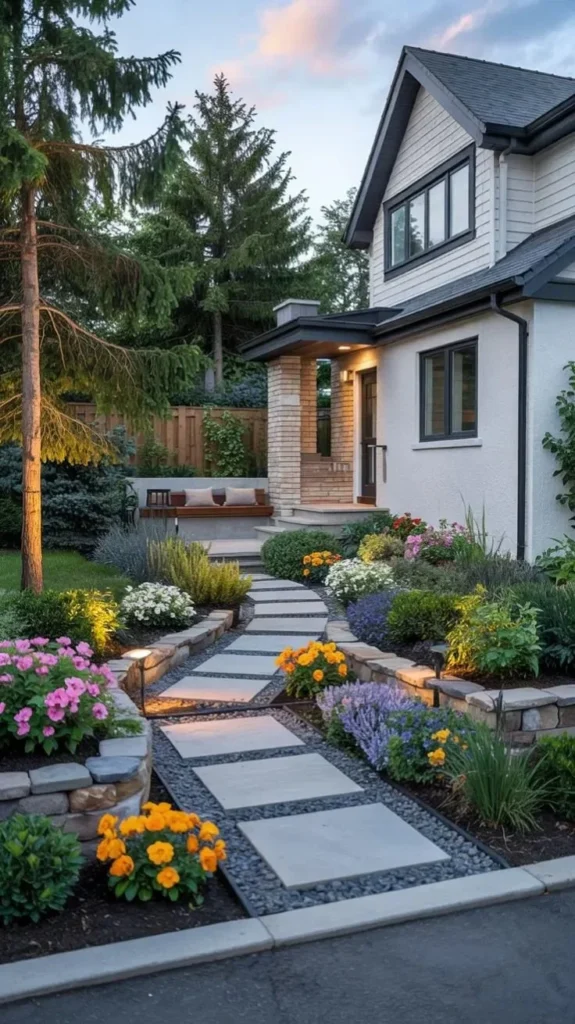
- Define the path: decide between a straight, formal path or a meandering one. Use stepping stones to make a narrow yard feel longer; wide slabs create a modern approach. Keep path width at least 3 feet for comfortable two-way passage.
- Layer heights: plant low groundcovers and bulbs at the front, medium shrubs mid-depth, and one or two vertical elements near the entry (small tree, columnar shrub, or tall planters) to frame the doorway.
- Install smart irrigation: lay drip lines or soaker hoses before final topsoil and mulch are added. This prevents overwatering and reduces maintenance time.
- Add lighting in layers: path lights for safety, uplights for architectural plants or trees, and warm string lights for porch coziness. Use warm (2700–3000K) bulbs for an inviting evening glow.
- Incorporate texture and material contrast: pair smooth pavers with rough gravel or moss between stones for interest. Tip: avoid too many materials — 2–3 is ideal.
- Place planters strategically: use odd-number groupings and vary heights. Tip: put a tall planter on one side of the door and balance with two smaller pots on the other.
- Finish surfaces: apply mulch to beds for moisture retention and neatness; compact gravel pathways to prevent shifting. Common mistake: overplanting — leave breathing room for mature sizes.
- Seasonal tweak plan: schedule spring bulb planting, summer fertilizing for containers, and autumn pruning. Rotate smaller pots with seasonal color to refresh the look.
Best Pairings
Front yard designs benefit from thoughtful accessory pairings that connect the landscaping to your home’s architecture. Pair low, textured grasses with a charcoal or black front door for contrast. Porch planters in corten steel look striking with warm wood trim; clay pots balance contemporary facades. For a cozy approach, use woven baskets of potted herbs near the entrance and a small outdoor rug to create a porch “room.”
In the entryway: flank the door with two strong, symmetrical planters for instant curb appeal.
In the living room connection: echo outdoor material choices — a sisal rug or wooden side table visible from your front windows strengthens flow.
Small-space idea: use vertical planters and a slim gravel path to make a tight frontage feel layered without crowding.
Large, open-plan curb appeal: create distinct zones — a meandering path, a sitting node, and a pollinator meadow area — so guests discover the yard gradually.
For pairing inspiration and ideas on hard boundaries that complement these looks, check out this guide to backyard fence landscaping ideas which applies many of the same principles.
How to Maintain
Maintenance in 2026 front yards is about small, seasonal actions rather than daily upkeep. Dust and debris on hardscape can be cleared with a leaf blower or broom monthly; pressure-wash stone surfaces annually if needed. For plant care, prune perennials in late winter, deadhead flowering plants through summer, and check irrigation lines seasonally for clogs or leaks.
Material-specific care:
- Wood planters: reseal once a year if they’re untreated; consider lining with plastic to prolong life.
- Metal elements (corten, powder-coated steel): rinse salt and debris in coastal areas to avoid corrosion; patinaed corten is expected and protective.
- Fabric cushions/rugs: store or cover during winter months; wash according to labels or use outdoor fabric cleaners.
Rotate container plantings for seasonal interest and refresh mulch annually to keep beds looking intentional. Keep a small garden toolkit near the porch for quick tasks — pruning shears, a hand trowel, and gloves.
Designer’s Advice
- Scale to the street: design for the viewpoint from the sidewalk, not just your front door.
- Use odd numbers in groupings for natural balance.
- Layer light sources — path, accent, and ambient — to create depth after dusk.
- Choose native plants for longevity and pollinator benefits.
- Keep two neutral hardscape materials and one accent material to avoid visual chaos.
- When in doubt, prioritize functionality (clear path, safe steps) over decorative elements.
- Test plants in containers first: they’re easy to replace if a variety doesn’t thrive.
Style Twists
Minimalist: Use a monochrome palette (charcoal pavers, white gravel, silver-gray plants) and a single sculptural tree like a columnar olive. Keep furnishings minimal — one bench, one planter.
Cozy Cottage: Mix native flowering perennials, cottage shrubs, and a meandering stepping stone path. Add lanterns and layered pots with seasonal color for a homey feel.
Budget/Thrifted Version: Repurpose reclaimed bricks for edging, use thrift-store pots painted in a unified palette, and rely on bulbs and hardy perennials that return yearly for low-cost color.
Luxury Version: Invest in integrated low-voltage lighting, bespoke steel planters, and a small water feature or sculptural focal point to elevate the entry.
Frequently Asked Questions
Q: How do I match a front yard design to my existing house color and style?
A: Start with the dominant architectural tone (warm or cool). If your house is warm-toned, choose warm plant accents (golden grasses, terracotta). For cool-toned homes, lean into silver foliage and slate or charcoal hardscapes. Repeat one exterior color in pots or cushions to unify.
Q: Can these ideas work for small apartments or condos with only a stoop?
A: Yes. Focus on container groupings, vertical plantings, and a single decorative feature like a lantern or a statement pot to create a welcoming micro-entry.
Q: Are these trends renter-friendly?
A: Absolutely. Use containers, removable gravel, and temporary lighting (solar or plug‑in) to create impact without permanent changes.
Q: Where can I source quality materials without overspending?
A: Look locally for reclaimed stone, thrift stores for pots, and garden centers for seasonal sales. Buying plants in gallon sizes is usually cost-effective for long-term results.
Q: How should I store seasonal items like string lights and cushions?
A: Keep them in a breathable storage bin in a dry place. For cushions, use waterproof covers and elevate them off concrete to avoid moisture buildup.
Conclusion
Front yard landscaping in 2026 is about creating a layered, intentional welcome that blends beauty with practicality — low-maintenance plantings, warm layered lighting, and thoughtful materials that age gracefully. Try a small, staged refresh this season: a new pair of planters, a clean pathway, and a night-time lighting layer will change how your home feels from the curb and to your everyday routines. Share your before-and-after photos or questions below — we’d love to see what you create.
For seasonal planting inspiration and storytelling that pairs well with these front yard ideas, browse this curated home-and-garden blog for creative concepts at Welcome to Jane at Home, and for technical design tips and visualization tools, explore practical guides on Design Inspiration Blog Tips & Tricks.