Front Yard Landscaping Ideas 2026: Front Yard Landscaping Ideas With Simple Walkways
Imagine stepping outside to a front yard that feels deliberate and welcoming: the soft crunch of pea gravel underfoot, the sun dappling through a row of clipped boxwood, and a simple walkway that guides you like a friendly hand to the door. In 2026, front yard landscaping is leaning into calm, intentional design—clean lines, warm textures, and plantings that look effortless yet curated. Simple walkways are the backbone of this look: they set the pace, create balance, and add texture without shouting for attention.
A well-designed walkway is tactile and sensory. Picture smooth, low-profile pavers set in a field of fine gravel; in the evening, low LED path lights cast a honeyed glow across the stone. The air smells faintly of lavender and freshly cut grass; the sound of water from a small fountain mixes with birdsong. Colors are muted—soft charcoals, warm terracotta, sage greens—while material contrasts (cool concrete against warm wood, rough stone beside velvety groundcover) keep the scene interesting.
Why does this decor idea matter for real homes? Because it’s about more than curb appeal. A simple, thoughtful walkway improves daily life: fewer muddy shoes after rain, a clearer path for package delivery, and a welcoming route when guests arrive. It’s an instant mood-shifter—inviting, tidy, and calming—whether you’re a busy family rushing out in the morning or someone savoring a quiet cup of coffee on the porch. For seasonal refreshes, renter‑friendly changes, or budget‑conscious updates ahead of a holiday gathering, a simplified front-yard plan with a purposeful walkway is both practical and beautiful.
If you’re expanding your yard’s narrative beyond the entry, pairing walkway ideas with fence and border treatments helps unify the property. For inspiration on how the fence and garden edges can complete the look, see this guide to backyard fence landscaping ideas that translate well to front-yard planning.
At a Glance
Front Yard Landscaping Ideas 2026: Front Yard Landscaping Ideas With Simple Walkways is a decor approach focused on low‑fuss, high‑impact front-yard layouts where straight or gently curving paths connect the street to the entry. It’s a landscape element (hardscaping) combined with plantings and lighting to form a cohesive outdoor “room.”
- Main style: Modern-minimalist with nods to cottage and Scandinavian simplicity.
- Typical colors: Charcoal, warm gray, soft taupe, terracotta, and muted greens.
- Materials and textures: Concrete pavers, bluestone, decomposed granite, pea gravel, mulch, reclaimed brick, low‑profile lighting, and restrained planting textures (ornamental grasses, boxwood, lavender).
- Best zones: Front yard entry, porch approach, driveway edges, front garden beds, and small courtyard entries.
- DIY vs. store-bought: Mix — many walkways are achievable as easy-to-moderate DIY projects (gravel paths, stepping stones), while specialty pavers or professional grading may be better as hired work.
Why It Works
A simple walkway transforms both flow and feeling. Visually, it creates a clear axis that organizes planting beds and lawn areas, giving the eye a restful line to follow. A single material or a restrained palette prevents the front yard from feeling fragmented—an effect that makes small yards read as larger and more intentional. Light-reflecting pavers coupled with low planting can brighten shaded entries, while darker stone adds depth and contrast against pale siding.
Emotionally, a clear path communicates care and hospitality. Guests feel led into the home gently; homeowners experience fewer small daily frictions—muddy shoe tracks, awkward detours over the lawn, or tripping hazards. Practically, simple walkways can be low‑maintenance: gravel with a weed-retardant base, permeable pavers for drainage, and drought-tolerant border plantings. Imagine returning from a grocery run and setting bags down on a stable, non-slip path, or hosting neighbors on the porch while string lights pick up the texture of the walkway below—these are the everyday benefits that make a small landscaping change feel like a lifestyle improvement.
Perfect For…
Simple walkways are smart for a wide range of homeowners. Renters who can’t alter hardscape permanently can still install modular stepping stones, potted border plantings, and portable lighting. Families benefit from safer, cleaner routes for strollers and kids on scooters. Busy professionals gain curb appeal without a lot of upkeep, and design lovers get a canvas for seasonal styling.
Key strengths include affordability, flexibility, and longevity. A gravel path with stepping stones is inexpensive and reversible; bluestone or poured concrete is more permanent but adds property value and requires less regular replenishing. One real-life problem this solves: a muddy front yard after summer storms. Replace the informal dirt track to the porch with compacted decomposed granite and stepping stones, and you instantly eliminate mud and create a neat edge for mulch beds—no heavy excavation required.
How to Style Front Yard Landscaping Ideas 2026: Front Yard Landscaping Ideas With Simple Walkways
{ingredients}
- Main items:
- Pavers, stepping stones, or compacted decomposed granite (DG)
- Weed barrier fabric (optional)
- Landscape edging (metal, plastic, or natural stone)
- Sand and crushed rock base for pavers
- Outdoor LED path lights or solar stake lights
- Low planting: lavender, dwarf boxwood, sedum, ornamental grasses
- Mulch or gravel for beds
- Optional extras:
- Reclaimed brick or timber for edging
- Groundcover plants (thyme, Irish moss) between stones
- Drip irrigation for border plants
- Decorative boulders, a small bench, or vertical house numbers
- Budget substitutions:
- Reclaimed pavers or second‑hand flagstone
- Stepping stones placed on compacted sand instead of full sub‑base
- Solar lights instead of wired lighting
- Thrifted planters and baskets for seasonal color
{directions}
- Sketch the route: Walk the desired path from sidewalk to door and mark it with spray paint or strings. Tip: gentle curves often feel more inviting; a straight path reads formal and modern.
- Measure and plan width: For comfortable two-way foot traffic, aim for 36–48 inches; for narrower budgets, 30 inches works for single-file access.
- Choose materials based on mood: Use bluestone or poured concrete for modern-minimalist; decomposed granite and reclaimed brick for cottage or rustic styles. Tip: match walkway color to house foundation or trim for visual cohesion.
- Prepare the subgrade: Remove turf and dig to the recommended depth (typically 4–6 inches for stepping stones, 8–12 inches for pavers). Install crushed rock base and compact. Common mistake: skipping compaction leads to settling—fix with a plate compactor before laying the surface.
- Lay the walkway material: For pavers, bed them on sand and maintain even spacing; for stepping stones, set on compacted sand and ensure each is level. Use a rubber mallet to seat stones without chipping.
- Create joints and edges: Fill joints with sand, pea gravel, or a polymeric sand for pavers. Install edging to keep materials contained and create clean lines.
- Add softening plantings: Plant low-maintenance borders—ornamental grasses and lavender for texture and scent; dwarf boxwood for structure. Tip: stagger heights to create depth; keep taller plants away from entry sightlines.
- Install lighting: Place low lights 3–5 feet apart for even illumination; highlight curves and steps to prevent shadows. Avoid overly bright fixtures that glare into windows.
- Mulch and final touches: Apply mulch or gravel to beds, and add small boulders or a single specimen plant as an anchor point. Mist test areas after rain to see drainage—if puddling occurs, modify slope or add drainage.
- Seasonal styling: Add potted evergreens in winter, flowering annuals in summer, and a low wreath or bench for holiday displays. Tip: choose containers and textiles (like an outdoor mat) that echo walkway tones for cohesion.
Presentation Tips
Simple walkways fit a variety of front-yard situations. In a small, narrow yard, opt for a single-file stepping-stone route with groundcover between stones to visually broaden the space. In larger, open-plan yards, create a main axis with a secondary branching path to a garden seating area—this makes the yard feel like a series of rooms.
Pair walkways with planted edges, low decorative lighting, and a statement piece near the doorstep (a sculptural pot, a bench, or a small fountain). Use rugs and cushions on a front porch that echo the walkway’s color palette—soft grays and warm terracotta translate beautifully from stone to textiles. For continuity between front and back, mirror materials or planting palettes; for ideas on tying yard spaces together, consider how fence treatments can echo walkway details by reading our tips on backyard fence landscaping ideas 2026.
- Small space idea: Narrow plank pavers with thyme between joints to create a green carpet effect.
- Larger yard idea: Wide bluestone steps, a gravel field, and a curve of boxwood leading to a porch seating zone.
- Seasonal swap: Change container plantings and string lights for simple holiday charm without altering the hardscape.
Care Instructions
Most simple walkway materials are low maintenance but benefit from seasonal attention. Sweep gravel paths monthly to redistribute material and remove debris; replenish pea gravel or DG annually as it compacts. For stone or paver walkways, power wash lightly once a year to remove mildew and grime. Avoid harsh chemicals on natural stone—warm water, a mild detergent, and a soft brush are sufficient.
Plants at the walkway edge need trimming to maintain the feel of a clean path—prune boxwood and perennials seasonally and deadhead flowering plants to extend blooms. Store seasonal accessories (lights, wreaths, cushions) in a dry area during winter—wrap solar lights for freezing climates to prolong battery life. If a paver settles or wobbles, lift and re-level the base immediately to prevent wider settlement; catching small issues quickly keeps the walkway feeling new.
Designer’s Advice
- Keep the path proportionate: narrow paths suit small lots; wide, inviting paths suit larger homes.
- Use repetition: repeat a plant or material every few feet to create rhythm.
- Layer lighting: combine low path lights with uplights on feature plants for depth.
- Choose permeable materials where possible to support drainage and local regulations.
- Add texture contrast: pair smooth pavers with rough gravel or soft groundcover.
- Plan for maintenance before planting—avoid high-shed plants that will clutter the path.
- Favor native, drought-tolerant plants to minimize water use and care.
Style Twists
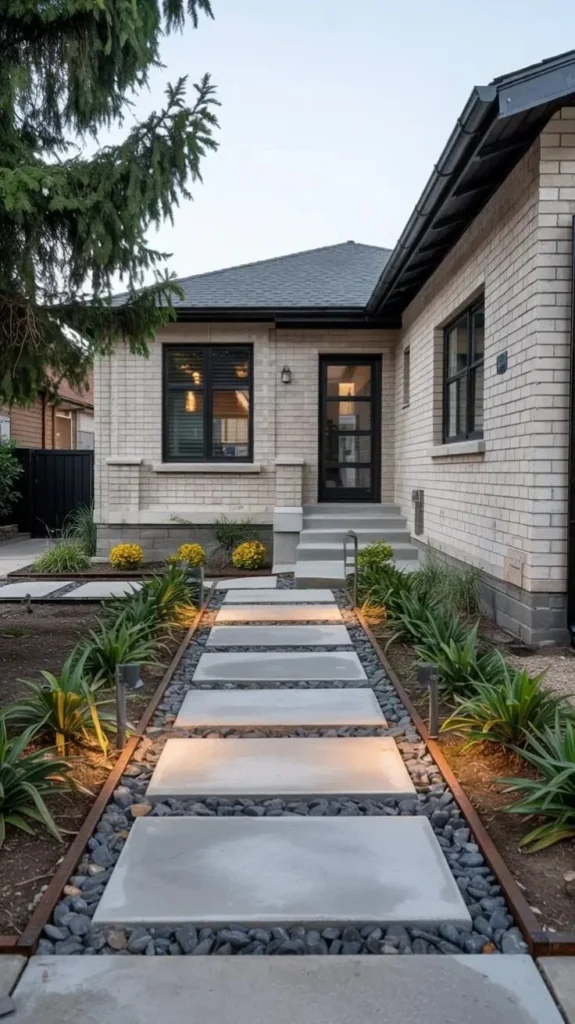
Minimal modern: Smooth concrete ribbons set in pebbled gravel, crisp steel edging, and clipped evergreen hedges create a sleek, monochrome look—ideal for contemporary homes.
Cozy cottage: Reclaimed brick path with uneven edges, thyme between bricks, lavender borders, and vintage lantern-style lighting make the approach feel storybook and fragrant.
Budget-friendly: Use large, inexpensive stepping stones on compacted sand with mulch beds and thrifted pots for color. Solar stakes and DIY reclaimed-timber edging keep costs low while delivering charm.
Common Questions & Answers
Q: How do I match a new walkway to existing house colors?
A: Pick a primary material that echoes one tone from the house (roof slate, brick, or siding). For contrast, use a second material in a lighter or darker shade to create balance.
Q: Can this work for a sloped front yard?
A: Yes—use terraced steps or switchback paths with level landings. For steep slopes, consult a professional to ensure proper drainage and safe step rise.
Q: Is a simple walkway renter‑friendly?
A: Many elements are reversible: stepping stones on sand, portable planters, and solar lighting can be removed when you move. Avoid permanent excavation unless you own the property.
Q: Where is the best place to buy affordable materials?
A: Local landscape supply yards, reclaimed-stone dealers, and community marketplaces often have quality materials for less than big-box retailers. Look for secondhand pavers and reclaimed bricks for character.
Q: How do I store seasonal decor?
A: Keep cushions and textile items in a weatherproof bin; wrap lights and delicate pots in bubble wrap or old towels and store in a dry room with stable temperatures.
Conclusion
Ready to refresh your curb appeal with a simple, stylish walkway? Start small—plot the route, choose materials that speak to your home’s character, and add low-maintenance plantings for fragrance and texture. If you’re dealing with slope challenges or want visual examples, this project pairs well with guidance on hillside layouts like the Front Yard Landscape on a Slope page, and for broader curb‑appeal ideas consider practical how‑tos such as Front Yard Landscaping Ideas to Boost Curb Appeal in North …
We’d love to see your before‑and‑after photos or answer questions—leave a comment, share tips, or explore more outdoor styling inspiration on Moderndecorum.com. Join the community and keep creating welcoming, beautiful outdoor spaces.