Introduction
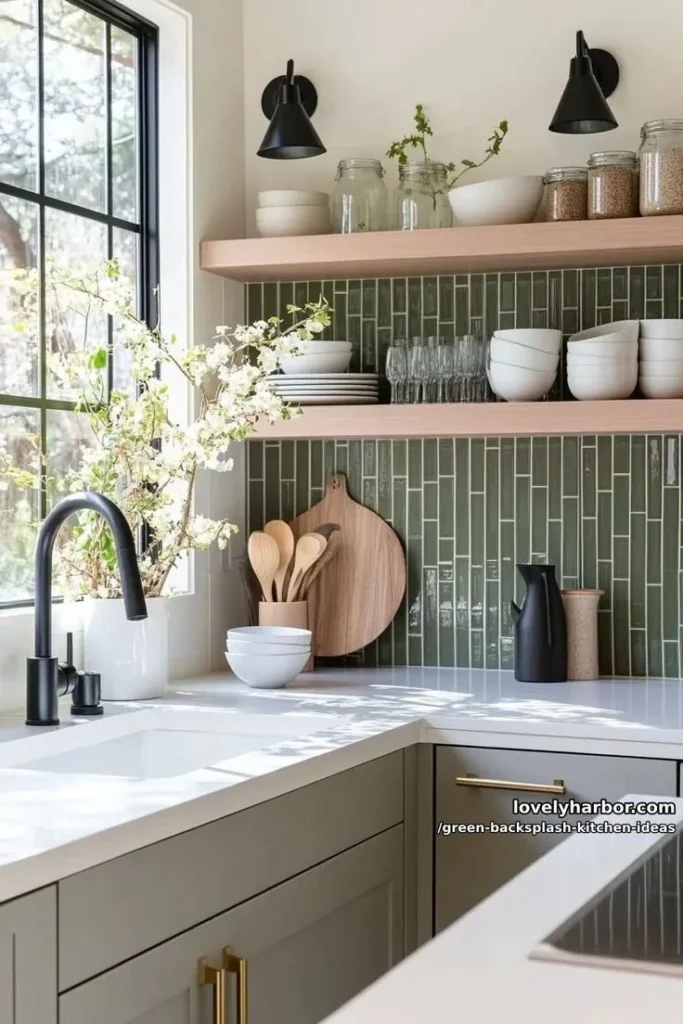
Imagine a kitchen where the backsplash does more than catch splashes — it becomes a ribbon of color that sets the mood for the whole room. From a soft sage that soothes the eye to a glossy emerald tile that bounces sunlight across countertops, green backsplashes bring a sense of life and calm to modern kitchens. Picture the tactile contrast of matte, forest-green subway tiles against warm oak cabinets, or the shimmering ripples of glass tiles that mimic sea glass under pendant lights. These are the 15 Green Backsplash Ideas for Modern Kitchens that can turn a utilitarian wall into a sensory centerpiece.
This trend matters because the kitchen is where life happens: morning coffee, school lunches, dinner parties, and quiet late‑night baking. A green backsplash isn’t just decorative — it communicates style and warmth. It can make a compact galley feel fresher, a large open-plan kitchen feel cozier, or a rental unit feel uniquely yours. Whether you’re hosting a holiday feast or enjoying a weeknight takeout, the right backsplash sets a backdrop that supports both living and entertaining.
Seasonal updates are effortless with green: pair deeper tones with brass and plaid in fall, or swap in light linens and fresh herbs in spring. For renters and budget-conscious decorators, peel-and-stick or painted tile alternatives give big impact without permanent changes. If you love the idea of a living, breathing kitchen that reflects personality — not just a showroom — these 15 green backsplash ideas will help you create a kitchen that looks inviting, functions beautifully, and feels truly lived in.
At a Glance
What it is:
- A backsplash is a decorative, protective wall surface behind a kitchen counter or stove. The 15 ideas cover tiles, panels, paint treatments, and mix-and-match approaches focused on green hues.
Main style:
- Predominantly modern with variations toward Scandinavian minimalism, mid-century modern, rustic farmhouse, and coastal chic depending on finishes and patterns.
Typical colors, materials, and textures:
- Colors: sage, mint, olive, emerald, teal, and moss.
- Materials: ceramic and porcelain tiles, glass mosaics, metal-accent tiles, natural stone, peel-and-stick options, and painted drywall with sealant.
- Textures: matte, satin, high-gloss, crackle, hammered metal, and beveled finishes.
Best rooms or zones:
- Kitchen main walls (behind sink, stove, and prep areas). Also excellent as a partial backsplash in wet bars, laundry rooms, and kitchenette nooks.
DIY vs. store-bought:
- Mix: many ideas are easy DIY (peel-and-stick tiles, paint, beadboard panels), while intricate mosaics or full stone require pro installation.
Design Impact
Green has a unique visual power: it reads as both a neutral and a statement. Lighter greens reflect light and expand space, making tiny kitchens feel airier, while darker greens add depth and drama, making open-plan kitchens feel intentionally anchored. A glossy green tile can act like a mirror, throwing highlights back into the room, whereas a matte olive creates a soft, tactile backdrop that lets metallic hardware and wood tones shine.
Emotionally, green connects us to nature — it soothes, restores, and evokes freshness. Think about coming home to the scent of lemon on your counters and a backsplash that feels like a garden wall: simple rituals like brewing tea or chopping herbs suddenly feel calmer. Practically, a well-chosen backsplash protects walls from splatters and steam and creates a surface that’s easier to clean than painted drywall. For busy households and entertainers, choosing a durable, stain-resistant finish reduces stress and maintenance time so you can focus on guests or family time.
Why Choose It
Who it’s perfect for:
- Renters who want removable options, homeowners seeking a mid-century refresh, families wanting a forgiving surface, and first-time decorators who want high impact for modest cost.
Key strengths:
- Flexible: works with many cabinet colors and countertop materials.
- Timeless: green is versatile; in small doses it’s trendy without being fleeting.
- Affordable updates: from paint to peel-and-stick tiles, many looks fit a range of budgets.
- Small-space friendly: vertical color draws the eye up, making ceilings feel taller.
Problem solved:
- Dark, dull kitchens often feel lifeless; a green backsplash adds personality and brightens the mood. In narrow kitchens with limited decorative real estate, a colored backsplash creates a focal point and reduces the need for extra accessories that clutter countertops.
How to Style 15 Green Backsplash Ideas for Modern Kitchens
ingredients
Main items:
- Tiles (subway, hex, penny, or glass mosaic) in chosen green shade.
- Grout (matching or contrasting).
- Peel-and-stick tile sheets (for renters).
- Trowel, tile spacers, tile cutter (if installing traditional tile).
- Tile sealant (for porous materials).
- Painter’s tape and semi-gloss paint (for painted backsplash option).
- Backer board or cement board for heavy tile installations.
Optional extras:
- Under-cabinet LED strip lighting.
- Brass or black metal trim pieces.
- Open shelving with brackets.
- Live potted herbs, ceramic jars, woven baskets.
- Decorative hood vent or stainless-steel accents.
Budget-friendly substitutions:
- Vinyl plank backsplash sheets or peel-and-stick tiles instead of ceramic.
- Acrylic panels painted on the back for a glossy look.
- Salvaged tile or thrifted ceramics for mosaic accents.
directions
- Choose your green based on light: select a cool mint or sea-glass for north-facing kitchens; deep emerald or olive for bright, sunlit rooms. Tip: hold a 6×6 sample against cabinets to judge contrast.
- Decide on finish: glossy tiles amplify light and look modern; matte tiles read warmer and more tactile. Avoid highly textured tiles behind the stove unless sealed thoroughly.
- Measure twice: calculate square footage for materials, adding 10–15% for cuts and waste. For peel-and-stick, order slightly more to account for pattern matching.
- Prep the wall: clean grease with degreaser, sand gloss paint to promote adhesion, and install cement board where needed for heavy tile. For painted backsplashes, prime before color.
- Lay out tiles dry: create a centerline and dry-lay to minimize awkward cut pieces at ends. Tip: use narrower grout lines for a contemporary look; wider for a rustic feel.
- Install tiles or peel-and-stick panels following manufacturer instructions; use level frequently. For grout, choose a color that either blends (for a seamless field) or contrasts (to emphasize shape).
- Seal porous surfaces and grout to prevent stains. Add under-cabinet lighting to enhance tile texture and color at night.
- Accessorize mindfully: limit countertop clutter—display a few favorite jars, a herb pot, and a tray to keep the aesthetic intentional.
- Avoid common mistakes: don’t mix too many green shades unless planning a deliberate ombré; keep metal finishes consistent (e.g., all brass or all matte black).
- Finalize with trim and caulk around edges to make the installation look built‑in and polished.
Presentation Tips
Green backsplashes are surprisingly versatile in different rooms and layouts. In a compact galley kitchen, run tile only behind the work zones to create the illusion of depth. In larger open-plan kitchens, create a full-height backsplash that rises to a dramatic hood for a theatrical, cohesive statement. A partial backsplash behind floating shelves can highlight styled ceramics and cookbooks without overwhelming the room.
Pairing green with natural textures elevates the look:
- Plants (potted basil, hanging herbs) echo the color and scent.
- Wooden countertops or open oak shelving warm cool greens.
- Brass or matte black fixtures add contrast and polish.
- Textiles like linen towels or a woven rug introduce softness.
Small-space idea:
- Use a single row of green penny tiles behind the stove and a matching painted wall to keep the space light and airy.
Large-space idea:
- Combine a deep green full-height backsplash with warm wood lower cabinets and light upper cabinets to anchor an island and create visual zones.
Also consider styling variations for your kitchen’s function: a breakfast nook can adopt softer moss tiles for a cozy corner, while an entertainer’s kitchen benefits from glossy emerald tiles that glint under pendant lights. For more moody green inspiration that extends beyond kitchens, check out this collection on moody green bedroom inspo.
How to Maintain
Cleaning and care depend on material. Glossy and glazed ceramic tiles wipe clean with a mild dish soap solution; avoid abrasive pads that scratch. For matte tiles, use a pH-neutral cleaner and a soft cloth to avoid residue. Grout can be refreshed with a grout-safe cleaner or resealed annually in high-use kitchens.
Dust shelves and top trim monthly. Wash decorative textiles like towels and runner rugs every 1–2 weeks depending on use. Store seasonal decor in labeled bins in a cool, dry place; protect delicate ceramic pieces with tissue or bubble wrap. To keep the backsplash looking new, rotate small accessories (e.g., change jar colors or switch metallic finishes) and refresh lighting bulbs to maintain a flattering color temperature.
Designer’s Advice
- Keep scale in check: use large-format tiles in big kitchens and smaller mosaic or subway styles in compact spaces.
- Layer light: combine overhead, under-cabinet, and appliance lighting to let tile color change with the day.
- Limit metals: choose one primary metal finish for fixtures and hardware for a cohesive look.
- Use grout as a design tool: match grout to tile for a seamless field or choose contrast to highlight patterns.
- Green pairs beautifully with natural wood and stone — use those materials to balance bold shades.
- Test paint and tile samples in the actual kitchen light before committing.
- For renters: peel-and-stick tiles and over-tile boards provide removable options with minimal commitment.
Style Twists
Minimalist: pale sage matte subway tile, white grout, thin black hardware, and open shelving for a calm, Scandinavian feel.
Cozy & Eclectic: mix patterned encaustic tile in greens with warm terracotta accents and woven baskets for texture and personality.
Budget-friendly: peel‑and‑stick emerald glass-look sheets over a painted wall, brightened by under-cabinet LED tape for the gloss effect without the pro install.
Frequently Asked Questions
Q: Will a green backsplash clash with wood cabinets?
A: Not usually — most greens complement wood. Lighter greens work beautifully with pale woods; deeper greens pair well with walnut or painted lower cabinets.
Q: Is a green backsplash renter‑friendly?
A: Yes — choose peel-and-stick tiles, removable panels, or painted microwave-friendly backsplashes to avoid permanent changes.
Q: How do I choose between glossy and matte tiles?
A: Glossy amplifies light and color; matte reads softer and masks smudges. Consider how much light your kitchen receives and how much cleaning you want to do.
Q: Where can I find quality tiles on a budget?
A: Look for online tile shops, local tile outlets, or remnant centers; also consider remnant or clearance sections at home centers.
Q: How often should I reseal grout or stone backsplashes?
A: Typically every 1–2 years for high-use areas; check manufacturer guidelines for specifics.
Conclusion
Ready to bring one of these 15 Green Backsplash Ideas for Modern Kitchens into your home? From quick peel-and-stick refreshes to full ceramic installations, there’s an option to fit your budget and lifestyle. If you want removable solutions that look high-end, check out Peel and Stick Wall Tiles for Kitchen, Bath & More | Smart Tiles … for ideas that make updates easy. For more curated inspiration on green backsplashes and styling examples, explore this helpful roundup: 15 Green Backsplash Ideas For Modern Kitchens – Lovely Harbor.
Try a small sample first, snap a photo when you’ve styled your backsplash, and share it in the comments — we love seeing how ideas translate into real homes. For more decorating tips and step-by-step projects, join our community and follow Moderndecorum for fresh inspiration and seasonal styling guides.