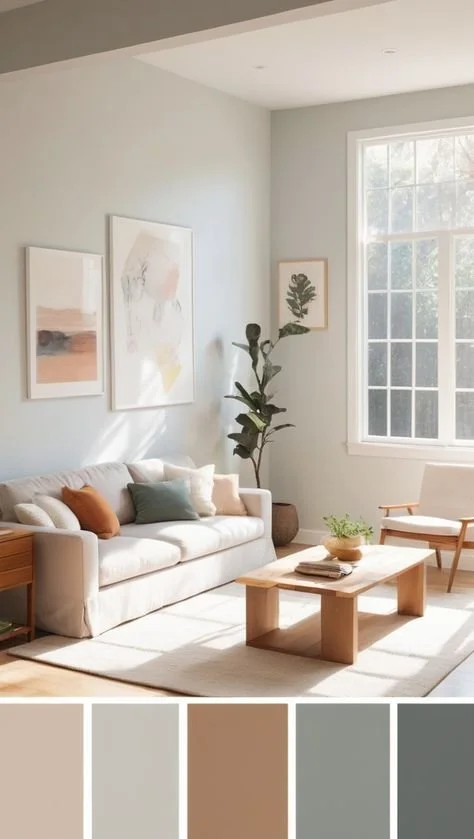
Imagine stepping into a living room that breathes: a quiet palette of warm off‑whites, dove greys, and a single sculptural black lamp anchoring the space. The air carries the faint scent of linen and wood polish; sunlight drifts through sheer curtains and pools on a low-profile rug that invites you to sink in. Minimalist doesn’t mean sparse here — it feels intentional, tactile, and deeply livable, where every surface has purpose and every texture contributes to a calm rhythm.
Minimalist living room aesthetics for 2025 lean into softness and sculptural simplicity. Think rounded sofas with clean seams, handcrafted ceramics on an open shelf, and layered lighting that moves from bright task to forgiving ambient glow. Natural fibers — wool, linen, raw cotton — meet smooth matte metals and muted timber finishes. The mood is soothing but modern, a background that elevates conversation, hosting, and quiet evenings alike.
This approach matters because homes are more than showrooms; they are stages for life. A minimalist living room supports being present: an uncluttered coffee table for game nights, a cozy reading corner for work‑from‑home afternoons, a neutral backdrop that highlights a rotating set of personal objects. Whether you’re preparing for holiday guests, doing a seasonal refresh, updating a rental without permanent changes, or simply craving more calm, minimalism gives you tools to shape comfort and character simultaneously.
If you want visual cues, practical how‑tos, and renter-friendly swaps to realize this look, read on. For complementary variations that mix industrial edges or curated TV‑wall concepts, consider exploring our guides on minimalist industrial living rooms and minimalist TV wall ideas as you plan your 2025 update: minimalist industrial living room inspo.
Style Snapshot
Minimalist living room aesthetic inspo 2025 is a collection of decor choices — furniture, lighting, textiles, and a handful of well‑chosen accents — that together create a serene, modern environment. The focus is on clean lines, subtle textures, and functional beauty rather than maximal ornamentation.
- Item type: Furniture (sofas, side tables), lighting, wall art, textiles (rugs, throws), storage solutions, and small decorative objects.
- Main style: Modern minimalist with Scandinavian and Japandi influences.
- Typical colors/materials/textures: Neutral palette (ivory, stone, clay, charcoal), natural woods (oak, walnut), matte metals (black, brushed brass), linen, wool, hand‑thrown ceramics, and simple glass.
- Best rooms/zones: Living room main area, reading nook, entryway seating, small apartment lounge.
- DIY vs. ready‑made: Mostly store‑bought for foundational pieces; easy DIY for accents (shelves, simple wall art, DIY planters).
Design Impact
A minimalist living room changes a space visually and functionally. Visually, it prioritizes negative space and scale: streamlined furniture increases perceived square footage, pared-back color palettes unify disparate elements, and single statement pieces — a sculptural lamp or an oversized framed print — become focal points. Natural light bounces off neutral walls and soft surfaces, making the room feel airy and composed.
Emotionally, the effect is restorative. You’ll notice lower visual noise, which reduces cognitive load and invites relaxation. After a busy day, a tidy coffee table, a soft throw, and a gentle light source communicate safety and calm. Practically, minimalism encourages multi‑use furniture: a console with concealed storage keeps games and throws out of sight; nesting side tables provide flexibility during gatherings. This balance supports scenarios like weekend hosting (room adapts to more people), focused remote work (clear surfaces and task lighting), and cozy date nights (layered lighting and textiles).
Imagine curling up on a low sofa with a wool throw, a warm lamp illuminating your book, and the rest of the room uncluttered — that’s minimalism serving everyday life.
Why Choose It
Minimalist living rooms are smart for people who want order without losing personality. They’re ideal for renters and small‑space dwellers who need an organized, visually cohesive environment without permanent alterations. For families and busy households, minimalism reduces the time spent tidying while giving each item a clear home.
Key strengths include flexibility and longevity. Neutral foundations make seasonal swaps — like bold cushions or a patterned throw — feel intentional rather than jarring. This style translates well across budgets: a thrifted oak coffee table paired with a quality neutral sofa can look as considered as high‑end alternatives. One clear problem it solves is cluttered surfaces: replacing a crowded console with a single low shelf and a pair of woven baskets immediately clears visual chaos while adding valuable storage.
If your living room feels disjointed — mismatched colors, too many small items, no clear focal point — minimalism reintroduces hierarchy and calm, making your space function better and look more harmonious.
How to Style +10 Ideas For minimalist living room aesthetic inspo 2025
{ingredients}
- Low‑profile sofa in neutral fabric (linen, cotton blend)
- Simple coffee table (solid wood or metal frame with wood top)
- Area rug in natural fiber (wool, jute, or low‑pile wool blend)
- Layered lighting: overhead flush/pendant, floor lamp, table lamp
- Throw blankets and 2–3 cushions in muted tones or subtle patterns
- Open shelving or slim console table
- One large piece of wall art or a curated gallery of small frames
- Decorative objects: ceramic vase, sculptural bookends, tray
- Storage baskets (seagrass, woven, or fabric bins)
- Plants: one tall floor plant + a small tabletop succulent
- Optional upgrades: textured wallpaper, folded blanket ladder, statement mirror
Budget alternatives:
- Thrift a wooden coffee table or re‑stain an existing one.
- Use IKEA or similar affordable modular shelving.
- Substitute new cushions with thrifted covers or upcycle old ones.
{directions}
- Start with the sofa: choose a neutral tone and simple silhouette. This is your anchor; keep patterns minimal so you can change smaller accents seasonally.
- Define the seating area with a rug sized to fit at least the front legs of the sofa and chairs. For small rooms, a rug that is narrower but deep enough to ground the furniture works well.
- Add a coffee table that complements the sofa’s scale — avoid tiny tables that look lost or oversized ones that block flow. Aim for 12–18 inches of walking space around.
- Layer lighting: place a floor lamp beside the sofa for reading, a softer table lamp on a console, and a dimmable overhead fixture to shift mood for entertaining. Use warm bulbs (2700K–3000K) for coziness.
- Create a focal point: hang one large framed print or a trio of coordinated objects at eye level (about 57–60 inches from floor to center). Keep frames simple in black, white, or natural wood.
- Edit surfaces: limit coffee table objects to a tray, one stack of books, and a vase. Remove anything that doesn’t add visual harmony or practical value.
- Introduce texture with textiles: a wool rug, a chunky knit throw, and linen cushions add warmth without noise. Stick to 2–3 complementary textures.
- Solve storage with baskets under a console or on lower shelves; conceal cables with cord organizers and choose furniture with built‑in compartments if possible.
- Bring in greenery: one sculptural floor plant (fiddle leaf or tall palm) and a small tabletop plant add life and improve perceived airiness.
- Reassess and edit: live with the arrangement for a week, then remove one item that feels unnecessary. Minimalism thrives on restraint — less often reads as more.
Common mistakes:
- Overcrowding walls — keep negative space.
- Using too many small patterns — limit to one patterned item.
- Poor scale — small rugs or oversized art can unbalance a room.
Best Pairings
A minimalist living room benefits from considered pairings that emphasize texture and warmth. Pair a neutral sofa with a mid‑tone wooden coffee table and a single statement lamp in matte black or brushed brass to create contrast without clutter. Layer throws and cushions in tonal variations rather than competing colors.
- Entryway: a slim console with a round mirror and a woven basket below for shoes.
- Living room focal area: sculptural floor plant + single large art piece + narrow bookcase.
- Dining adjacency: visually tie the two zones with a rug runner or matching wood tones.
- Home office nook: pair a minimalist desk with a task lamp and a low‑profile shelf to keep the living area feeling cohesive.
Small space idea: use nesting tables that stow away when not needed and a light‑colored rug to visually expand the floor. For larger, open‑plan rooms: create distinct zones with furniture placement — a sofa to define the lounge area and a low console to subtly separate dining from living. For curated TV setups and more industrial edge ideas, also see our guide to minimalist TV wall ideas.
How to Maintain
Materials like wool, linen, wood, and matte metal are forgiving but need gentle care. Dust wooden surfaces weekly and treat with a light wood cleaner monthly; avoid abrasive chemicals. For linen and cotton cushion covers, follow label instructions — most can be washed on a gentle cycle or spot‑cleaned. Vacuum rugs with a brushless attachment to preserve fiber texture.
Refresh textiles seasonally: swap cushion covers and throws every few months to avoid wear patterns and sun fading. Store out‑of‑season items in breathable containers and avoid plastic that traps moisture. For ceramics and glass decor, wash by hand and dry immediately to avoid water spots. Rotate plants occasionally for even growth and wipe leaves with a damp cloth to keep them dust‑free.
Designer’s Advice
- Scale matters: choose furniture that allows 12–18 inches between seating and coffee tables for flow.
- Use a limited palette: 3–4 core colors maximize cohesion.
- Warm up neutrals with wood tones and tactile textiles.
- Layer lighting: one overhead + task + accent for every scene.
- Negative space is intentional — resist filling empty corners.
- Mix matte and natural finishes; avoid too many reflective surfaces.
- Edit quarterly: put away items that aren’t used and rotate one or two pieces to keep the room fresh.
Creative Variations
- Minimalist Cozy: Add plush textures — a boucle chair, faux shearling throw, and floor lamp with a warm glow. Ideal for cooler seasons and small gatherings.
- Neutral Coastal: Swap darker woods for bleached oak, bring in rope baskets and pale blues in tiny accents. Works well for beachside apartments or summer refreshes.
- Budget‑Friendly: Thrift a solid wooden coffee table, reupholster cushions with neutral covers, and DIY wall art using monochrome canvases. This gives the same calm aesthetic without breaking the bank.
Frequently Asked Questions
Q: Can I achieve this look in a small apartment?
A: Yes — prioritize scaled furniture, light colors, and multi‑functional pieces (like nesting tables and storage ottomans) to keep the space airy.
Q: Is the style renter‑friendly?
A: Absolutely. Focus on non‑permanent changes: rugs, furniture, lighting (plug‑in lamps), removable wallpaper, and frames you can hang with damage‑free hooks.
Q: How do I match this decor with an existing colorful sofa?
A: Keep surrounding elements neutral and use small accents (throws, a single cushion) to echo the sofa color so it feels intentional.
Q: Where can I find quality items affordably?
A: Look for durable basics (sofa, rug) to invest in; balance with thrifted finds or affordable modular shelving and accent pieces.
Q: How often should I refresh textiles and plants?
A: Rotate textiles seasonally and check plants weekly; deep‑clean rugs and cushion covers every 3–6 months.
Conclusion
Embracing a minimalist living room aesthetic in 2025 is about creating a calm, adaptable backdrop that enhances everyday life — from relaxed evenings to spirited gatherings. Try the steps above, experiment with textures, and keep editing until the space feels balanced and personal. Share your photos and questions in the comments; we’d love to see how you make the look your own.
For inspiration on current furniture direction, check out insights on the sofa trends for 2025, and for graphic and pattern ideas that translate to decor, review the graphic design trends for 2025. Explore more ideas and join our community for updates and seasonal guides on Moderndecorum.com.