Table of Contents
Why Kitchen Lighting Matters
KITCHEN LIGHTING plays a pivotal role in shaping both the function and the style of your home’s most important space. The kitchen is more than just a place to cook—it’s the heart of the home, where family breakfasts, gatherings, and late-night conversations happen. The right lighting not only brightens the room but also transforms it into a welcoming hub that feels both practical and inspiring.
In modern interior design, kitchen lighting goes far beyond simple illumination. It accentuates architectural details, sets the ambiance, and enhances efficiency for everyday tasks. With current trends embracing open layouts, clean lines, and versatile functionality, lighting has evolved into a central design element. Whether you prefer a sleek minimalist approach or a bold statement piece, your KITCHEN LIGHTING choices define the mood and elevate the overall aesthetic of your space.
What You’ll Need
When planning modern kitchen lighting, consider layering three main types:
- Ambient Lighting
- Ceiling lights, recessed fixtures, or track lighting.
- Creates the overall brightness of the room.
- Task Lighting
- Pendant lights over islands, under-cabinet LEDs, or spotlights.
- Ensures you can chop, cook, and prep safely with clear visibility.
- Accent Lighting
- Wall sconces, toe-kick lighting, or backlit shelves.
- Adds depth and highlights design features.
Budget Tip: Use LED strips for under-cabinet lighting—they’re cost-effective, energy-efficient, and instantly modernize your kitchen.
Decorating Steps
1. Define Your Kitchen Zones
Separate areas for cooking, dining, and entertaining. Each zone benefits from its own type of lighting.
2. Choose a Statement Fixture
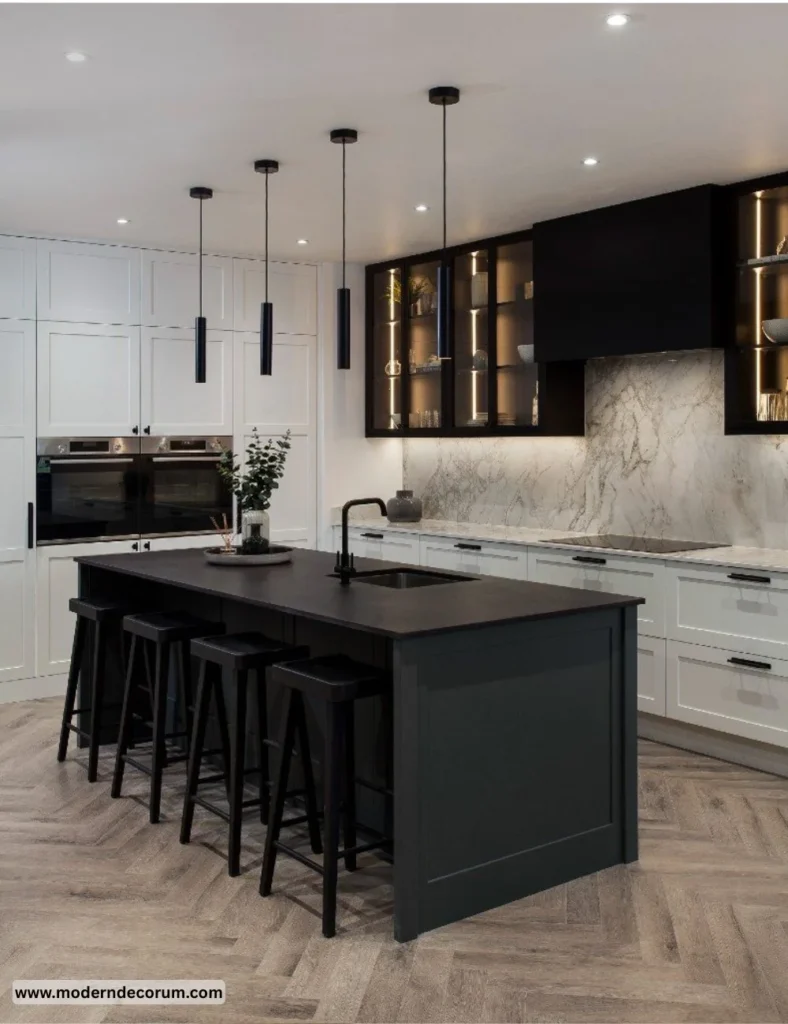
For modern kitchens, pendant lighting over the island is a must-have. Opt for sleek glass, matte black, or metallic finishes.
3. Layer Your Lights
Combine recessed lights with pendants and under-cabinet LEDs for balance. This prevents shadows and creates a dynamic look.
4. Play with Smart Technology
Install dimmable fixtures or smart bulbs. They let you shift from bright task lighting to soft mood lighting with ease.
5. Balance Aesthetics and Functionality
Match your lighting style (industrial, minimalist, Scandinavian, or luxury modern) with your overall kitchen décor.
Design Tips & Variations
- Minimalist Modern: Slim LED track lighting with hidden under-cabinet strips.
- Industrial Chic: Exposed bulbs, black steel pendants, or cage-style lighting.
- Luxury Modern: Crystal pendants or gold-finished chandeliers above the island.
- Scandinavian: Natural wood accents paired with simple white fixtures.
- Small Kitchens: Use reflective surfaces and layered LEDs to create the illusion of space.
FAQ / Common Challenges
Q: How many pendants should I hang over my kitchen island?
A: For small islands, 2 pendants work; larger ones may need 3 evenly spaced fixtures.
Q: Can recessed lighting replace all other lights?
A: No. While recessed lighting provides great general brightness, it should be paired with task or accent lighting for balance.
Q: Are smart bulbs worth it?
A: Absolutely—they offer flexibility, energy savings, and allow you to change the ambiance instantly.
Conclusion & Call to Action
Modern kitchen lighting is about more than visibility—it’s about style, comfort, and personality. By layering ambient, task, and accent lighting, you’ll create a kitchen that feels warm, functional, and effortlessly modern.
Which modern lighting idea will you try first—sleek pendants, under-cabinet LEDs, or a statement chandelier?