21 Outdoor Shower Ideas to Elevate Your Backyard Oasis
Imagine the hush of early morning as cool mist rises from a hidden corner of your garden. Sunlight slices through the leaves, catching droplets that bead on warm wood and woven rope. An outdoor shower can be more than a practical rinse-off — it’s a sensorial retreat: the gentle patter of water, textured stone underfoot, potted herbs scenting the air, and fabrics that dry in the breeze. Whether you crave a minimalist, spa‑like experience or a boho hideaway with layers of color and collected finds, a thoughtfully styled outdoor shower transforms your backyard into an everyday escape.
Outdoor showers speak to a lifestyle as much as a design choice. They’re perfect after a day at the beach, for rinsing muddy pets and kids, or simply for stealing ten luxurious minutes for yourself under the sky. The right materials — warm cedar, patinated copper, matte black fixtures, river pebble floors — create a distinct mood: modern and crisp, rustic and earthy, or whimsical and bright. Texture is key here: smooth stone against rough timber, the cool sheen of metal, the softness of a Turkish towel flung on a nearby hook.
This collection of 21 outdoor shower ideas is meant to inspire practical beauty. Whether you’re planning a seasonal refresh, prepping for summer entertaining, updating a dated yard, or renting and looking for low‑impact upgrades, there’s a solution that fits. For renters and DIYers, many options are simple swaps or freestanding units that won’t upset a lease; for homeowners, permanent installations can add both comfort and a touch of luxury. If you’re looking for inspiration beyond the shower itself, see how these concepts tie into other cozy areas of your home with ideas from our 10 cozy living room ideas to warm your heart for cross‑space harmony.
Decor Information
An outdoor shower is a functional decor installation — a blend of plumbing fixture and landscaping element that reads like furniture for the outdoors. Main styles range widely: modern and minimalist with matte black fixtures and concrete slabs; coastal with driftwood and whitewashed tiles; rustic with reclaimed timber and copper accents; boho with patterned tiles and hanging planters. Typical materials include pressure‑treated or cedar wood, stainless or brass fixtures, slate or river stones for flooring, and durable textiles like outdoor towels and weatherproof baskets.
Common color palettes lean natural — sandy beiges, deep greens, stone greys, warm wood tones — but bold tiles or painted walls can introduce playful pops. Texture is crucial: slatted wood, smooth pebbles, rough masonry, and woven elements create tactile contrast. Best zones for an outdoor shower are backyard corners, near pool areas, deck edges, or beside a garden path. Installation complexity varies: some showers are mostly store‑bought freestanding units (easy install), others require professional plumbing and are more advanced DIY projects. Many ideas here work as a mix — a purchased fixture dressed with DIY screens, hooks, and planters.
Design Impact
An outdoor shower instantly changes the way your outdoor space feels and functions. Visually, it creates an intentional focal point that draws the eye and defines a zone. A simple cedar panel and matte fixture can add vertical interest to a low, horizontal garden bed; a mosaic tile wall introduces color and pattern that shifts the yard from purely utilitarian to thoughtfully curated. Because showers combine water and texture, they naturally add contrast — the cool reflective surface of metal against the warm grain of wood — which deepens the sensory environment of the backyard.
Emotionally, an outdoor shower is about permission: permission to pause, to enjoy a sundrenched rinse, to host alfresco guests with confidence that muddy feet won’t track indoors. Practical benefits are immediate — pets and kids get easy cleanups, gardeners can wash up without filling the house with dirt, and swimmers can rinse before entering the pool. Imagine hosting a summer dinner party where guests refresh themselves under string lights between courses, or quiet mornings when you step outside with a cup of coffee and a private shower to greet the day. Those small routines can make daily life feel more like a retreat.
Why Choose It
An outdoor shower is smart for a wide range of people. Renters can choose portable or freestanding systems that require no permanent alterations; homeowners can invest in built‑in units that increase property appeal. Families benefit from easy, outdoor cleanups, while design lovers gain a new canvas for texture, tile, and fixtures. Beginners find many budget‑friendly starter options that look high‑end with the right finishing touches — a teak bench, woven hooks, or potted greenery.
Key strengths include flexibility (seasonal elements can be swapped), affordability (from thrifted tiles to custom builds), and timeless appeal (natural materials age well outdoors). One real‑life problem it solves: a muddy entryway. If shoes and pant legs are constantly showing the day’s yard work, a dedicated outdoor shower zone cuts indoor mess and creates a designated transition area between messy and clean — stylishly. It’s also a design solution for a neglected corner: a narrow plot between fence and deck can become a vertical garden and shower nook, turning wasted space into an inviting feature.
How to Style 21 Outdoor Shower Ideas to Elevate Your Backyard Oasis
Ingredients
- Main items:
- Outdoor shower fixture (freestanding or wall‑mounted).
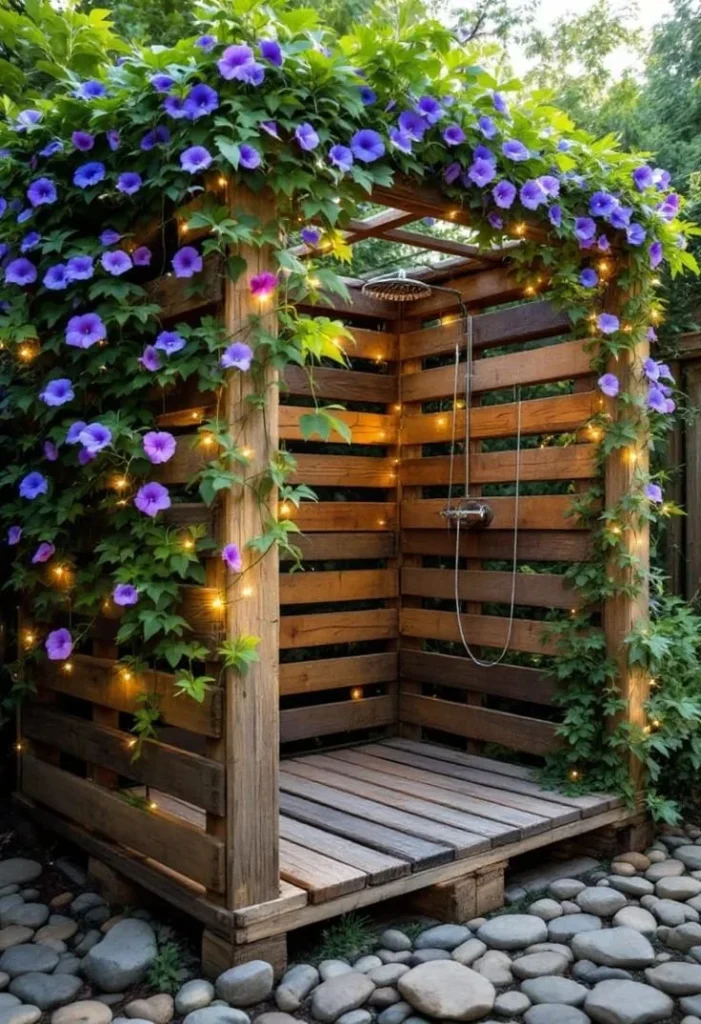
- Base material: river stones, gravel, concrete pavers, or wooden slats.
- Privacy screen: slatted wood panels, lattice, fence extension, or bamboo roll.
- Hooks and towel bars (stainless or brass).
- Small bench or teak stool.
- Optional upgrades:
- Accent tile or mosaic for the shower wall.
- Outdoor‑safe mirror and shelf.
- String lights, lanterns, or a waterproof sconce.
- Potted plants (ferns, succulents, herbs).
- Outdoor rug and woven baskets for towels.
- Shower caddy and liquid soap dispensers.
- Alternatives / budget substitutions:
- Use reclaimed pallet wood for a privacy screen.
- Lay pea gravel instead of expensive stone.
- Repurpose an indoor bench or thrifted cabinet with proper sealing.
- Install a portable solar shower bag for a no‑plumbing option.
Directions
- Choose the right location: pick a spot with good drainage and a degree of privacy — near a fence, beside a garage wall, or tucked behind shrubs. Tip: avoid low spots where water pools.
- Decide on permanence: for renters, select freestanding or solar shower bags; for homeowners, plan plumbing placement with a professional. Common mistake: installing without considering winter freeze — use frost‑proof fixtures or winterize.
- Create the base: level the ground and add a compacted gravel bed beneath pavers or lay a timber decking cradle. Tip: use a slight slope (1–2%) away from structures to prevent runoff toward the house.
- Add a privacy screen: build or install panels at a comfortable height (6–7 feet), leaving a small gap at the bottom for airflow. If space is limited, a folding screen or tall planters can offer flexible privacy.
- Select fixtures and finishes: choose corrosion‑resistant metals (stainless, brass, or powder‑coated steel) and coordinate finish with other yard hardware. Avoid mixing more than two metal finishes to keep the look cohesive.
- Install storage and seating: mount hooks at reachable heights (4.5–5.5 feet) and place a teak stool or bench nearby for dressing. Tip: use slatted benches for quick drying and easy cleaning.
- Layer in texture and greenery: arrange potted plants of varying heights, add a pebble tray for soap, and use a colorful outdoor towel or rug to anchor the space. Avoid too many small items that trap moisture; choose breathable fabrics.
- Light it for evening use: string lights create atmosphere; a waterproof sconce ensures safety. Use warm bulbs (2700K–3000K) for a welcoming glow.
- Test and adjust: run water to confirm drainage and fixture stability. Fix wobble by tightening anchors or adding gravel support under pavers.
- Seasonal care: add a removable windproof screen or cover fixtures during winter; store soft goods like cushions indoors.
Presentation Tips
Showcasing an outdoor shower can vary by space and use. In a small urban backyard, tuck the shower into a corner framed by a tall planter and a slim slatted wall to keep the footprint tiny but impactful. In poolside or larger yards, create a dedicated wellness area with a small changing nook, a sun lounger, and a storage bench for towels and sunscreen. Near an entryway, a discreet open shower with a muted tile wall can act as a mudroom extension.
Pair the shower with natural textiles and plants to soften hard surfaces. A woven basket for towels next to a teak bench reads inviting; a cluster of terracotta pots and a trailing vine can screen views and introduce life. For small spaces, use vertical elements — hanging planters, narrow shelves, and a tall mirror to make the spot feel larger. For large, open‑plan yards, define the shower with a pebble pad or circular paving and surround it with low hedges or a row of potted citrus for fragrance and privacy.
- Small space idea: compact corner shower with foldaway bench and a single large planter for privacy.
- Large yard idea: freestanding teak enclosure with string lights, a tiled accent wall, and a pergola overhead.
- Pool pairing: tile the shower wall to match pool coping and add a hooked board for robes.
How to Maintain
Outdoor showers face the elements, so choose maintenance routines that keep materials looking fresh. Rinse wood panels periodically with a gentle soap and water, then treat with a sealant or natural oil once a year to protect against UV and moisture. Metal fixtures should be wiped dry after heavy use to prevent water spots; stainless finishes tolerate weather best, while brass and copper develop patina intentionally — treat them only if you prefer the original sheen.
Clean stone and tile with a mild, pH‑neutral cleaner to avoid dulling natural finishes, and sweep gravel or pebble pads to remove debris. Wash outdoor textiles (towels, mats) regularly, and store soft cushions indoors during heavy rain or winter. For freezing climates, drain lines and insulate or shut off water to avoid burst pipes. Rotating decorative items seasonally — swapping heavy, dark towels for bright linens in summer — keeps the shower feeling fresh without major changes.
Designer’s Advice
- Scale fixtures to the space: a giant rain head overwhelms a tiny corner; choose a slim profile for compact areas.
- Layer lighting: combine overhead string lights with a low‑level lantern to create depth and safe pathways.
- Use repetition: echoing a material (like cedar) in both the privacy screen and a bench ties the look together.
- Limit color pops to one or two accents (towels, tiles) so the space feels intentional, not busy.
- Blend hard and soft textures — stone and wood with woven baskets and organic cotton towels — for balanced sensory appeal.
- Plan for drainage and ventilation first; style second.
- Add scent with planted herbs (lavender, rosemary) instead of aerosols to enhance the outdoor experience naturally.
Style Twists
- Minimalist Spa: Think clean lines, matte black fixtures, a concrete slab base, and a single sculptural plant. Keep the palette neutral and focus on quality materials for a serene, modern feel.
- Coastal Charm: Use whitewashed shiplap, driftwood hooks, blue mosaic tiles, and coral‑colored towels. Add a mesh basket for sunscreen and a large potted palm for sheltering shade.
- Budget‑Friendly Rustic: Build a privacy screen from reclaimed pallet wood, lay pea gravel for the base, and install a solar shower bag. Finish with thrifted baskets and a secondhand teak stool for a charming, low‑cost nook.
Frequently Asked Questions
Q: Can I install an outdoor shower if I rent?
A: Yes — choose freestanding units, portable solar showers, or non‑penetrating privacy screens. These options require little to no permanent alteration and can be removed before move‑out.
Q: How do I match the shower to existing backyard colors?
A: Pull two dominant tones from your yard (stone grey, greenery) and use them as a base; add one accent color in tiles or textiles to harmonize the new feature with existing elements.
Q: Is an outdoor shower practical in a small backyard?
A: Absolutely. A corner or foldaway setup with vertical plants and slim fixtures can create a functional shower without sacrificing usable space.
Q: Where can I find quality items without breaking the bank?
A: Look for reclaimed materials, local hardware stores for fixtures, and secondhand shops for benches and baskets. Many big-box retailers offer affordable outdoor‑grade options that are easy to upgrade with accessories.
Q: How should I store seasonal decor items?
A: Keep textiles and soft goods indoors during the off‑season. Stack lightweight planters and lanterns in a dry shed or garage and cover permanent fixtures if severe weather is expected.
Conclusion
Ready to transform your backyard into a quiet, rejuvenating oasis? Start small — a freestanding fixture, a simple pebble base, and a teak stool — and build from there. If you’re curious about sustainable power options for off‑grid or solar heating, check out the insights in the Blog – ARKA Energy | Innovations in Solar & Sustainable Living. For step‑by‑step, budget‑minded builds and inspiration, this DIY roundup is a great resource: DIY Outdoor Shower Ideas on a Budget for the Ultimate Backyard Oasis.
We’d love to see your outdoor shower projects — share photos, questions, or clever hacks in the comments below and explore more backyard styling ideas on Moderndecorum.com. For tips on pairing indoor cozy corners with your outdoor oasis, don’t forget to revisit our other guides and join the community for seasonal updates and design inspiration.