+12 Lovely Sage Green Bedroom Aesthetic Ideas For 2026
Imagine waking in a bedroom where the light feels like a soft brush of mint and moss, where textures invite you to linger and the color palette calms the breath. Sage green is that rare hue that reads both modern and timeless — a muted green with gray undertones that flatters skin tones, reflects daylight gently, and pairs beautifully with warm woods or brushed metals. In 2026, sage bedrooms are shifting from purely Scandinavian minimalism to layered, tactile spaces that feel curated rather than cataloged.
This collection of +12 lovely sage green bedroom aesthetic ideas is about more than paint chips. It’s about creating corners where you read late into the evening, blankets that feel twice as warm, and walls that anchor the room without shouting. Whether you prefer a soft, neutral backdrop or a moody, jewel-toned retreat, sage builds a calming atmosphere that suits sleep, slow mornings, and quiet hosting.
These ideas are perfect for seasonal refreshes—swap a couple of pillows and a throw to go from winter hygge to spring lightness—or for renters who want a big visual change without permanent commitment. If you’re updating a modern apartment, finishing a cozy guest room, or preparing a restful sanctuary before guests arrive, these options work across budgets and skill levels. For inspiration rooted in last year’s trends, check out this retrospective on lovely sage green bedroom ideas 2025 to see how the palette has evolved.
Style Snapshot
Sage green bedroom aesthetics are a decor ensemble — not just paint. This style guides choices in textiles, lighting, furniture finishes, and accents to create a cohesive, low‑key luxe bedroom.
- Item type: Color-driven scheme applied to walls, textiles, bedding, accent furniture, and accessories (wall art, lamps, rugs).
- Main styles: Scandinavian, modern organic, soft boho, and quiet luxe.
- Typical materials/textures: Linen, brushed brass, matte ceramics, unfinished or oak woods, rattan, boucle fabrics, wool rugs.
- Best rooms/zones: Bedrooms (primary and guest), reading nooks, calming home offices, and spare rooms converted to sleep spaces.
- DIY vs. store-bought: Mix — easy DIY (paint, cushion covers) with store-bought anchor pieces (bed frame, rug, lighting).
Design Impact
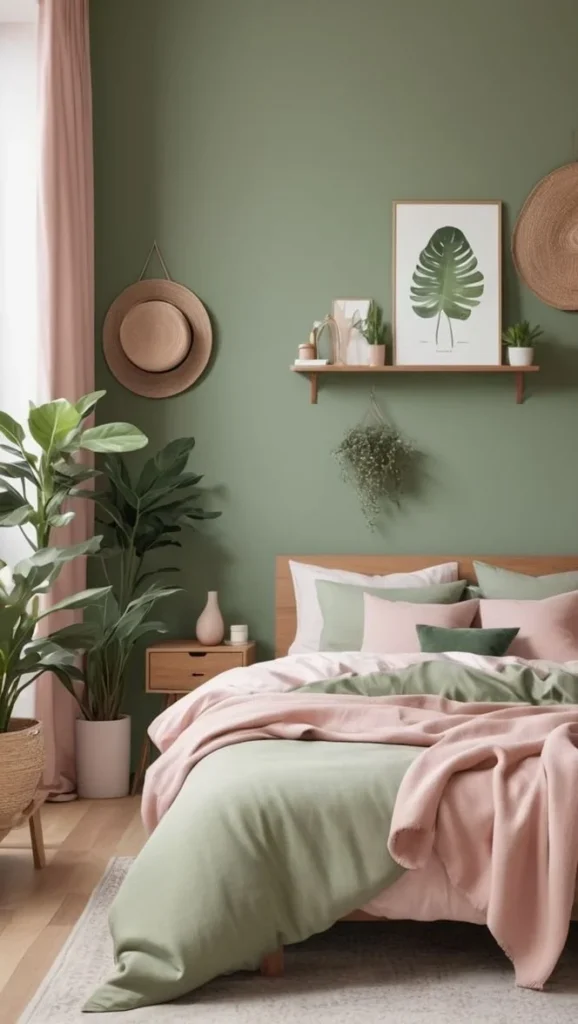
Sage green instantly softens light and flattens contrasts, making rooms feel wider and calmer. On walls it acts like a gentle filter that tempers glare and bright whites; on textiles it reads as an embrace, adding depth without weight. A sage statement wall behind the headboard becomes a focal point that still allows bedding and artwork to pop.
Emotionally, sage promotes relaxation. The color’s subtle green base evokes nature and balance, helping reduce stress and creating a bedroom that invites rest. Practically, the palette is forgiving: it conceals minor scuffs better than white, pairs with many neutrals, and adapts to changing accents—so you can swap gold for black, or linen for velvet, and the room remains cohesive. Picture an evening scenario: soft amber bedside lamps, layered linen bedding in cream and moss, a low teak bench at the foot of the bed, and a woven basket holding a throw—the mood is calm, curated, and welcoming for both daily rest and overnight guests.
Why Choose It
Sage green is an intelligent choice for anyone who values comfort and longevity in decor. Renters appreciate how sage tones minimize the “temporary” feel—use removable wallpaper or sage bedding to transform a room without painting. Small-space dwellers find sage opens rooms without sacrificing warmth, and families love that the color hides ordinary wear and pairs well with kid‑friendly textiles.
Key strengths include affordability and flexibility. A single sage duvet or a pair of curtains can overhaul the look of a room. The hue also reads as timeless: whether you’re dressing a mid-century bed or a modern upholstered frame, sage bridges eras. One common problem this aesthetic solves is a bland, echoing bedroom—introducing sage with soft textures and layered light immediately adds intimacy and depth, making a once‑stark room feel intentional.
How to Style +12 Lovely sage green bedroom aesthetic Ideas For 2026
{ingredients}
- Main items:
- Sage green paint or removable wallpaper
- Neutral linen duvet cover (cream, off-white, or beige)
- Accent throw pillows (saged velvet, patterned in muted tones)
- Area rug in natural fiber or wool
- Bedside lamps with warm bulbs
- Accent chair or bench in oak or rattan
- Optional upgrades:
- Brass or matte black hardware and lighting
- Statement headboard (upholstered or wood slat)
- Plants (ferns, rubber plant, pothos)
- Layered curtains (sheer + blackout)
- Art in complementary colors (terracotta, soft blush, charcoal)
- Budget-friendly substitutions:
- Thrifted wooden nightstands sanded and refinished
- DIY cushion covers from linen fabric
- Removable peel-and-stick wallpaper instead of full paint job
- Secondhand rugs or DIY floorcloths
{directions}
- Choose your base: decide whether paint, removable wallpaper, or textiles will be the primary sage element. For renters, start with textiles (bedding, curtains, pillows) to get the color without painting.
- Pick the right sage: cooler sages have more gray and pair well with charcoal and black; warmer sages lean toward olive and suit brass and warm woods. Test large paint swatches near the bed; view them at different times of day.
- Create a focal point: paint an accent wall behind the headboard or install a removable wallpaper panel. If you prefer all‑over walls, balance with lighter bedding and white trim for contrast.
- Layer textures: add linen sheets, a wool throw, a boucle cushion, and a woven rug. Mixing textures keeps the palette interesting even with limited colors.
- Anchor with wood or metal: introduce an oak bedside table or a brushed brass lamp to add warmth and sophistication—don’t feel forced to match finishes perfectly; variation adds depth.
- Add art and mirrors: choose artwork with a hint of complementary color (terracotta or muted coral) and a simple frame. Place a mirror opposite a window to amplify light and make the sage glow.
- Place lighting thoughtfully: bedside lamps should be about eye level when seated; use a dimmable overhead or a warm 2700K bulb to maintain a cozy ambiance.
- Mind scale and spacing: nightstands should be roughly the same height as your mattress. Keep 2–3″ clearance between larger pieces for traffic flow; allow 18–24″ walking space at the sides of the bed.
- Soften corners: a floor plant, a woven basket, or a low stool in a corner prevents the room from feeling too staged and adds life.
- Edit: step back and remove one item if the room feels cluttered—restraint keeps a sage scheme calming rather than busy.
Best Pairings
Sage green pairs beautifully across rooms and styles. In a bedroom, pair sage with cream linens, a wool rug, and brass lighting for a soft-luxe look. For a boho twist, layer patterned cushions, macramé wall hangings, and a rattan chair. In a minimalist space, stick to two neutrals and one accent metal so the palette reads calm and intentional.
- Entryway: a sage runner and a console with a woven basket set the tone before you reach the bedroom.
- Living room: integrate sage pillows or a throw to echo the bedroom and create cohesion across home zones—this works especially well in open-plan layouts.
- Small spaces: use sage on textiles or a single accent wall to avoid overwhelming the room.
- Larger rooms: go bold with sage walls and larger art pieces; anchor with a low wooden bed and layered rugs to maintain intimacy.
For more ideas on bringing sage into different layouts and rooms, explore our guide to sage green bedroom ideas 2026 which walks through variations for open-plan and compact layouts.
How to Maintain
Fabric and paint in a bedroom require gentle care to stay fresh. For painted walls, clean scuffs with a soft cloth and mild detergent; for stubborn marks, use a magic eraser gently. Wash linen and cotton bedding every 1–2 weeks; velvet or specialty cushions can be spot-cleaned and rotated to even wear.
Dust lighting and furniture weekly to prevent buildup; vacuum rugs biweekly, and deep-clean wool rugs every 6–12 months. Store seasonal linen in breathable cotton bags and avoid plastic bins that trap moisture. To keep the look new over time, rotate cushion covers, switch accent colors with the seasons, and occasionally move plants or art to refresh vantage points.
Decor Expert Tips
- Balance scale: large headboards need proportionate bedside tables—use visual weight, not exact symmetry.
- Layer light: combine overhead dimer, bedside lamps, and a floor lamp to create pockets of warm light.
- Mix metals sparingly: choose two dominant metal finishes (e.g., brass + black) and let others be minor accents.
- Pattern rule: limit busy patterns to one or two elements (pillow, throw) and keep the rest solid to preserve calm.
- Texture over color: in a muted palette, texture provides interest—prioritize boucle, linen, and woven fibers.
- Green with green: don’t fear multiple greens; vary temperature and saturation to avoid monotony.
- Leave breathing room: edit decor into groupings of 3–5 items to avoid visual clutter.
Creative Variations
- Minimalist Sage: All-over sage walls, crisp white bedding, a slim black metal bedframe, and a single piece of monochrome art. Budget-friendly: thrift white bedding and paint only one wall.
- Cozy Layered Sage: Mix deep sage walls, plush velvet pillows, a tufted bench, and layered rugs for winter-ready hygge. Luxury version: add silk-blend sheets and a designer headboard.
- Botanical Boho: Sage linen bedding, hanging macramé, lots of plants, and rattan furniture for an earthy, collected feel. Occasional twist: add holiday metallic accents for festive warmth.
Frequently Asked Questions
Q: Can sage work with existing dark wood furniture? A: Yes. Sage’s gray undertone complements dark wood by balancing warmth; add light textiles to prevent the room from feeling heavy.
Q: Is this renter‑friendly? A: Absolutely. Use removable wallpaper, peel-and-stick tiles for a headboard effect, or focus on textiles like curtains and bedding to achieve the look without painting.
Q: How do I choose accessories without overdoing the green? A: Limit green to 2–3 elements (walls, a large cushion, and a plant). Add contrast with neutrals, warm woods, and a single accent color like terracotta or blush.
Q: Where can I find affordable items? A: Look at thrift stores for wooden furniture to refinish, online marketplaces for secondhand rugs, and discount fabric stores for linen to sew cushion covers.
Q: How do I store seasonal textiles? A: Fold linen and cotton in breathable bags and keep them in a cool, dry place away from direct sunlight. Use cedar blocks to deter pests.
Conclusion
Sage green is a quietly powerful choice for bedrooms in 2026—versatile, calming, and endlessly adaptable. Try one of the ideas above to make your bedroom feel like a retreat, and don’t be afraid to mix textures, layer light, and edit patiently.
Love browsing styles for other rooms? You might enjoy Living Room Furniture You’ll Love | Wayfair for complementary pieces that carry your sage palette through an open-plan home. For a bold wall treatment to pair with sage accents, consider exploring the Luxury Wallpaper Collection | Patterned Designs by House of Hackney for inspiration.
Share your before-and-after photos, ask questions, or drop a styling tip in the comments—our community at Moderndecorum.com loves seeing personal interpretations of sage.