Introduction
Imagine stepping into a tiny bathroom and feeling like you’ve entered a boutique spa rather than a cramped utility space. The right paint color can do that — it can smooth rough edges, reflect soft light, and wrap the room in a mood that feels intentional and calming. From the cool hush of pale blue to the cozy embrace of a warm taupe, paint is a sensory shortcut: you see it first, but you also feel it in the way the space breathes, in how tiles, towels, and metal fixtures catch the light.
Small bathrooms are intimate by nature — they should be comforting, efficient, and a little bit stylish. Choosing one of these 23 small bathroom paint colors can transform a compact room into a retreat: imagine velvety charcoal that makes brass fixtures pop, or a whisper‑soft mint that brightens grout lines and brings out the green in a potted fern. Whether you love a Scandinavian minimalist look or prefer a lush, moody aesthetic, the right hue can redefine how a bathroom functions and feels.
This idea matters because most homes have limited square footage but unlimited potential. A coat of paint is one of the most affordable, renter‑friendly ways to change your environment for hosting, unwinding after a long day, or making mornings feel less rushed. If you’re considering a seasonal refresh, a modern update, or an easy upgrade before guests arrive, these color choices give you real design direction without the fuss. For inspiration on classic and trending tones, check our guide to designer‑approved bathroom paint colors for more curated options.
At the end of this post you’ll have practical styling steps, materials lists, and maintenance tips so you can confidently pick and apply one of the 23 colors below and make your small bathroom feel larger, cosier, or more sophisticated — whatever you need it to be.
At a Glance
Small bathroom paint colors are a decor tool — not furniture or fixtures — that dramatically alter perception and mood. They are most often applied on walls and ceilings, but can also be used on cabinetry, trim, and niches to create depth.
Typical style leanings include modern, Scandinavian, coastal, moody‑glam, and cottagecore. Materials that partner well with these colors are matte or eggshell paint finishes, high‑gloss elements for contrast, warm metals like brushed brass or oil‑rubbed bronze, cool chrome, ceramic tile, natural wood accents, and lush textiles.
Typical colors and 23 standout hues:
- Chalk White — crisp, airy, and reflective.
- Soft Dove Gray — very light, keeps things neutral with warmth.
- Pale Sky Blue — fresh, breathy, like morning light.
- Seafoam Green — calm, coastal, pairs with rattan.
- Mint Whisper — youthful and clean with a vintage edge.
- Sage Garden — grounded, very small‑space friendly.
- Olive Leaf — richer, pairs well with wood and terracotta.
- Forest Canopy — moody and enveloping for evening baths.
- Linen Beige — soft, timeless, and warm.
- Sandstone Taupe — cozy without feeling dark.
- Warm Greige — the modern neutral with personality.
- Soft Blush — subtle, romantic, and flattering to skin tones.
- Dusty Rose — vintage charm, very calming.
- Coral Glow — energizing in small doses.
- Terracotta Accent — earthy and grounding near sinks.
- Canary Butter — bright, sunny, and surprising.
- Mustard Accent — retro and bold when used on a feature wall.
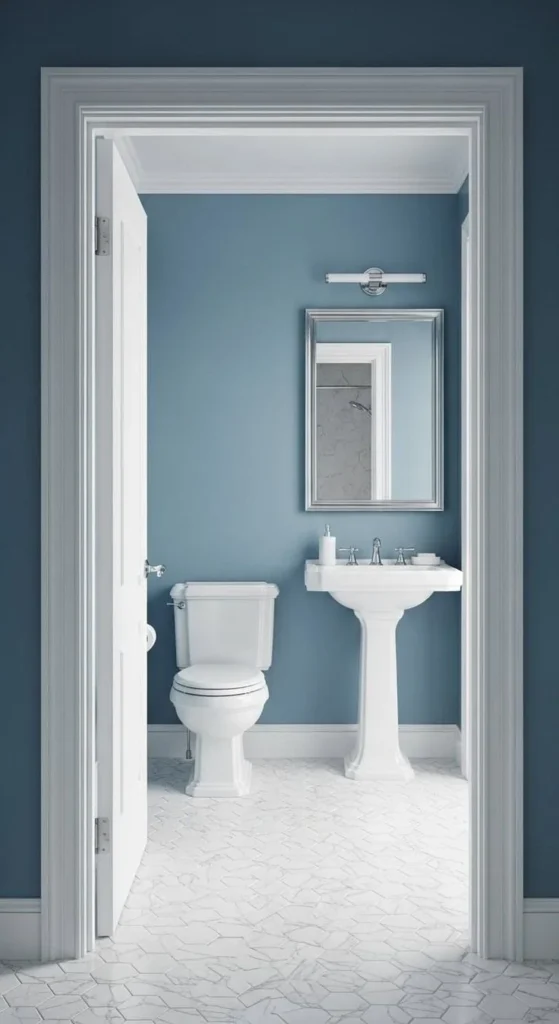
- Ice Gray‑Blue — cool, sophisticated, reflects light well.
- Ink Navy — deep, elegant, great for contrast.
- Charcoal Slate — dramatic, shows off metallics.
- Graphite Black — bold for ceilings or vanities.
- Lavender Mist — soft and spa‑like.
- Lilac Haze — modern, whimsical, and light.
Level of DIY vs. store‑bought: Mostly an easy DIY project (taping, rolling, one to two coats) with optional professional paint services for color matching or high‑end finishes.
Design Impact
A painted bathroom is the quickest way to manipulate perception: lighter hues bounce daylight and artificial light around, creating the illusion of depth, while a darker ceiling can visually lower a disproportionately high room for a cozier feel. Painting a compact bathroom in a soft, reflective color like Chalk White or Ice Gray‑Blue expands sightlines and emphasizes tiles, fixtures, and mirrors — helpful when you want a light, spa‑like atmosphere.
Emotionally, color changes how you inhabit the space. Warm neutrals such as Linen Beige and Warm Greige foster a feeling of comfort for weekend lounging with a candle; cool greens and blues like Sage Garden and Pale Sky Blue instill calmness and serve as quiet backdrops for morning routines. For social moments—like hosting overnight guests or getting ready for a dinner party—bolder choices (Ink Navy or Charcoal Slate) create drama and sophistication that make the room feel curated rather than purely functional.
Practically, paint helps mask small imperfections, unify mismatched tiles, and frame focal points such as mirrors, shelving niches, or artwork. For instance, painting recessed shelves in a contrasting Lilac Haze or Navy makes toiletries feel intentionally displayed, reducing visual clutter. For related small‑space color strategies, you can also study how small white kitchens transform compact spaces — many principles (light reflection, trimmed borders, and contrast) translate directly to tiny bathrooms.
Why Choose It
This approach is perfect for renters (with peelable paint/temporary removable wall treatments), young families needing quick refreshes between projects, design beginners who want maximum impact for minimal cost, and lovers of small apartments who understand every square inch counts. Paint lets you experiment — go bold now, repaint later — without committing to permanent renovations.
Key strengths include affordability, flexibility, and speed. Paint costs are modest, color changes are reversible, and a weekend is often enough for a full room refresh. Small‑space friendly, paint can emphasize vertical lines (using a darker color on the lower half) or visually expand the room (using a lighter ceiling). It’s also seasonal‑friendly: brighten for summer with Canary Butter or Coral Glow; switch to deep Ink Navy or Forest Canopy for winter coziness.
Real‑life problem solved: ugly, patchy tile with mismatched grout. Paint the walls a neutral Warm Greige and choose a coordinating grout cleaner or paint for trim. The neutral wall color will downplay the tile mismatch and make a small vanity and shelving look intentionally composed rather than ad hoc.
How to Style 23 Small Bathroom Paint Colors That Transform Compact Rooms
{ingredients}
- Quality interior paint in your chosen finish (eggshell for walls, semi‑gloss for trim)
- Primer (stain‑blocking / bonding primer if changing from dark to light)
- Painter’s tape, drop cloths, sandpaper
- Good rollers (mini rollers for tight spaces) and angled brushes
- Step stool or ladder
- Sample pots for testing swatches
- Accent hardware (towel bars, hooks) in brass, chrome, or black for contrast
- Small mirror or framed piece for a feature wall
- Plants (small potted fern or air plant)
- Towels and textiles in complementary hues
Optional upgrades: - High‑gloss paint for a vanity or feature niche
- Peel‑and‑stick wallpaper for an accent behind the toilet
- Coordinating bath mat and shower curtain
Budget swaps: - Thrifted mirror instead of new vanity mirror
- DIY framed art using printed botanicals and inexpensive frames
- Use leftover paint from other rooms to create an ombre or feature band
{directions}
- Measure and plan: Tape off areas and estimate paint quantity. For a 5’x8′ bathroom, one gallon usually covers two coats. Tip: always buy a little extra for touch‑ups.
- Test swatches: Paint three 2′ x 2′ swatches on different walls (near the window, near the light) and view at morning and evening light. Colors shift dramatically based on lighting.
- Prep surfaces: Clean walls with a TSP substitute, sand glossy spots, and fill holes. Apply primer if changing from dark to light or on new drywall.
- Cut in edges: Using an angled brush, cut along trim, corners, and around fixtures. Keep steady, and remove tape while paint is damp for crisp lines.
- Roll walls: Use a mini roller for tight bathrooms. Apply evenly, feathering out edges to avoid lap marks. Two thin coats beat one heavy coat.
- Paint trim and ceiling last: Consider painting the ceiling a shade lighter than the walls to open the height, or the same color for a cocooning effect.
- Add contrast and accents: Paint niches or lower half of the wall in a darker complementary shade (e.g., Sage lower with Chalk White upper) to add visual interest without crowding the space.
- Accessorize: Add towels, a small plant, and a hand soap dispenser that pick up tones in the paint. Metals should contrast (warm metals with cool paints, matte black with softer neutrals).
- Final touches: Reinstall hardware, hang a mirror slightly above the vanity so the reflection reads as additional space. Add a low‑profile shelf for toiletries to keep counters minimal.
- Troubleshooting: If color reads too dark, add a larger mirror or a warmer bulb (2700‑3000K). If the paint looks flat, add a satin finish on trim for subtle sheen.
Presentation Tips
Even though paint is invisible texture, it plays beautifully with physical decor. In a tiny bathroom, use a large mirror to reflect your painted wall and double the visual space. Pair cool paints like Ice Gray‑Blue with clean white ceramic and chrome for coastal leanings, or match a Charcoal Slate with warm brass and natural wood for a moody, hotel‑like vibe.
For small spaces, keep accessories minimal: one plant, two matching towels, and a small tray for soap. In larger, open‑plan bathrooms, extend the paint color onto a vanity or an adjacent hallway wall to create harmony and flow. Use a textured rug or woven basket to break the paint’s flatness and introduce tactile contrast.
Pairing ideas:
- Soft Blush + brushed brass + marble soap dispenser
- Sage Garden + rattan shelf + white linen towels
- Ink Navy + brass mirror + warm wood floating shelf
- Chalk White + black fixtures + graphic monochrome artwork
How to Maintain
Painted bathrooms require straightforward upkeep. Clean painted walls monthly with a damp microfiber cloth and mild detergent; avoid harsh scrubbing that can remove paint finish. Semi‑gloss and satin finishes are more washable than matte, so choose these for high‑traffic splash areas.
Dust vents, light fixtures, and tops of cabinets every one to two months. Towels and shower curtains should be rotated or washed regularly to prevent mildew that can stain wall paint. For seasonal storage, keep spare paint sealed and stored upright in a cool, dry place to prevent shrinkage or skinning.
To keep the room feeling fresh over time, swap textiles seasonally (light linens for summer, waffle‑weave towels for winter), rotate small decorative items, and touch up scuffs annually. A new frame or swapped hardware can make the same paint feel brand‑new.
Designer’s Advice
- Use a “rule of three” for color contrast: wall, trim, and one accent shade.
- Test colors in the actual room at different times of day — phone photos can deceive.
- Layer light: combine overhead, vanity, and ambient lighting for the best color rendering.
- If using a dark color, carry it onto the ceiling or the vanity to prevent the space from feeling top‑heavy.
- Keep fixtures simple in small rooms to avoid visual clutter—one statement mirror can replace multiple small accessories.
- Mix metal finishes deliberately: two different metals (e.g., brass and matte black) create depth without chaos.
- Scale decor down: choose smaller, low‑profile storage to keep sightlines clear.
Creative Variations
Minimalist twist: Stick to Chalk White or Soft Dove Gray, glossy white subway tile, and black hardware. Budget: inexpensive vinyl shower curtain and thrifted mirror.
Cozy, cottagecore: Pair Dusty Rose or Soft Blush with warm pegged wood shelves, linen towels, and lots of greenery. Mid‑range: hand‑painted pattern in a niche.
Bold, moody: Ink Navy or Charcoal Slate on all walls with brass fixtures and a patterned floor tile. Luxury version: add a backlit mirror and statement pendant light.
Frequently Asked Questions
Q: How do I choose a paint finish for a small bathroom?
A: Use satin or semi‑gloss for walls and trim in bathrooms — they’re more durable and washable while still soft enough not to be shiny.
Q: Can I use dark colors in a tiny bathroom without making it feel smaller?
A: Yes — if you limit dark colors to one accent wall, the vanity, or the ceiling, and balance with reflective surfaces like mirrors and chrome fixtures.
Q: Is painting a tenant bathroom allowed?
A: Many landlords permit temporary changes; use peelable, removable paint or consult your lease. Always get written permission for permanent color changes.
Q: Where should I buy budget fixtures and accents?
A: Look locally at home improvement stores, small retailers, and thrift shops for mirrors, hooks, and light fixtures — you can often get high‑quality items for less.
Q: How frequently should I touch up paint?
A: Annually for high‑traffic walls; within a few years for stylistic repainting or if trends change.
Conclusion
Ready to transform a compact bathroom with color? Painting is one of the fastest, most impactful ways to change how a small room feels and functions — whether you want bright and airy, warm and cozy, or dramatically moody. For tips on choosing color specifically for small rooms, see this practical guide on How To Choose Paint Colors for Small Rooms, and if you’re pairing paint with patterned surfaces don’t miss these inspiring 23 small bathroom tile ideas that make a splash in a tiny space …
Try a sample pot in your bathroom this weekend, share your before‑and‑after photos in the comments, and explore more ideas on Moderndecorum.com — we’d love to see how your hue transforms a compact room into a favorite corner of the home.