Introduction
Spring arrives like a soft exhale—the first warm light spilling across linen curtains, a faint green at the tips of potted herbs, and the gentle perfume of cut blooms drifting through the kitchen. Small flower arrangements are the easiest way to bottle that season: clusters of daffodils and ranunculus in a milk-glass bud vase, a handful of tulips tucked into a narrow-neck bottle, or a sprig of flowering quince laid across a stack of coffee-table books. Nineteen small arrangements give you the freedom to scatter joy throughout the home, creating pockets of color, texture, and scent that feel intentional yet effortless.
These little floral moments matter because they work on so many levels. Visually they brighten corners and balance linear furniture; texturally they introduce soft, organic contrast to hard surfaces; emotionally they invite calm, optimism, and hospitality. Whether you’re making a cozy reading nook feel more inviting or setting a cheerful mantle for weekend guests, small arrangements are a personable, affordable way to refresh a room without a full redesign. For hands-on readers, consider pairing these arrangements with simple crafts and botanical projects—if you liked the pressed-flower craft ideas from earlier posts, you’ll find the same mindful reward in building tiny vases for every shelf. pressed flower craft ideas
These 19 small flower arrangements are perfect for seasonal refreshes, renter-friendly updates (no paint required), quick party styling, and everyday touches that reflect your personality. They work for modern apartments and cottage spaces alike, and they’re forgiving for kids and pets—small vases are easier to place safely than large centerpieces. In short: they’re simple, sensory, and satisfying.
At a Glance
What it is: A collection of 19 small floral vignettes and arrangements intended to spread spring cheer across a home. Item type: decor pieces comprised of floral stems, bud vases, bottles, and small vessels.
Main style: Flexible—leans modern-farmhouse, Scandinavian, and cottage-core depending on vessel choice and color palette.
Typical colors, materials, and textures:
- Colors: soft pastels (butterscotch, blush, mint), bright accents (fuchsia, lemon, coral), and fresh greenery.
- Materials: glass, ceramic, porcelain, metal tins, and repurposed jars.
- Textures: glossy vases, matte ceramics, delicate petals, broomy grasses, and twiggy branches.
Best rooms/zones: entryway table, kitchen windowsill, coffee table, bedside table, bathroom shelf, dining table runner, and home office desk.
DIY vs. buying: A mix—many arrangements are simple to assemble at home (easy DIY) while some vessels or preserved elements might be store-bought.
Benefits
Design Impact
Small arrangements operate like punctuation marks in a room—tiny but decisive. A cluster of three mini vases on a console creates a focal point without overpowering the eye; a single bright tulip at each place setting turns a dinner into an event. Because the pieces are small, they’re easy to move, layer, and rearrange to suit light, traffic flow, or mood. They can also help break up visual monotony on long surfaces, adding rhythm and color in measured beats.
Emotional & Practical Impact
Emotionally, flowers uplift. They signal warmth to guests, make remote workdays kinder, and add a restorative element to bedrooms and bathrooms. Practically, these arrangements are budget-friendly and low-commitment: one bouquet can be split into multiple small displays, stretching value and variety. Imagine a rainy afternoon where you spend ten minutes arranging stems for a vase cluster—suddenly the living room is softer and the day feels gentler.
Why Choose It
Who it’s perfect for
This idea is ideal for renters, busy hosts, small-apartment dwellers, and decor beginners who want a high-impact, low-effort update. Parents who need compartmentalized styling—small vases can be placed out of reach—will appreciate the control these pieces offer. Design lovers will enjoy mixing vessels and experimenting with seasonal palettes.
Key strengths
- Affordable: one bouquet becomes many arrangements.
- Flexible: move pieces room to room or swap stems by season.
- Timeless: flowers are perennial decor staples.
- Small-space friendly: tiny vases restore balance on narrow shelves or slim consoles.
Problem solver example
Have an empty hallway table that feels cold and unused? Line it with five petite vases alternating heights and colors to create a curated, magazine-ready display that’s far more inviting than a lone lamp.
How to Style 19 Small Flower Arrangements for Spring Cheer
Ingredients (materials & tools)
- Several bouquets of mixed spring flowers (tulips, ranunculus, daffodils, hyacinth, freesia, baby’s breath, sprigs of green).
- 19 small vessels: bud vases, jars, espresso cups, demi-tasse cups, small bottles, metal tins, thimbles, or test tubes.
- Floral shears or sharp scissors.
- Floral tape or a small frog for stabilizing stems (optional).
- Fresh water, flower food, and a shallow basin for mixing.
- Optional upgrades: battery tea lights, small trays, decorative stones, moss, ribbon, and small branches.
- Budget alternatives: thrifted china cups, recycled glass jars, condiment jars, or upcycled spice tins.
Directions (step-by-step)
- Sort and plan: Lay out all vessels and group them by height and color. Keep a mental map of where each arrangement might go—entry table, kitchen window, guest room nightstand—so the palette balances across spaces.
- Prep stems: Remove excess foliage that would sit below the waterline. Cut stems at a 45-degree angle to increase water uptake. For delicate flowers like tulips, trim gently to avoid bruising.
- Divide a bouquet: Take one large bouquet and split it into smaller bunches—about 3–5 stems per small vase depending on scale. Use variety: mix a focal bloom (tulip or ranunculus) with filler (baby’s breath or small greens).
- Anchor stems in narrow vases: For slender-necked vessels, stagger stem lengths by 1–2 inches so the arrangement reads layered not flat. Use floral tape across the opening if you need to create a grid to hold stems upright.
- Balance color: When choosing colors for multiple arrangements in a room, spread bolder hues evenly (don’t cluster all hot pinks in one corner), and repeat at least one color in each zone for cohesion.
- Place strategically: Aim for eye-level focal points—the coffee table, console, and mantel. Keep small vases off main walkways to prevent spills. On dining tables, make sure arrangements are short enough for conversation across the table.
- Layer with accessories: Group 3–5 vessels on a tray or wooden board for impact, or scatter singles for a subtle touch. Add a sprig of eucalyptus or a ribbon on a vase for an instant lift.
- Refresh water regularly: For real flowers, change water every 2 days and recut stems to extend life. For faux or dried arrangements, dust gently and avoid direct sunlight.
- Rotate and remix: Every few days, swap vessels between rooms to keep the look fresh. Use one standout vase as the “hero” and build smaller supporting arrangements around it.
- Avoid overcrowding: If a surface feels cluttered, edit down to the strongest 3–5 vases and store the rest—simplicity often reads as more deliberate.
Ways to Display
Small arrangements can work anywhere you want a soft, seasonal boost. In an entryway, line three small vases across a narrow console to greet guests with color and scent. On a windowsill, alternate tiny ceramic pots with single-stem bottles for a charming rhythm that catches the light. For a dining table, place a line of 6–7 mini vases down the center as a runner substitute—each guest has their own piece to admire.
Pairings:
- With plants: Mix a small floral arrangement near a potted plant for contrast between structured foliage and soft petals.
- With candles: Cluster a bud vase with one or two votives on a tray for cozy evening glow.
- With textiles: Place a small bloom beside a folded throw or on top of a stack of linen napkins to tie color into soft furnishings.
Small-space idea: Use test tubes or thin bottles on narrow shelves and stagger heights to create depth without intruding into living space.
Large-room idea: Group multiple arrangements into zones—entry cluster, sofa-side trio, dining runner—to create a coordinated whole across an open-plan layout. For inspiration on botanical wall accents that complement these vignettes, check a quick guide to spring botanical art ideas. spring botanical art ideas
How to Maintain
Fresh flowers: Replace water every 48 hours, recut stems slightly, and remove wilting blooms promptly to prevent bacterial growth. Keep arrangements away from direct heat sources and out of strong drafts to lengthen vase life.
Faux and dried florals: Dust weekly with a soft brush or a hairdryer on cool, low. Keep pieces out of direct sunlight to avoid fading. If petals flatten, gently steam from a distance to relax fibers (test first).
Storage: Store seasonal vessels and delicate stems upright in boxes with acid-free tissue. Keep ceramic and glass items wrapped and labeled in bins. Rotate pieces seasonally—store heavier winter decor and bring out fresh florals for spring to maintain a curated, uncluttered collection.
Designer’s Advice
- Use odd numbers for groupings—three or five small vases reads more natural than two or four.
- Vary heights and textures: pair glossy glass with matte ceramics and leafy greens with fluffy blooms.
- Keep sightlines clear: place arrangements so they don’t block views or line-of-sight across a room.
- Light matters: warm bulbs (2700–3000K) make floral colors feel cozier; layer with natural light in daytime.
- Repeat a motif—same vase shape or color—across different rooms for cohesion.
- If unsure, choose greenery first: a simple green sprig makes any vase feel intentional and lasts longer.
- When mixing metals, limit to two finishes per vignette to avoid visual clutter.
Creative Variations
Minimalist: Single white ranunculus in a cylindrical glass tube placed on a marble coaster—clean, quiet, modern.
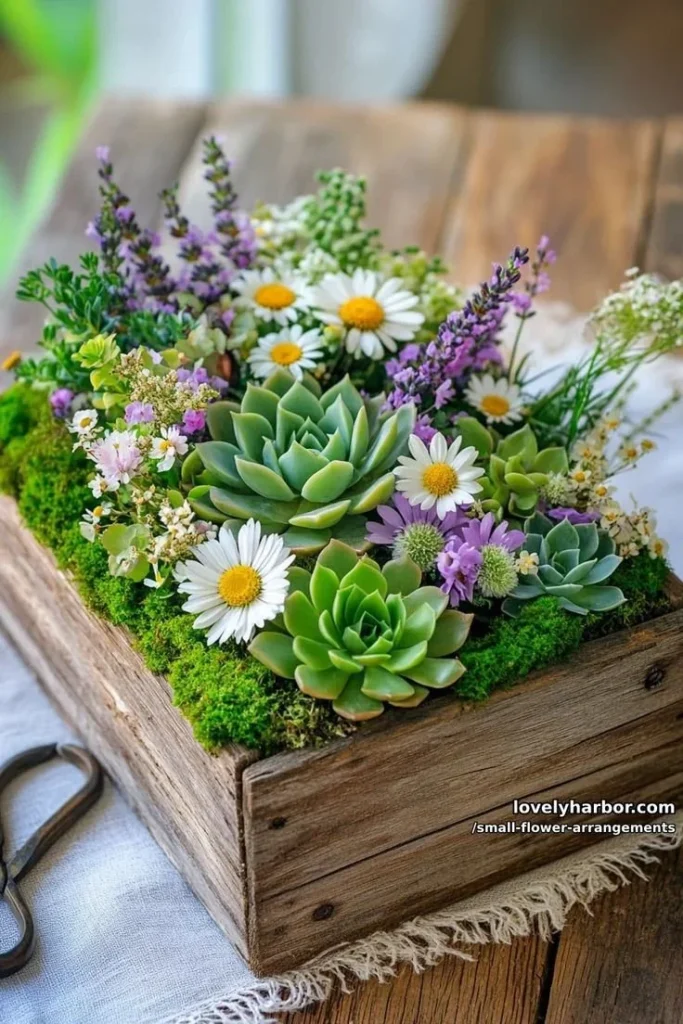
Cozy-Cottage: Small mismatched teacups filled with mixed pastels (daisies, forget-me-nots, sprigs of thyme) on a wooden tray—soft, layered, and welcoming.
Budget/Thrifted: Upcycled baby-food jars wrapped in twine, each holding one stem from an affordable mixed bunch—charming and wallet-friendly.
Frequently Asked Questions
Q: How do I match small flower arrangements with my existing color scheme?
A: Choose one accent hue from your room (a cushion or rug) and introduce that color sparingly across several arrangements to create harmony without matching everything.
Q: Are these arrangements renter-friendly?
A: Absolutely. They require no permanent changes to the space and can be moved or removed easily when needed.
Q: Can I use artificial flowers?
A: Yes—high-quality faux stems are great for low-maintenance styling. Mix with a few real stems for authenticity or choose all-dried bouquets for long-lasting texture.
Q: Where can I find vessels without spending much?
A: Thrift stores, dollar shops, and recycled jars make excellent budget options. Keep an eye out for small porcelain cups or unusual glass bottles for character.
Q: How should I store seasonal pieces?
A: Wrap fragile vessels in tissue and store in labeled boxes. Keep dried stems in breathable containers to avoid crushing.
Conclusion
Spring is a season of refresh, and 19 small flower arrangements offer a joyful, low-commitment way to bring that energy into your home. Try scattering petite vases on shelves, creating a dining runner of single stems, or gifting tiny arrangements to friends—it’s a small change that makes everyday moments feel special. If you’re looking for fresh inspiration on spring bouquets and seasonal blooms, consider browsing resources like Send Springtime Cheer Bouquet in Howard Beach for bouquet ideas, or read about classic blossoms in The 19 Best Flowers for Your Spring Wedding to broaden your palette. Share your photos, questions, or favorite combinations in the comments below, and visit Moderndecorum.com for more ideas to style a home you love.