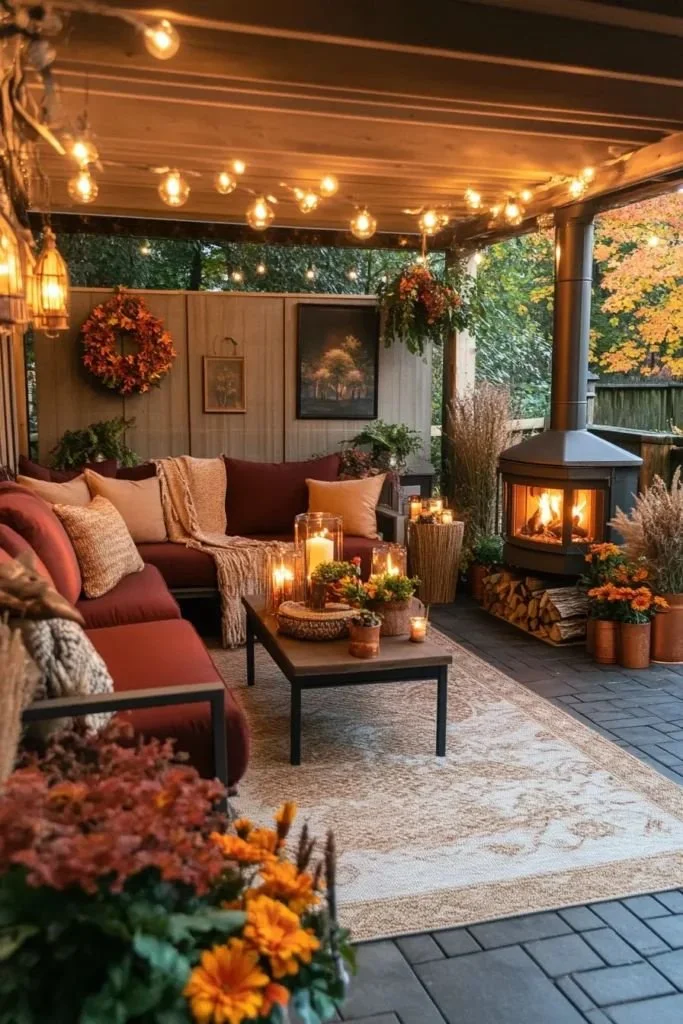
Indoor Outdoor Living Room 2026: Smart indoor-outdoor living room layout planning for 2026
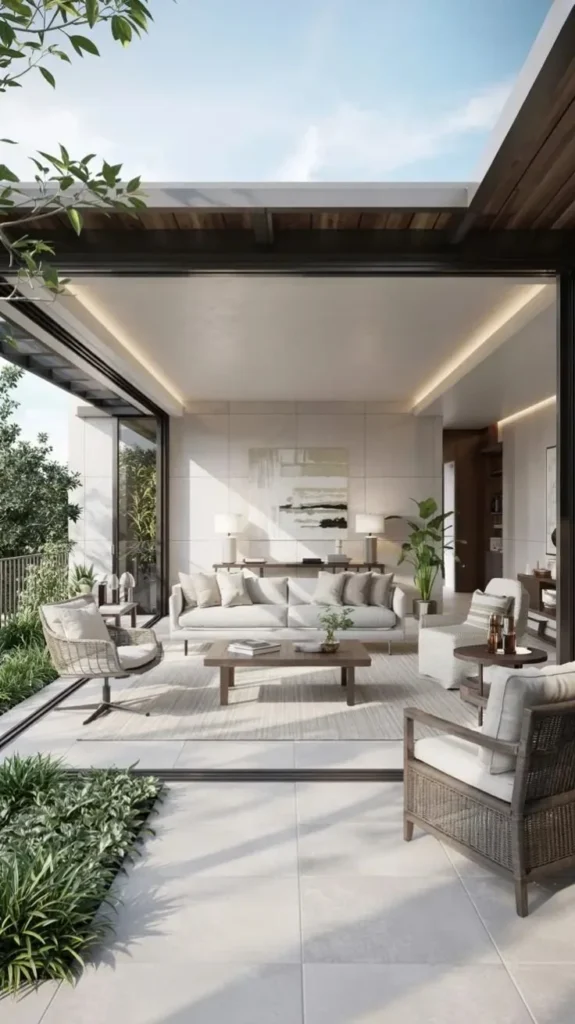
Imagine stepping out of a sun-warmed living room onto a shaded patio and feeling the two spaces breathe as one. Light pours in through wide glass doors, bouncing off a pale linen sofa and a low coffee table topped with river stones and a steaming mug. The floor textures shift from warm oak to smooth porcelain pavers underfoot; a woven jute rug bridges the interior and exterior, muffling footsteps and pulling the eye toward a planted corner where sculptural succulents and trailing jasmine perfume the air. This is the indoor-outdoor living room of 2026: calm, tactile, and smartly connected.
Textures are layered—soft bouclé cushions against weather-resistant canvas, a hammered metal pendant above a driftwood console, a mossy-green ottoman echoing nearby planting. Colors drift between neutral sand and soft olive with accents of terracotta and sun-faded denim. Voice-activated blinds glide silently; LED strips warm the under-planting at dusk. The mood is a cultivated ease that invites conversation, quiet reading, and weekend parties without fuss.
This layout matters because it transforms how you live. It removes the walls between entertaining and daily life, encourages natural light and ventilation, and makes hosting feel effortless. Whether you’re craving a relaxed evening with family, a sunlit workspace with fresh air, or a year-round room that handles seasonal gatherings, the indoor-outdoor living room is about comfort, personality, and versatility.
Perfect moments to try this: a seasonal refresh heading into spring or fall, updating a dated family room, creating cozy corners for reading nooks, renter-friendly tweaks for a balcony that feels like an extension of your living room, or decorating on a budget before hosting holidays. For inspiration on small-scale cozy planning, see our tips for smart small living room layout ideas to borrow scale and zoning tricks for compact spaces.
Decor Details
Indoor-outdoor living in 2026 is less a single decor piece and more a considered layout strategy: a blend of furniture, textiles, lighting, and smart tech chosen to make interior and exterior spaces read as one cohesive room. It’s a multi-component approach—think modular seating, layered rugs, weatherproof fabrics, and flexible lighting.
Main style: modern with organic, Scandinavian, and coastal influences—clean lines softened by natural textures. Typical colors are sandy neutrals, olive greens, terracotta, slate blues, and warm metallics. Materials and textures: teak or cedar wood, textured concrete, porcelain tile that mimics stone, water-resistant woven textiles, rope, rattan, and matte metal accents. Best rooms/zones: living room that opens to patio, sunroom, covered balcony, or terrace. DIY vs. buying: a mix—basic furniture and smart devices are mostly store-bought, while textiles, plant displays, and small built-ins are easy DIYs.
- Item type: multi-zone living layout (furniture + textiles + lighting + smart features)
- Main style: modern-organic with coastal and Scandinavian undertones
- Colors: sand, olive, terracotta, slate, warm whites
- Materials: teak, porcelain pavers, weatherproof textiles, woven fibers, metal
- Best zones: living room opening to patio, sunroom, covered balcony
- DIY level: mix of easy DIY and ready-made purchases
Design Impact
Bringing interior and exterior spaces together dramatically changes both the visual flow and how you spend your days. Visually, continuity of floor tones, aligned sightlines, and consistent color accents make rooms feel larger and more restful. A single, well-placed focal point—like a sculptural outdoor sofa seen through glass—can draw the eye and anchor both zones. Layered lighting (ambient interior, task lighting at the dining table, accent lights in planting) extends use into the evening and creates a seamless transition of atmosphere.
Emotionally, this layout cultivates calmness and sociability. Natural materials and living plants boost mood and air quality; an easy-to-adjust shading system creates comfort throughout the day. Practically, smart zoning enables multi-use living: a breakfast spot that doubles as a daytime workspace, an outdoor dining area that becomes a lounge at night, or a play corner that’s easy to reset. Picture a quiet weekday morning: you brew coffee, open the door, and your smart blinds raise to the perfect angle—light floods a cozy corner where you read, while a soft speaker plays calming jazz. Later, that same space converts for guests with modular seating and mood lighting.
Why Choose It
This approach is perfect for people who want flexible, breathable living—renters who need temporary solutions, families who prize durability and easy cleaning, urban dwellers seeking a connection to nature, and design lovers who want a modern, timeless feel. Its strengths are affordability (focus on durable, multipurpose items), flexibility (modular furniture and textiles can be swapped), and seasonal friendliness (layers change with weather).
One real-life problem this solves: a cramped living room that feels cut off from fresh air and natural light. By aligning seating with an opening and choosing low-profile furnishings, an awkward room becomes a flow-through social area. Another example: small balconies misused as storage transform into extension lounges with weatherproof poufs and a folding table, immediately multiplying usable square footage.
How to Style Indoor Outdoor Living Room 2026: Smart indoor-outdoor living room layout planning for 2026
{ingredients}
- Main items:
- Modular outdoor/indoor sofa or sectional (weather-resistant fabric)
- Low coffee table (teak, metal, or composite)
- Area rugs (indoor flatweave + outdoor jute or polypropylene)
- Smart blinds or motorized shades
- Layered lighting (pendant, floor lamp, LED strips, outdoor-rated sconces)
- Planters (terracotta, resin, or concrete)
- Retractable screen or sliding glass doors (if budget allows)
- Weatherproof side tables and ottomans
- Optional extras:
- Outdoor-rated throw pillows and blankets
- Portable electric fireplace or chiminea
- Multi-room audio speakers and smart home hub
- Hanging chair or swing for a statement
- Shelving with baskets for storage
- Budget substitutions:
- Thrifted rattan chairs refreshed with weatherproof cushions
- DIY pallet coffee table sealed with outdoor varnish
- Ikea-style modular seating covered with outdoor fabric
- Potted plants swapped seasonally for cost savings
{directions}
- Measure and map your sightlines: Measure doorway widths, flooring transitions, and the distance from the interior seating to the outdoor threshold. Aim for a clear 30–36 inch traffic path. Tip: draw a quick floor plan on graph paper to test furniture placement before buying.
- Choose a color base: Start with a neutral palette for large pieces (cream, sand, warm gray), then layer two accent colors—one botanical (olive, moss) and one warm (terracotta, rust). This keeps continuity across interior and exterior.
- Pick durable textiles: For cushions and upholstery, choose high-performance fabrics (solution-dyed acrylics or polyester blends). Use indoor throws and pillows to add softness that’s swapped seasonally.
- Anchor zones with rugs: Use an indoor rug in the interior and a matching or complementary outdoor rug on the patio. Make sure rugs meet visually at the threshold to create a “bridge.” Common mistake: rugs that are too small—fix by using rugs that extend at least 18 inches past furniture legs.
- Scale furniture for flow: Low-profile seating improves views; choose pieces with open legs to let light pass. Avoid bulky backs facing the threshold; instead, orient seating to encourage engagement between zones.
- Layer lighting: Install dimmable overheads for general light, a floor lamp or task lamp for reading, and soft garden lighting outside. Tip: choose warmer bulbs (2700–3000K) for living spaces to maintain coziness.
- Integrate smart tech subtly: Add motorized shades, a thermostat zone for the sunroom, and multi-room speakers. Ensure outdoor plugs are weatherproof and installed by a professional if needed.
- Green strategically: Use tall, narrow planters as privacy screens, and group pots of three at varying heights to create a natural focal point. Seasonal swaps (summer herbs, winter evergreens) keep things fresh.
- Add storage and surfaces: Incorporate baskets, an outdoor-rated console, or ottomans with storage for cushions and throws so transitions from indoor to outdoor remain clutter-free.
- Dress small details: Finish with a tray for drinks, scented candles for evening, and a textured throw that ties accent colors together. Mist common decorating mistakes by keeping large, bold patterns to smaller accents to maintain calm.
For additional ideas on keeping a clean, minimalist look while brightening a room, check out our guide to all-white bathroom inspiration for color and material cues you can translate into living spaces.
Room Setting Inspiration
Small space idea: For a city apartment with a tiny balcony, create a fold-down table on the railing, pair two stackable chairs with a narrow planter, and use a single weatherproof pouf inside by the door to extend seating. Keep the palette light to maximize perceived space.
Large open-plan idea: Define zones with a low console or open shelving that divides living and dining without blocking sightlines. Use a large area rug to anchor the living area and mirror that texture outside with coordinated pavers or a second rug to maintain flow. Add a pergola or retractable awning for depth and seasonal protection.
Pairings to consider:
- Plants and clay pots for organic warmth
- Oversized mirror indoors to reflect the outdoor view
- Layered rugs to define zones
- Soft throws and outdoor cushions for comfort
- Side tables and trays for entertaining ease
Care Instructions
Cleaning and maintenance are simple when you choose the right materials. For teak and other natural woods: clean with a mild soap and water, avoid harsh bleaches, and apply teak oil or sealant annually if you prefer the golden patina. Metal accents: wipe with a damp cloth; for rust-prone pieces, use protective sprays. Fabrics: follow manufacturer instructions—machine-wash covers where possible, spot-clean stains promptly, and store cushions during heavy rain.
Dust and refresh weekly in high-traffic rooms; deep clean rugs and textiles seasonally. Store seasonal items in breathable bags to avoid moisture buildup. Protect electronics and smart devices with weather-rated enclosures and, for long-term care, rotate cushions and textiles to even out sun exposure. Replace or re-cover high-wear cushions every few years to keep the look current without a full overhaul.
Designer’s Advice
- Keep scale in check: leave 30–36 inches for main walkways and ensure furniture legs sit on rugs for cohesion.
- Layer light sources: each zone should have ambient, task, and accent lighting; dimmers are essential.
- Anchor with natural textures: wood, stone, and woven fibers instantly harmonize interior and exterior.
- Mix patterns sparingly: pair one large-scale pattern with a smaller geometric or stripe for balance.
- Choose warm bulbs (2700–3000K) for living areas to preserve a cozy atmosphere.
- Declutter visually: use baskets and closed storage to hide outdoor gear when not in use.
- Test fabrics: take swatches into sunlight to ensure colorfastness and texture appeal.
Style Twists
- Minimalist coastal: Pale navy accents, whitewashed wood flooring, and low-profile teak furniture create an airy beachside feel. Luxury touches like a marble-top side table elevate the scheme.
- Boho garden nook (budget-friendly): Mix thrifted rattan chairs, macramé wall hangings, and mismatched pottery. Use secondhand rugs and a DIY pallet table sealed for outdoor use.
- Modern rustic (luxury): Hand-sawn cedar beams, a large outdoor fireplace, and plush weatherproof sectionals create a high-end retreat for year-round use.
Frequently Asked Questions
Q: Can I make an indoor-outdoor living room in a small apartment? A: Yes—focus on visual continuity (matching accent colors and a similar rug tone), use foldable or modular furniture, and add plants to bridge spaces.
Q: Is this idea renter-friendly? A: Absolutely. Use freestanding furniture, removable window treatments, and potted plants rather than built-ins. Hooks and peel-and-stick solutions help without damaging walls.
Q: How do I match this with my existing furniture? A: Identify one or two colors or materials from your current pieces and echo them in outdoor cushions or planters. Reupholster small items or add coordinating throws to create harmony.
Q: Where can I find quality items without overspending? A: Look for local outdoor furniture retailers, craft markets for one-off planters, and thrift stores for pieces that can be refinished. Prioritize durable materials for items that will see frequent use.
Q: Best way to store cushions during off-season? A: Use breathable storage bins in a dry place; avoid plastic sealed bags that trap moisture. For long-term storage, add silica packs to prevent mildew.
Conclusion
Ready to bring the outdoors in and design a living room that breathes with you? Start small—pair one indoor rug with one outdoor rug, add a plant cluster, and test a dimmable lamp to feel the difference. Share your before-and-after photos or questions in the comments below; we love seeing how readers adapt these ideas to their homes and hosting styles. For color direction and seasonal palette trends to guide your choices, take a look at the 2026 Color Collection of the Year, and for inspiration on flexible open-plan conversions, explore a variety of floor plans in The Best Barndominium Plan Collection (2026). Want more ideas? Browse Moderndecorum for layout guides and seasonal styling tips, and join our community to keep your home feeling fresh and welcoming.