Sofa Table Design 2026: Innovative Sofa Table Shapes Beyond Rectangular Forms
Introduction
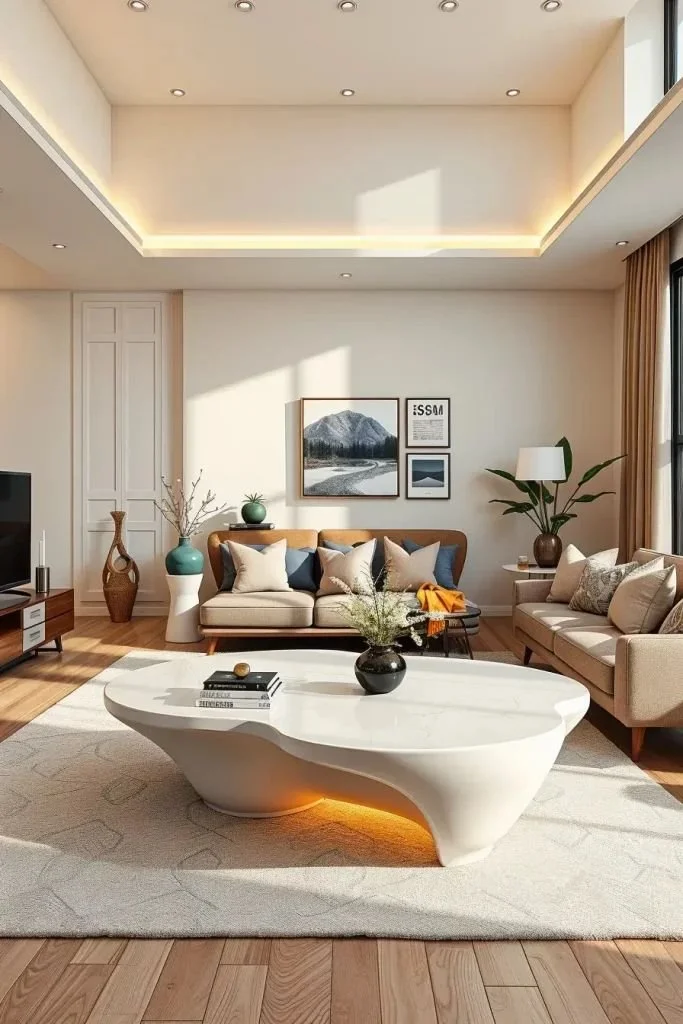
Imagine stepping into a living room where the silhouette of furniture feels more like art than function: a crescent-shaped sofa table cupping the back of a curved sectional, a slender arch that echoes the curve of a sculptural lamp, or a hexagonal console that catches light like a jewel. Sofa Table Design 2026 leans into shape as language—soft arcs, geometric breaks, and biomorphic forms that invite touch, frame views, and create pockets of intimacy. Textures play a starring role: satin metals brushing matte woods, ribbed ceramic vases against smooth terrazzo tops, and boucle-covered stools peeking beneath a floating table. Colors drift from warm latte to deep forest and off-white with inky accents, setting moods from breezy Scandinavian calm to moody, layered glam.
This design shift matters because furniture today must multitask emotionally and practically. We want pieces that assert personality without shouting, that help a living room host friends for a cozy night in, provide a dedicated landing strip for work-from-home essentials, and anchor a sofa in an apartment where every inch counts. Non-rectangular sofa tables do more than look interesting; they modulate flow, create visual tension, and carve out zones for lighting, plants, and personal objects. Whether you’re craving a seasonal refresh that feels fresh without a full overhaul, updating a rental-friendly living room for holiday hosting, or seeking small-space solutions that feel curated, these shapes deliver.
Non-rectangular sofa tables are perfect for a quick style update: swap a straight console for a sculptural crescent before guests arrive, or tuck a modular L-shaped table behind a sofa to create a mini bar during gatherings. They’re also ideal for cozy corners—imagine a semicircular table behind a chaise that becomes a nightly ritual spot for candles and a carafe. If you love the idea of changing your room for each season or entertaining in style without a big budget, embracing unconventional sofa table forms can be transformative. For inspiration on grounding these looks in earthy palettes and textures, check this roundup of earthy living room designs to see how shape and color work together.
Style Snapshot
What it is:
- A furniture piece—primarily a sofa table or console—reimagined in 2026 with rounded, angular, asymmetrical, and modular silhouettes that move beyond traditional rectangular footprints.
Main style:
- Eclectic modern with nods to Scandinavian minimalism, mid-century curves, and sculptural contemporary design.
Colors, materials, textures:
- Soft neutrals (creams, beiges), deep jewel tones (teal, forest), matte black and brass accents; materials like solid wood, veneered plywood, honed stone, hammered metal, and glass. Textures include ribbed wood, terrazzo, velvet, and tactile ceramics.
Best rooms/zones:
- Living room (behind sofas or along a wall), entryway console, bedroom headboard alternative, dining area sideboard, home office space divider.
DIY vs. ready-made:
- Mostly store-bought for complex geometry, but mixable with easy DIY additions (paint, reclaimed wood tops, or upcycled bases).
Design Impact
Non-rectangular sofa tables change a room’s rhythm. Curves soften straight lines, creating a flow that guides the eye and foot traffic—great for narrow or oddly shaped rooms. A triangular console placed diagonally can open circulation and make a doorway feel more intentional; a half-moon table behind a sofa creates a private niche for late-night reading lamps and a small tray for a book and mug. When a table breaks the rectangle mold, it often becomes a focal point, balancing a visual heavy sofa or anchoring a gallery wall with a central axis.
Emotionally, these shapes invite touch and linger. Rounded edges read as welcoming, which can make hospitality feel more intimate. Geometric, faceted designs convey sophistication, while organic biomorphic pieces add calm. Practically, many of these tables are multifunctional: they provide surface area for lamps and accessories, offer lower shelves for storage baskets, or slide in modular stools for extra seating. For example, a crescent table with slatted lower shelving keeps blankets stowed for cozy movie nights, while an asymmetric console with one deep drawer solves the “where did I put the charger?” problem during work-from-home days.
Why Choose It
Who it’s perfect for:
- Renters who need visual impact without structural changes, small-space dwellers craving smart surfaces, design lovers seeking a standout piece, and anyone who hosts regularly and wants a stylish serving spot.
Key strengths:
- Affordable variety across price points, highly flexible in styling, timeless when executed in neutral materials, and easy to update by swapping accessories. Many shapes are small-space friendly because they tuck into corners, float behind a sofa without intruding into walkways, or act as room dividers.
Real-life problem solved:
- Imagine an empty wall behind a low sofa that feels neglected. Replacing a long, boxy console with a modular, scalloped table sized to the sofa’s back creates cohesion and gives you a place to soften the room with a lamp and layered textures. In a narrow entryway that can’t handle a full rectangle, a slim semi-circle console gives you a landing space for keys and mail without blocking passage—a practical elegance that makes daily routines smoother.
How to Style Sofa Table Design 2026: Innovative Sofa Table Shapes Beyond Rectangular Forms
Ingredients (materials, tools, products)
- Main items:
- Your chosen non-rectangular sofa table (crescent, L-shaped, hexagonal, trapezoid, or modular segments).
- Table lamp or a pair of wall sconces.
- Decorative tray or small bowl for keys/chargers.
- One statement sculpture or tall vase.
- A stack of books or a magazine holder.
- Optional extras:
- Plants (potted or trailing), candles, woven basket for throws, small framed art, decorative mirror above.
- Budget-friendly substitutions:
- Thrifted console base with a DIY-cut wood top, plywood cut to shape and finished with stain or paint, IKEA modular legs with an upcycled tabletop.
Directions (step-by-step)
- Measure twice, buy once: note the sofa height and depth. Choose a table height that sits 1–2 inches below sofa back for a seamless look or equal height if you prefer alignment.
- Choose shape based on traffic: crescent or rounded forms work well behind curved sofas, while triangular or trapezoid tables can be angled in hallways. Allow at least 30–36 inches of clearance behind a sofa for walkway.
- Pick color and finish to match your vibe: light woods and matte brass for Scandinavian; dark stained wood and sculptural black metal for moody modern. For renters, consider surface wraps or removable peel-and-stick veneer.
- Layer lighting: start with one statement lamp or pair of low-profile wall sconces to create depth. Use warm bulbs (2700–3000K) for cozy ambiance; add a small LED uplight for dramatic shadow play on sculptural pieces.
- Anchor the table with a central heavy object (lamp or vase), then balance with lower items like a book stack or tray on the opposite side. Keep visual weight evenly spread rather than symmetrical if using an asymmetric table.
- Add texture: a woven runner or a small linen mat softens a stone or metal top. Place a small plant in a tactile ceramic pot to add life and fragrance.
- Hide clutter: use a narrow basket, drawer, or stylish box beneath the table for remotes, chargers, and mail. For open-legged designs, tuck rolled throws or slim stools underneath.
- Mind the scale of accessories to the table shape: on a narrow crescent, avoid oversized lamps; opt for slim-profile lighting. On multi-faceted surfaces, keep decor low and layered.
- Seasonal swaps: swap textiles and plants seasonally—bougainvillea and bright ceramics in summer, tapered candles and brass trays in winter—to keep the look fresh.
- Common mistakes to avoid: don’t over-crowd small surfaces; avoid placing the table where it interferes with traffic flow; and don’t match every metal—mix finishes for depth.
Showcasing Ideas
Non-rectangular sofa tables can shine in many rooms. In the entryway, a scalloped console with a mirror creates an instant sense of arrival and is perfect for last-minute touch-ups. In living rooms, place a curved console behind a rounded sectional to create a secondary surface for drinks and mood lighting. In bedrooms, use a narrow trapezoid table at the foot of the bed as a layered landing for trays and plants. In dining spaces, a hexagonal sideboard becomes a conversation-starting server.
Pairings to try:
- Plants: trailing pothos in a hanging planter near a curved table softens geometry.
- Mirrors and art: a large round mirror echoes curved tables; a vertical gallery wall works with angular consoles.
- Rugs: pick shapes that interact—round rugs under a circular console or rectangular rugs that contrast with hexagonal tables.
- Small-space idea: use a slim half-moon console behind a narrow sofa to create storage without eating floor space.
- Open-plan idea: arrange two modular trapezoid tables to form a longer table that can delineate living and dining areas without blocking light or sightlines. For kitchen-adjacent styling inspiration that blends vintage color and bold shapes, see this feature on green vintage kitchen designs.
How to Maintain
Care varies by material: for wood, dust weekly with a soft cloth and use a damp (not wet) cloth for spills; avoid abrasive cleaners. For metal bases, a microfibre cloth and mild soap maintain finish—dry immediately to prevent water spots. Glass and stone tops prefer pH-neutral cleaners; blot spills of wine or citrus quickly to prevent etching. For fabrics or upholstered edges, vacuum gently and treat stains per fabric care instructions.
Refresh every season by rotating smaller accessories and swapping textiles—this keeps the piece from feeling static. Dust more frequently in high-traffic homes (weekly) and deep-clean surfaces monthly. For storing seasonal decor, use acid-free boxes for paper items, breathable fabric bags for textiles, and stack ceramic pieces with bubble wrap to avoid chipping.
Designer’s Advice
- Scale rule: the table should be roughly two-thirds the length of the sofa for balanced proportion.
- Lighting tip: layer light sources—one task lamp plus ambient overhead equals versatility.
- Mix metals: choose two primary metal finishes and use them consistently across accessories to avoid a cluttered look.
- Texture trick: pair smooth table surfaces with tactile accessories like ribbed vases or woven trays for sensory contrast.
- Negative space: leave at least 30% of the table surface intentionally empty for a curated, airy look.
- Color anchor: add one accent color through a single accessory (vase or book) to create cohesion.
- Function-first styling: always include one catch-all (tray or bowl) so aesthetics and daily life coexist.
Creative Variations
- Minimalist Curves:
- Description: A slim, white-painted half-moon table with tapered wood legs. Styling is sparse—single ceramic lamp, one book, and a small succulent. Budget-friendly and airy, perfect for Scandinavian-inspired homes.
- Cozy Eclectic:
- Description: A carved wooden scalloped console with a hammered brass base. Rich jewel-toned accessories, layered textiles, and mixed-pattern art create a welcoming vibe for family gatherings and holiday hosting.
- Modular Multipurpose:
- Description: Interlocking trapezoid modules that can be reconfigured as an end table, longer console, or occasional coffee table. Mid-range investment with high versatility—great for renters who move often or those who entertain in different room layouts.
Frequently Asked Questions
Q: Will a curved console work in a small apartment?
A: Yes—curved or slim half-moon consoles are ideal for tight spaces because they tuck against walls and allow better circulation than bulky rectangles.
Q: How do I match a non-rectangular table to existing furniture?
A: Anchor with color and material continuity—match a table top to a nearby wood tone or pick accessories that repeat your room’s accent color to tie everything together.
Q: Is this renter-friendly?
A: Absolutely. Choose lightweight pieces or those with non-permanent finishes. Use removable mats or peel-and-stick veneer to update an affordable table without altering it permanently.
Q: Where can I find quality pieces without overspending?
A: Look at local consignment shops, artisan markets, or online marketplaces for small-batch designers. You can also DIY by reshaping a tabletop or upholstering a thrifted base.
Q: How should I clean a mixed-material console?
A: Treat each material appropriately—dust wood, wipe metal dry, and use glass cleaner for panes. Test products in an inconspicuous area first.
Conclusion
Sofa Table Design 2026 is about shape, texture, and making furniture work emotionally and functionally for modern life. Whether you select a sculptural crescent console for cozy evenings or a modular trapezoid setup for flexible hosting, these unconventional forms help craft rooms that feel curated and lived-in. Ready to explore pieces that bridge form and function? See an example of a geometric console that captures this trend in an accessible piece like the Condemo Console Table with Geometric Base … – Amazon.com, and find styling inspiration from trusted design voices like Athena Calderone’s favorite decor picks to spark your vision.
Try this idea in your home—start small with a unique silhouette and build accessories around it. Share photos, questions, or tips in the comments, and explore more decor ideas on Moderndecorum.com or join our community to stay inspired.