Turn Heads With These 50+ Stunning Garden Walkway Ideas You Can Easily Copy
A beautifully designed garden walkway does more than just connect points A and B — it sets the mood, highlights plants, and can make even a small yard feel intentional and inviting. Whether you prefer a formal brick avenue, a wildflower-strewn meander, or a modern concrete ribbon, these ideas will inspire you to create a path that stops people in their tracks. For ideas on blending indoor and outdoor moods, check how interiors influence pathways in this cozy living room ideas roundup — the same color and texture principles can guide your walkway choices.
Below are 50+ practical and eye-catching ideas, grouped by style, with quick tips so you can copy them with confidence.
Classic & Timeless
- Brick running bond — warm, traditional, easy to edge with flowers.
- Herringbone brick — a more formal, eye-catching pattern for driveways and paths.
- Cobblestone lane — historic charm; great with moss in the joints.
- Flagstone irregulars — natural, rustic look; lay flat for safer footing.
- Cut stone slabs — sleek and upscale; use consistent color for a modern classic.
- Reclaimed pavers — add character and sustainability by reusing old bricks.
- Gravel with paver borders — affordable and permeable; contains edges well.
- Pebble mosaic — slice pebbles into patterns for a handcrafted look.
Modern & Minimal
- Concrete ribbon — narrow concrete strips with grass between for a contemporary look.
- Large-format concrete pavers — minimal, geometric, excellent for small yards.
- Corten steel edges — rusted steel provides dramatic framing for modern paths.
- Permeable grid pavers — modern, eco-friendly, and good for runoff.
- Smooth slate walkway — cool tones and clean lines for a minimalist garden.
Natural & Meadowy
- Stepping stones in lawn — informal and playful, perfect for cottage gardens.
- Mulched trail — soft underfoot and inexpensive for winding paths.
- Wood slice stepping stones — rustic and good for woodland gardens.
- Bark-chip paths — natural, quiet, and easy to renew.
- Wildflower verge — plant native wildflowers along a simple gravel track.
- Meadow boardwalk — raised planks for marshy or slopey zones.
Japanese & Zen-Inspired
- Irregular stepping stones (tobi ishi) — encourage slow, mindful walking.
- Bamboo edging and accents — adds authenticity and fragrance.
- Raked gravel garden path — maintenance-friendly, meditative aesthetic.
- Moss-filled joints — soft green contrasts with stone and timber.
Mediterranean & Warm-Climate
- Terracotta tile walkway — warm hues that age gracefully.
- Pebble-and-tile inlay — eye-catching Mediterranean mosaic patterns.
- Low olive trees lining — drought-tolerant framing with sculptural trunks.
- Gravel with rosemary edges — fragrant and deer-resistant.
Cottage & Romantic
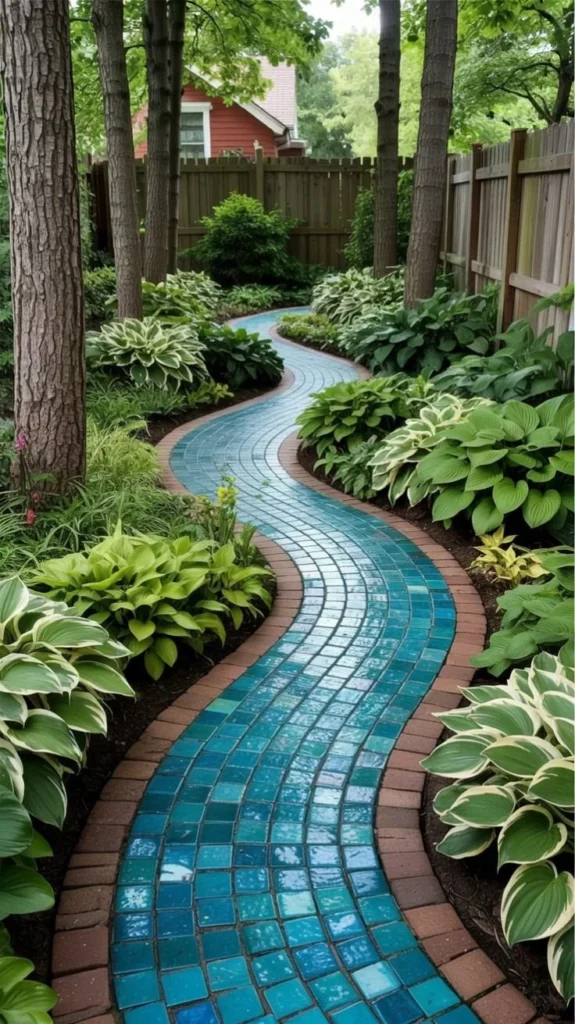
- Twisting brick alleys with roses — classic cottage romance.
- Recycled brick and mosaic scraps — charmingly eclectic.
- White picket fence borders — storybook framing for narrow paths.
- Climbing trellis over the path — pergola effect with shade and scent.
Rustic & Woodland
- Log-plank boardwalk — rugged and perfect for slopes or wet spots.
- Crushed rock with timber sleepers — rustic rail-like accents.
- Stone steps cut into the hill — stable and natural for elevation changes.
- Fern-framed shady trail — emphasize textures and fern planting for shade.
Edible & Pollinator-Friendly
- Herb walkway — thyme, oregano, and chamomile between stepping stones release scent.
- Berry-lined path — low hedges of raspberries or currants (watch the thorns).
- Pollinator strip — nectar plants along the edges to invite bees and butterflies.
- Vegetable border promenade — small raised beds along the path for an edible display.
Bold & Artistic
- Painted pavers — geometric colors for a playful, modern lane.
- Glass-inlaid stones — bring sparkle when sunlight hits them.
- Sculptural focal points — place a sculpture at a path’s turning point for drama.
- Glow-in-the-dark aggregates — subtle night illumination without wiring.
Low-Maintenance & Accessible
- Smooth, continuous concrete — easy to maintain and wheelchair-friendly.
- Wide compacted decomposed granite — stable and accessible with a natural look.
- Rubber interlocking tiles — forgiving underfoot and slip-resistant for families.
- Raised boardwalk with handrails — for steep or uneven terrain.
Water-Friendly & Drainage Solutions
- Permeable paving with soaked-away edges — reduces runoff and prevents puddles.
- French drain integrated along path sides — invisible solution for heavy soils.
- Dry creek bed alongside walkway — attractive drainage that complements stonework.
Seasonal & Year-Round Considerations
- Evergreen hedging or upright columns — keeps structure in winter.
- Winter-interest plants (bark, berries, shapes) — ensure path looks good in every season.
- Heated path strips under key steps — luxury option for icy climates.
Design Tips You Can Copy Today
- Keep a consistent rhythm: repeat materials or plantings every few feet to create visual continuity.
- Think width: make main paths at least 3–4 feet wide; secondary paths can be narrower.
- Edge everything: neat edging prevents gravel and mulch from wandering.
- Layer lighting: use path-level lights, uplights for trees, and statement pendants for covered pergolas.
- Match materials to function: smooth materials where you need wheelchair access; textured where you need grip.
- Plant for fragrance and touch: herbs near seating areas make the path sensory-rich.
For color continuity between your outdoor walkway and indoor spaces, consider carrying palettes and tile ideas through interior openings — for instance, coordinating with darker, moody palettes similar to the ones shown here: stunning black and tan bathroom ideas. That kind of cohesion makes transitions feel intentional and stylish.
Quick DIY Kits & Easy Starts
- Buy pre-cut stepping stones and lay them on compacted sand.
- Create a pebble mosaic using a stencil and mortar for a weekend project.
- Edge a short path with recycled bottles for a small, quirky statement.
- Lay temporary mulch to test a meandering route before committing to hard materials.
No matter your budget or style, there’s a garden walkway idea here you can adapt. Begin by mapping the desired route, deciding on primary materials, and testing small samples in place (mock up with cardboard or temporary pavers) to ensure the sightlines and scale feel right.
Conclusion
If you want more planting inspiration for making pathways feel like part of a cultivated garden, explore the classic planting combinations in Captivating Beth Chatto Gardens – Annika Perry. If you’re thinking about growing much of the planting yourself and are curious about safety and best practices, see community perspectives on Is it safest to grow your own garden? – Quora.