Indoor Outdoor Living Room 2026: Tropical Indoor-Outdoor Living Room With Natural Materials
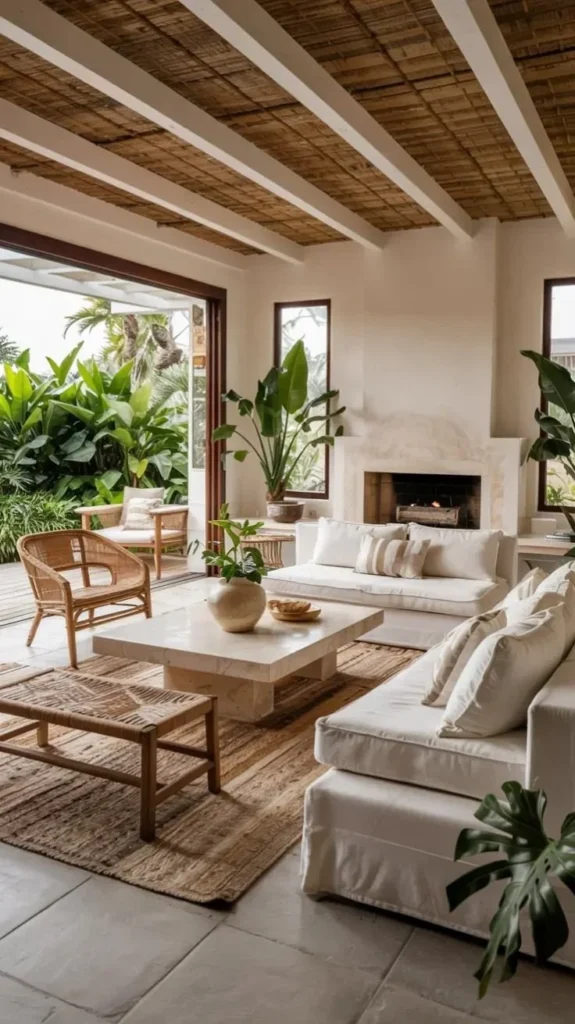
Imagine stepping into a living room that feels like a sunlit veranda on a slow, easy island morning. Warm, dappled light pools on a woven jute rug. Linen slipcovers whisper against rattan armchairs. A cascade of palms and philodendrons softens corners while terra-cotta planters and hand-carved wooden bowls add earthy punctuation. This is the Tropical Indoor-Outdoor Living Room of 2026 — a living space where the boundary between inside and outside dissolves into a tactile, relaxed luxury built from natural materials.
The look is simultaneously curated and effortless: layered textures — cane, seagrass, raw wood, and washed linen — mingle with a palette of sandy beige, sea-glass greens, sun-warmed terracotta and deep botanical greens. Light fixtures in hammered brass or woven bamboo cast soft, golden pools that invite conversation and lingering. The mood is restorative and sociable at once; a place for morning coffee, late‑afternoon reading, or hosting an intimate dinner under string lights.
Why this decor matters in real homes is simple. It offers comfort and personality without appearing overdone. Natural materials age well — they gain character, not wear — and their tactile warmth makes every seating moment feel intentional. Whether you live in a modern apartment, a suburban house, or a compact rental, this aesthetic adapts: it brings the calm of nature indoors, supports relaxed hosting, and makes daily routines feel more sensory-rich and less frenetic.
This idea is perfect for a seasonal refresh when you crave summer air in the middle of winter, for carving out cozy corners to read or work, or for renter‑friendly updates that transform a neutral space without major renovations. It’s a cost‑effective way to prepare for gatherings — think breezy dinner parties, holiday brunches, or family game nights — and it pairs well with simple DIY projects or store-bought statement pieces. For inspiration on how textured warmth and intimate lighting create cozy living spaces, see this take on a warm fireplace glow that blends mood and function: cozy French living room with warm fireplace glow.
Style Snapshot
The Tropical Indoor-Outdoor Living Room with Natural Materials is a decor approach — a full-room concept combining furniture, textiles, lighting, greenery, and accessories to blur indoor and outdoor living.
Main style: Modern tropical with strong boho and natural-modern influences. It keeps clean silhouettes while emphasizing organic textures.
Typical colors, materials, and textures:
- Colors: sand, olive and fern greens, sun-faded blues, warm terracotta, and ivory.
- Materials: rattan, cane, teak or reclaimed wood, linen, jute, terracotta, and matte ceramic.
- Textures: open-weave baskets, raw-edge wood, macramé, and soft, slubby linens.
Best rooms/zones: Living room, sunroom, covered patio, dining nook, and open-plan living-dining areas. Also ideal for a home office corner that benefits from greenery and natural light.
DIY vs. buying: Mix. Many statement pieces are best bought (a solid teak coffee table, a quality sofa), while accents and textiles are easy to DIY or thrift for character.
Design Impact
Bringing tropical indoor-outdoor elements into a living room completely alters how the space reads and how you live in it. Visually, natural materials and a layered palette create depth and balance without heavy color. Light reflects differently off linen drapes than painted walls, and woven textures break up large expanses, making a room feel intimate rather than cavernous. A large planter or a grouping of varying heights can become a new focal point, improving flow by gently directing sightlines and pathways.
Emotionally, this style calms the senses. Plants add life and oxygen; natural fibers feel comfortable under fingertips and feet; warm woods ground the room, creating a sense of rootedness. After a busy day, sinking into a linen lounge chair beneath a pendant light feels restorative — like a micro-retreat. Practically, the tropical indoor-outdoor approach supports multi-use living: a hamper of woven baskets tucks away throw blankets and board games, a tall console becomes a surface for serving, and modular seating adapts to movie night or cocktail hour.
If you work from home, designate a breezy corner with a wall-mounted shelf and potted greenery to separate focus time from relaxation. Hosting gets easier too: pairing stackable dining chairs with a long wooden table lets you scale seating, while layered lighting keeps evening gatherings warm and flattering. For additional layout ideas that balance comfort and function, take cues from this modern living room that blends organic textures with smart TV integration: cozy organic modern living room with TV.
Why Choose It
This decor is smart for anyone craving a low-stress, high-style living room that looks timeless and breathes. Renters love it because most changes are non-permanent: swap textiles, hang lightweight rattan shelves with anchors, use floor plants instead of built-ins. Families appreciate the forgiving, layered look — slightly worn wood and natural fibers conceal use and tell a story. Small apartment dwellers benefit from the vertical layering of plants and woven wall hangings, which add texture without hogging floor space.
Key strengths include affordability and flexibility. You can splurge on a centerpiece — a handcrafted teak bench or a statement pendant — while sourcing baskets, cushions, and ceramics from thrift stores or budget-friendly retailers. The aesthetic is seasonal-friendly; swap citrusy accents for deeper jewel tones in cooler months to maintain mood without a complete overhaul.
Real-life problem solved: a dark corner can become a sunlit focal point. Add a tall, reflective palm or fiddle leaf fig in a light pot, a slender tripod floor lamp with warm bulb, and a tapered side table to create a reading nook that was previously unused. A bland sofa can be revitalized with textured linen slipcovers, layered throws, and a couple of sculptural pillows in woven fabrics.
How to Style Indoor Outdoor Living Room 2026: Tropical Indoor-Outdoor Living Room With Natural Materials
{ingredients}
- Large statement pieces: teak coffee table, linen or light-cream sofa, rattan or cane armchair.
- Textiles: slubby linen slipcovers, jute or seagrass rug, macramé wall hanging, lightweight cotton throws.
- Lighting: woven pendant, floor lamp with warm LED bulb, string lights for evening ambiance.
- Greenery: mix of tall palms (real or high-quality faux), potted philodendron, trailing pothos, and small tabletop succulents.
- Accessories: ceramic vases, terracotta planters, woven baskets, wooden trays, brass or matte-finish accents.
- Tools: plant saucers, moisture meter (optional), neutral paint chips, measuring tape, removable wall hooks.
- Optional upgrades: outdoor-grade fabrics, glass folding doors (for a renovation), mosquito-repellent candles for open patios.
- Budget swaps: thrifted wooden stools, IKEA-style rattan alternatives, DIY macramé from online tutorials.
{directions}
- Start with a warm neutral base. Choose wall colors in soft ivory, warm off-white, or a pale sand to reflect light and let natural materials stand out. Tip: test paint swatches on different walls to see how light shifts through the day.
- Anchor the space with a textured rug. Place a jute or seagrass rug beneath the primary seating; ensure at least the front legs of sofas and chairs rest on the rug for cohesion. Avoid rugs that are too small — scaled properly, they unify the area.
- Layer seating for sociability. Pair a linen sofa with a rattan armchair and a small wooden bench; vary heights and materials to create an inviting conversation circle. Keep a 12–18 inch clearance between the coffee table and seating for comfortable movement.
- Introduce large greenery early. A tall plant beside the sofa or near a window sets the tropical tone; use terracotta or textured ceramic pots to add color and weight. Tip: if light is limited, choose a lush faux or low-light tolerant species.
- Bring in natural wood and woven textures. Add a reclaimed wood coffee table or side table and place woven baskets for magazine and blanket storage. Placement tip: tuck baskets under consoles or beside seating to hide clutter while keeping essentials accessible.
- Layer lighting for mood. Combine a central woven pendant with task lamps and a floor lamp. Use warm (2700K–3000K) LEDs to mimic golden sunlight in the evening. Avoid a single overhead source — layering creates depth.
- Accessorize with curated small groups. Cluster vases and planters in odd numbers on the coffee table or console. Use a wooden tray to corral remotes and candles. Avoid overcrowding surfaces; negative space helps each piece breathe.
- Add textiles for comfort. Drape a soft throw over an armchair and anchor the sofa with two large sculptural pillows and a smaller patterned cushion to introduce subtle color. Tip: mix a plain linen with one patterned or woven piece to maintain calm.
- Define indoor-outdoor transitions. If you have a sliding door, treat the threshold with coordinated flooring or a thin runner that aligns indoor and outdoor rugs. For small spaces, place a plant stand or umbrella inside near the door to blur boundaries.
- Personalize with found objects. Bring in shells, a hand-carved bowl, or travel souvenirs to tell a story. Place these sparingly — they should feel like curated moments, not clutter.
Room Setting Inspiration
This tropical indoor-outdoor approach adapts beautifully across rooms. In the entryway, a slim console in reclaimed wood with a woven mirror and a couple of dangling plants creates a welcoming first impression. In a living room, cluster plants at different heights around a reading lamp for a layered, air-filled vignette. For a dining area, choose a long wooden table, rattan dining chairs, and a statement pendant hung low for intimate meals.
Pairing ideas:
- Plants + mirrors: Mirror reflects greenery and multiplies light.
- Rugs + layers: A jute rug under a softer wool runner adds warmth and sound dampening.
- Throws + baskets: Keep extra throws in woven baskets near seating for easy access and texture.
- Candles + trays: Use wooden trays to organize candles and small ceramics for dinner settings.
Small-space solution: Use vertical planters, narrow console tables, and wall-mounted rattan shelves to keep floors clear while adding texture. Large open-plan rooms: define zones with large rugs, low-back sofas, and tall plants to create flow without walls.
How to Maintain
Natural materials require gentle care to stay beautiful. Wood surfaces benefit from occasional oiling or wax to restore luster; follow manufacturer guidance for teak or reclaimed wood. Woven fibers like jute and seagrass prefer dry environments — vacuum gently and spot-clean with a mild soap and water, avoiding saturation to prevent warping.
Fabrics such as linen should be machine-washed on a gentle cycle when removable, or spot cleaned and professionally laundered for structured items. Dust woven light fixtures monthly to prevent buildup; use a soft brush or compressed air for intricate weaves. For plants, wipe leaves with a damp cloth to keep them glossy and dust-free and rotate pots occasionally so all sides receive light.
Seasonal storage: store delicate textiles like linen throws in breathable cotton bags during humid months to avoid mildew. Protect pottery and terracotta from freezing temperatures by moving them indoors or insulating them if used outdoors. Refresh the look annually by swapping cushion covers and moving statement plants to new positions — small changes go a long way.
Designer’s Advice
- Scale matters: choose a few large pieces (a tall plant, large rug, statement pendant) instead of many small objects that create visual noise.
- Warm light is essential: use bulbs in the 2700K–3000K range and layer light sources for depth.
- Mix textures, not patterns: balance bold textures (rattan, wood, jute) with subtle patterns in pillows or throws.
- Keep three heights: arrange plants and objects at low, medium, and high levels for a natural, effortless look.
- Neutral base, colorful accents: maintain a calming neutral foundation, then add botanical greens or terracotta for seasonal pops.
- Edit ruthlessly: step back and remove one accessory if the scene feels crowded — negative space heightens impact.
- Use natural shapes: rounded edges and organic silhouettes feel more aligned with tropical, indoor-outdoor vibes than rigid, boxy furniture.
Creative Variations
Minimalist tropical: Stick to a restrained palette of white, sand, and a single deep green. Use fewer but more tailored pieces — a sleek linen sofa, one sculptural plant, and a smooth teak coffee table.
Cozy, colorful twist: Add saturated jewel tones — coral cushions, a teal throw, and patterned ceramic planters. Layer more textiles and smaller plants for a collected, lived-in warmth.
Budget-friendly blend: Source thrifted wooden stools and baskets, refresh old cushions with DIY linen covers, and use high-quality faux plants in low-light spots. A well-placed woven pendant and a few terracotta pots can make the whole room sing without a big spend.
Frequently Asked Questions
Q: Will this style work in a small apartment with little natural light? A: Yes. Use light-colored walls, reflective surfaces (mirrors), and high-quality faux plants in shadows. Keep furniture scaled appropriately and emphasize vertical texture with wall hangings.
Q: Is this look renter-friendly? A: Absolutely. Most changes are non-permanent: slipcovers, rugs, plant stands, and removable hooks for lightweight wall art keep the transformation reversible.
Q: How do I mix this tropical style with existing modern furniture? A: Anchor modern pieces with natural-textured accessories — a jute rug, woven baskets, and wooden accents will bridge the sleek lines to the warmer tropical palette.
Q: Where can I find quality items without overspending? A: Look for local craft fairs, flea markets, and thrift stores for unique ceramics and wood pieces. For basics, budget-friendly home stores offer natural-finish items and outdoor-grade textiles that work indoors.
Q: How often should I refresh textiles and plants? A: Rotate cushions seasonally, wash slipcovers twice a year, and trim or repot plants as they grow — usually every 6–18 months depending on species.
Conclusion
Ready to bring a tropical indoor-outdoor living room into your home? This look creates a calm, sociable, and textured space that suits modern living, whether you’re hosting friends or carving out a quiet corner for yourself. For visual inspiration showing how indoor-outdoor living can be integrated into homes of different scales, explore this collection of stunning blended spaces: 20 Homes With Striking Indoor-Outdoor Living Spaces. If you’re thinking about designing a guest-ready tropical retreat with a cohesive, curated approach, this thoughtful guide is a great read: Tropical House Design: Creating A Guesthouse Experience.
Try a corner experiment this weekend: swap a rug, add one large plant, and introduce two woven accents — then live with it for a few weeks. Share your photos, questions, or tips in the comments below, and explore more decor ideas at Moderndecorum.com to keep the inspiration flowing.