Table of Contents
Why This Decor Idea Matters
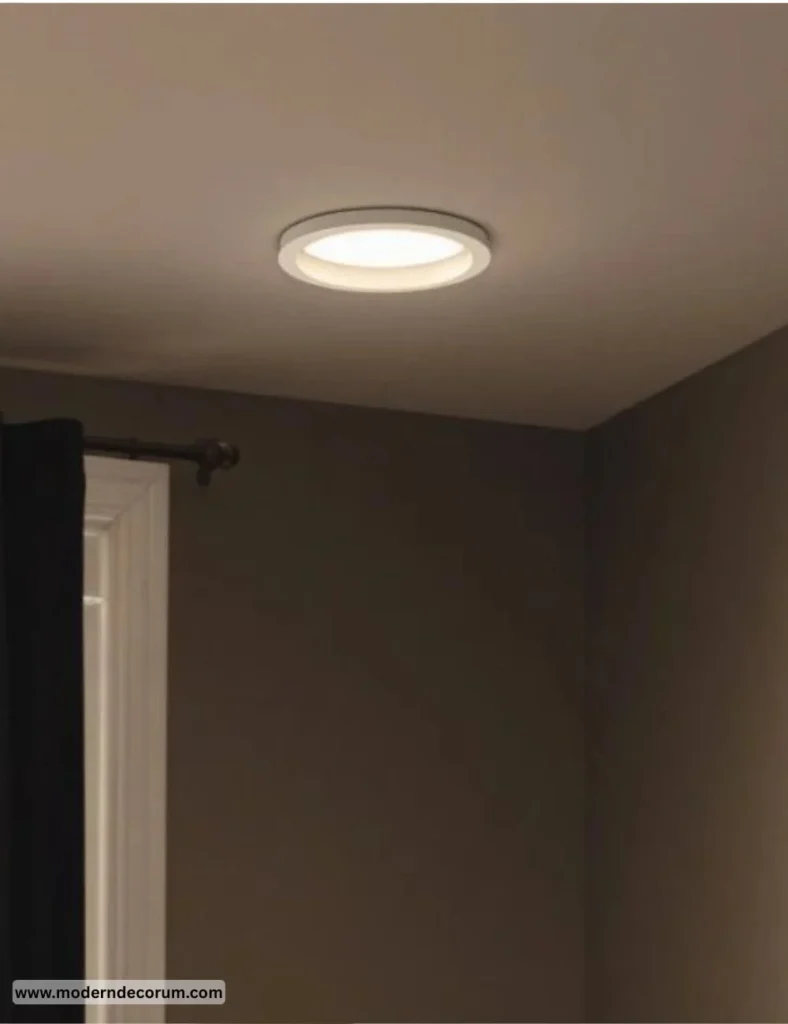
Recessed lighting is more than just a practical solution—it’s a design statement.
- Minimalist elegance: Hidden fixtures keep ceilings free from clutter.
- Even illumination: Lights are distributed across the room for consistent brightness.
- Flexibility: Works in living rooms, kitchens, hallways, or bathrooms.
- Trendy and timeless: Complements modern, Scandinavian, and transitional interiors.
In addition to aesthetics, recessed lighting enhances functionality, reducing shadows and highlighting key areas like artwork, countertops, or seating zones.
What You’ll Need
Recessed Light Fixtures
- Purpose: Provide clean, downward-facing illumination.
- Options: LED, halogen, or incandescent options.
- Budget Tip: LED is energy-efficient and long-lasting, offering cost savings over time.
Compatible Ceiling Housing
- Purpose: Houses the fixture and ensures safe installation.
- Options: Remodel housings for existing ceilings, new construction housings for fresh builds.
Trim and Baffles
- Purpose: Control light direction and reduce glare.
- Options: White trims for a subtle look, black trims for contrast, adjustable trims for focus lighting.
Dimmer Switches (Optional)
- Purpose: Adjust light intensity for mood and ambiance.
- Pro Tip: Choose dimmers compatible with LED or halogen bulbs to prevent flickering.
Decorating Steps
Step 1: Plan Your Layout
- Action: Determine areas that need illumination—task zones, ambient spaces, and accent spots.
- Why: Proper spacing ensures balanced, effective lighting.
- Pro Tip: Use a tape measure or lighting calculator to space fixtures evenly.
Step 2: Choose Your Fixture Type
- Action: Select LED or halogen recessed lights depending on desired warmth and energy efficiency.
- Why: Fixture choice affects light color, lifespan, and energy costs.
- Pro Tip: Warm LEDs (2700–3000K) create cozy vibes, while cooler LEDs (3500–4000K) are crisp and modern.
Step 3: Install Ceiling Housing
- Action: Cut ceiling openings and secure housings according to manufacturer instructions.
- Why: Proper installation ensures safety and stability.
- Pro Tip: If unsure, hire a licensed electrician for clean results.
Step 4: Add Trims and Baffles
- Action: Snap in trims to control glare and define light direction.
- Why: Enhances aesthetics while focusing illumination where needed.
- Pro Tip: Adjustable trims can spotlight artwork or architectural features.
Step 5: Layer with Other Lighting
- Action: Combine recessed lights with table lamps, wall sconces, or pendant lights.
- Why: Layered lighting adds depth and versatility to your rooms.
- Pro Tip: Dimmers allow you to shift ambiance from functional task lighting to cozy relaxation.
Design Tips & Variations
- Highlighting features: Use recessed lights to accent a fireplace, built-in shelves, or artwork.
- Zoned lighting: Create distinct areas in open-plan layouts by adjusting brightness per zone.
- Bathroom & kitchen upgrades: Moisture-rated recessed lights are perfect for wet areas.
- Mood settings: Combine dimmable LEDs with color-tunable bulbs for adaptive ambiance.
- Accent layering: Pair with under-cabinet, toe-kick, or cove lighting for a designer look.
FAQ / Common Challenges
Q: Can recessed lights be installed in sloped ceilings?
A: Yes. Use adjustable or “eyeball” trims to direct light properly.
Q: How far apart should recessed lights be?
A: A general rule is 4–6 feet apart for standard ceilings, but spacing depends on room size and purpose.
Q: Are LEDs compatible with dimmer switches?
A: Ensure you purchase LED-compatible dimmers to prevent flickering.
Q: Can recessed lighting replace other light sources?
A: Recessed lighting works best layered with ambient and task lighting for versatility.
Conclusion & Call to Action
Recessed lighting is the ultimate solution for homeowners seeking a clean, modern look without sacrificing style or functionality. It illuminates rooms evenly, highlights architectural features, and blends seamlessly with any decor.
Whether updating a living room, kitchen, or hallway, recessed lights provide subtle sophistication while keeping ceilings uncluttered. Layer them with other lighting elements to achieve the perfect balance between functionality and ambiance.
Ready to embrace sleek, modern illumination? Where in your home will you install your first set of recessed lights—over the kitchen island, in the living room, or along a hallway?