Yarn-Wrapped Recycled Bottles for Cheerful Spring Vases
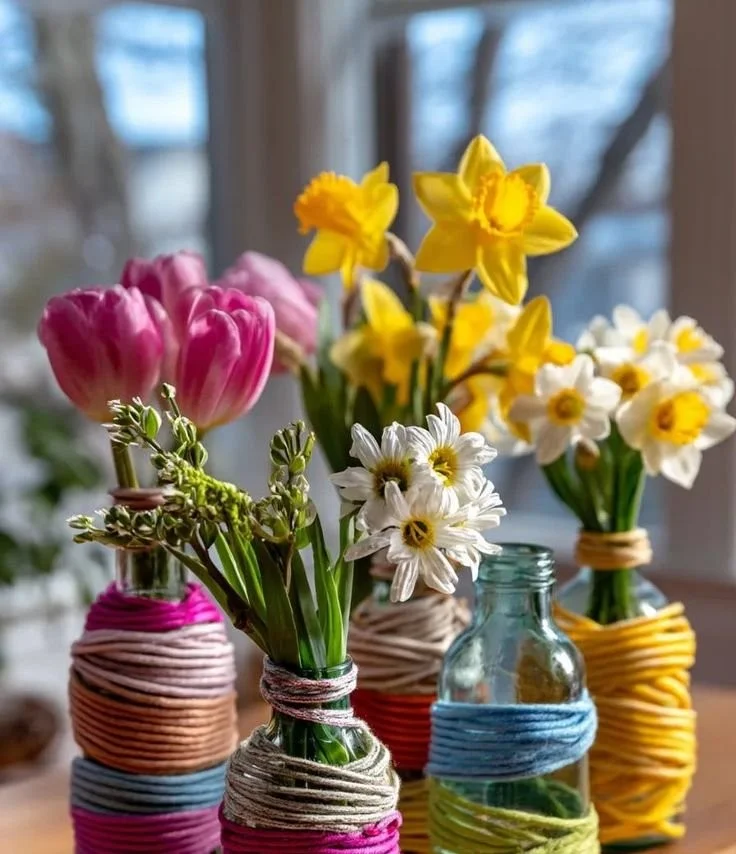
Spring light spills across the table, a fresh breeze brings the faint scent of cut grass and damp earth, and your hands are warm from winding soft yarn around glass. This craft is less about taste and more about texture and sight: the gentle fuzz of wool, the smooth coolness of recycled glass, the bright pop of color that transforms an ordinary bottle into a seasonal statement. It’s the kind of project that makes you smile before the first bud opens—simple, tactile, and endlessly adaptable.
If you like quick, satisfying crafts that brighten small corners of your home, this tutorial is for you—and if you want more ideas to expand your spring crafting evening, check out 15 fun spring crafts for adults for further inspiration.
At a Glance
- Prep Time: 10–15 minutes (per bottle)
- Craft Time (Cook Time): 20–45 minutes (depending on bottle size and pattern)
- Total Time: 30–60 minutes (including drying time for glue, if used)
- Servings: Makes 1–6 vases (scale up or down by number of bottles)
- Difficulty Level: Easy — beginner friendly, great for kids with supervision
Nutrition Highlights
This is a decorative craft project, not a food item. There are no caloric or macronutrient values to report for yarn-wrapped vases. Importantly, these vases are not food-grade containers; do not use them to store or serve food directly unless the bottle interior is thoroughly cleaned and you are certain it’s food-safe. If small children are present, supervise them carefully—ingestion of yarn, glue, or small decoration parts can be hazardous. Health guidance on ingestion and the importance of keeping non-food items out of reach can be found in reputable sources such as the Centers for Disease Control and Prevention (CDC) and Mayo Clinic.
Why You’ll Love It
- Instant personality: A single wrapped bottle adds color, pattern, and a handmade note to any shelf, mantel, or table runner.
- Resourceful and sustainable: You’re upcycling a common item—water bottles, wine bottles, or soda bottles—turning waste into decor.
- Therapeutic and tactile: Wrapping yarn is rhythmic and calming; many crafters find it soothing, almost meditative.
- Perfect for entertaining and gifting: Make a set for a brunch table or a pair as a hostess gift; they’re seasonal, personal, and inexpensive.
- Versatile: Use them outdoors on a covered patio, in a spring centerpiece, or grouped on a windowsill.
How to Make Yarn-Wrapped Recycled Bottles for Cheerful Spring Vases
Materials (Ingredients)
- 1 clean recycled glass bottle (wine bottle, soda bottle, or similar)
- 50–100 yards of yarn (amount depends on bottle size and how densely you wrap)
- Suggested types: worsted-weight acrylic, cotton, or wool yarn
- Fabric glue or hot glue gun (low-temp recommended for thinner yarn)
- Scissors
- Optional: twine, beads, ribbons, faux or fresh flowers, felt pads for base
- Optional embellishments: decorative buttons, small charms, metallic thread
Substitutions and notes:
- Substitute yarn with twine or jute for a rustic look (use stronger adhesive).
- Use thin ribbon wrapped in a spiral for a sleeker, glossy finish.
- For outdoor-safe vases, choose acrylic yarn and a waterproof adhesive.
Step-by-step Instructions
- Prepare the bottle: Remove labels and adhesive residue by soaking the bottle in warm, soapy water for 20–30 minutes. Dry thoroughly.
- Tip: Use a baking-soda paste or rubbing alcohol to remove stubborn glue.
- Decide on design: Plan whether you want full coverage, stripes, alternating colors, or a diagonal wrap. Measure yarn roughly by wrapping once around the bottle to estimate yards needed.
- Anchor the yarn: Put a bead of glue at the base of the bottle (or near the neck if starting there). Press the yarn end into the glue and hold until secure (5–10 seconds with hot glue; longer with craft glue).
- Wrap tightly and evenly: Turn the bottle as you wrap, keeping tension consistent so the yarn sits snugly without gaps. For stripes, switch colors by securing the end of one yarn with glue and overlapping the new yarn slightly before continuing.
- Tip: Work in sections if using craft glue—allow each section to dry so the yarn doesn’t slip.
- Change patterns: To make diagonal stripes, offset each wrap slightly as you go. For clean edges, tuck the yarn end into the previous row or secure with a dab of glue.
- Finish the top: When you reach the neck or desired stopping point, trim the yarn leaving a short tail. Use a small dot of glue to secure the tail; press down and hold until set.
- Add embellishments: Glue a band of ribbon, a cluster of beads, or wrap metallic thread around the neck for contrast. Attach felt pads to the bottom to protect surfaces.
- Let cure: If using craft glue, allow the vase to dry 24 hours before heavy use or adding water.
- Insert flowers: For fresh flowers, place a small glass vial or test tube inside the bottle to keep water from contacting the yarn (prevents mold and yarn damage). For faux stems, arrange directly in the bottle.
Practical tips:
- Test different yarn textures on scrap glass to see how they adhere.
- If yarn fuzz is unwanted, gently steam the finished piece and smooth fibers with a soft brush.
- For a seamless look, hide color changes under a ribbon band.
Presentation Tips
- Single statement: Fill one tall bottle with a simple branch of forsythia or a few ranunculus stems for an elegant table accent.
- Clustered vignette: Group three wrapped bottles of varying heights down the center of a dining table or on a mantel for a modern trio.
- Mini bud vases: Use small soda or sauce bottles wrapped in bright yarn and populate with single buds—perfect for place settings.
- Seasonal pairings: For spring brunches, pair vases with light linens, mismatched vintage plates, and a scattering of small painted eggs.
- Outdoor settings: Place wrapped bottles on a covered patio table with tea lights inside (use battery-operated candles to avoid heat on yarn).
For ideas on styling small outdoor displays, see these spring backyard decor ideas that pair beautifully with handcrafted vases.
Keeping it Fresh
- Room temperature (display without water): Yarn-wrapped bottles can be displayed indefinitely at room temperature; avoid direct sunlight to prevent yarn fading.
- With fresh flowers (using an inner vial): Replace water every 2–3 days and trim stems to extend flower life. The outer yarn will remain fine as long as it does not get soaked.
- If yarn gets damp: Remove any moisture promptly and allow the bottle to dry fully in a ventilated area to prevent mold.
- Storage: Store wrapped bottles in a cool, dry place. Wrapped items can last many months to years if kept away from pests and moisture.
- Freezer: Not applicable.
Pro Tips & Tricks
- Best yarn types: For bright, saturated color and less pilling, acrylic yarn works well; cotton gives a clean, matte finish; wool offers texture but may shed.
- Glue choice: Hot glue sets fast and is ideal for quick projects; craft glue produces a cleaner finish but requires drying time.
- Avoiding bumps: Keep yarn tension consistent; if knots or irregularities appear, unwrap the section and redo to keep lines smooth.
- Protecting the interior: If you plan to use the vase for fresh flowers, place a narrow glass jar or test tube inside to hold water—this prevents yarn from absorbing moisture and developing mildew.
- Fast color changes: To produce crisp stripes, cut and secure yarn ends rather than trying to twist yarn colors together; tuck the ends under neighboring rows.
- Safety: For projects with children, avoid small beads and use non-toxic glue.
Creative Twists
- Painted base + yarn band
- Paint the lower third of the bottle with chalk paint (matte) and finish the neck with a contrasting yarn wrap. This gives a modern two-tone finish.
- Embellished boho
- Combine yarn with thin leather cord and tiny brass charms for a bohemian vibe that’s gift-ready.
- Eco-chic jute and lace
- Wrap the majority of the bottle in jute twine, then tie a delicate lace ribbon around the neck for textured contrast—great for rustic weddings.
- Metallic thread accents (glam)
- Wind a fine metallic thread intermittently with thicker yarn to catch the light and elevate the look for evening tables.
- Kid-friendly pom-pom sleeves
- Instead of full wrap coverage, glue a variety of small pom-poms onto the bottle for a playful, tactile version kids will love.
Frequently Asked Questions
Q: Can I put water directly into a yarn-wrapped bottle with fresh flowers?
A: It’s safer to use a small inner glass vial or test tube inside the wrapped bottle to hold water—this prevents yarn from wicking moisture and growing mold.
Q: What if my yarn colors bleed or fade?
A: Pre-wash yarn if the manufacturer recommends it, and avoid prolonged direct sunlight. Acrylics typically retain color best.
Q: How do I remove labels without damaging the glass?
A: Soak bottles in warm soapy water for 20–30 minutes; scrape gently with a plastic scraper and remove residue with rubbing alcohol or a baking soda paste.
Q: Is hot glue safe for delicate yarns?
A: Low-temperature hot glue works well for most yarns; for very delicate fibers, use a clear craft glue to avoid heat damage.
Q: Can I make this outdoors?
A: Yes—working outdoors is ideal for ventilation if you’re using glue, and natural light helps you judge color and tension. Avoid windy conditions that can tangle yarn.
Conclusion
Wrap a few recycled bottles this weekend and let them usher spring into your home—each is a tiny, handmade cheerleader for fresh flowers, warm light, and simpler moments. For a classic jute-wrapped inspiration and technique reference, I found the detailed tutorial on jute yarn wrapped bottle vases helpful. If you’re curious about other upcycled vase ideas that pair well with yarn-wrapped styles, check out this guide on How to Make Moss Covered Vases Out of Tin Cans | The Happy Housie.
Share a photo of your finished vases, tell me what color palette you chose, and let’s build a community of seasonal makers—your little handmade moments inspire others.